
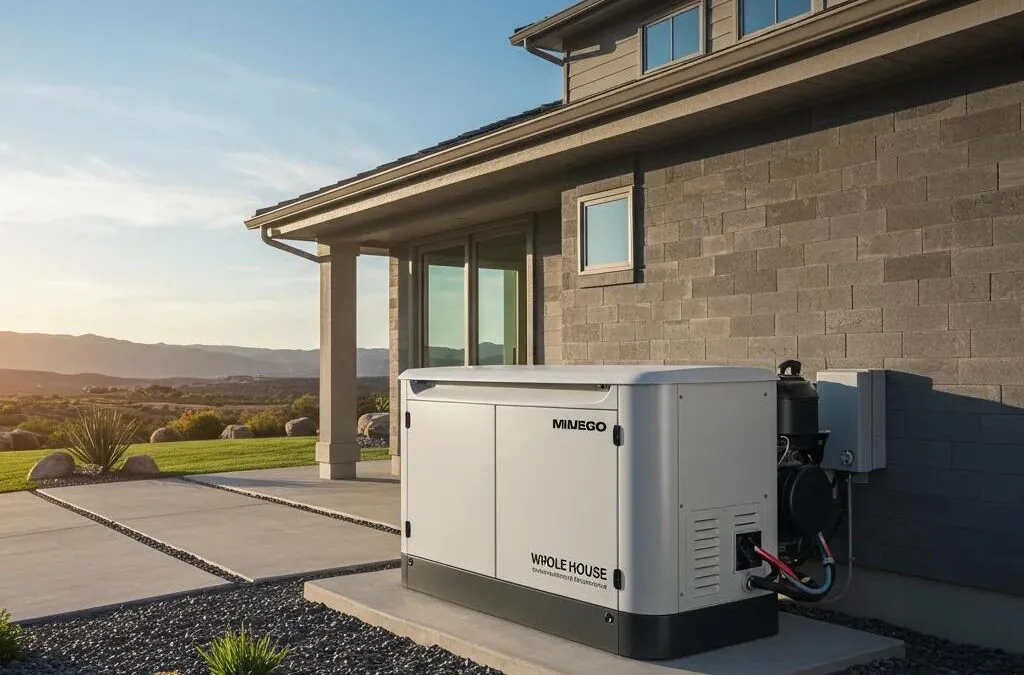
Comprehensive Cost Guide: Whole House vs Portable Generators
Whole House Generator Cost vs. Portable Options: Your Guide to the Best Home Backup Power Solution
Both whole-house standby generators and portable generators offer backup power, but they differ significantly in how they operate, their power output, and their long-term financial impact. This guide will break down those key differences, explore cost factors specific to the CSRA region, and provide practical advice on sizing, installation, financing, and safety. Our goal is to help you choose the ideal backup power solution for your home. Many homeowners grapple with the decision: invest more upfront for an automatic whole-house standby system, or opt for a less expensive portable unit that requires manual setup? We’ll compare costs, discuss typical CSRA permit and labor considerations, and weigh the trade-offs in reliability. You’ll learn how Automatic Transfer Switches (ATS) function, what to expect during installation and electrical panel upgrades, and how fuel and ongoing maintenance influence the total cost of ownership. This guide also covers financing and incentives relevant to local homeowners, along with maintenance and emergency repair strategies to keep your generator running smoothly through storms and outages. Read on for straightforward cost comparisons, EAV-style tables, checklists, and real-world examples that will make choosing between a whole-house generator and a portable generator clear.
What Are the Key Differences Between Whole House and Portable Generators?
A whole-house generator is a permanently installed standby system that automatically powers your home’s electrical system via an Automatic Transfer Switch (ATS). In contrast, a portable generator is a movable unit that requires manual operation to power specific circuits or devices. Whole-house standby units activate automatically when an outage is detected, ensuring seamless continuity for critical systems like HVAC, medical equipment, and sump pumps. Portable units, however, need to be manually started, safely positioned, and connected using extension cords or a manual inlet. The primary advantages of standby systems are their automatic operation and comprehensive coverage, while portable units offer a lower initial cost and greater mobility. Understanding these operational distinctions will help you decide based on your budget, essential power needs, and your tolerance for manual intervention during an outage. The following sections will detail automatic ATS operation and the limitations of portable generators, allowing you to compare their real-world performance.
How Does a Whole House Generator Work for Automatic Home Backup?
A whole-house generator operates by continuously monitoring utility power through an Automatic Transfer Switch (ATS). When the ATS detects an outage, it signals the generator to start, transfer the electrical load, and then return to standby mode once utility power is restored. The ATS safely isolates your home from the grid, preventing dangerous backfeed, and seamlessly switches power to the generator’s capacity, which can then power selected or all circuits. This automatic sequence—outage detection, generator start-up, load transfer, and synchronization—ensures minimal disruption to critical systems like your HVAC, refrigeration, medical devices, and sump pumps. Because the ATS and associated electrical wiring are integrated directly into your home’s electrical panel, professional installation and adherence to local codes are absolutely essential for safety and reliability. Understanding how the ATS works naturally leads to assessing the operation and limitations of portable generators.
What Are the Operation and Power Limitations of Portable Generators?

Portable generators are typically fueled by gasoline or diesel and are designed to power individual appliances or a limited selection of circuits. They require manual starting and manual power transfer methods, such as heavy-duty extension cords or a manual transfer switch/inlet box. Standard portable generator wattages (ranging from 3,000 to 7,500 watts) can typically run essential items like a refrigerator, a well pump, or a few lights, but they generally cannot simultaneously power whole-home HVAC systems, electric ranges, or multiple high-start-current motors. Crucial safety considerations include the risk of carbon monoxide poisoning, proper grounding, and preventing backfeed into the utility grid. For these reasons, transfer switches or professionally installed inlet boxes are strongly recommended. The runtime of portable generators is limited by their onboard fuel tank or external fuel storage and necessitates refueling during extended outages, which impacts their long-term practicality compared to automatic standby generator systems.
Portable Generator Safety: Awareness of Carbon Monoxide Hazards
The overall objective of the study was to determine Nigerian university students’ awareness and exposure to label warnings on portable electric power generators; their level of comprehension of these label warnings; knowledge of carbon monoxide poisoning; and, preventive measures taken to avoid carbon monoxide poisoning. The survey research method was used for this study. Data was collected in Southeastern Nigeria among undergraduate students, by administering questionnaire to a sample of 400 students from four universities. The study found a high level of exposure to label warnings on house hold products but a minimal exposure to label warnings on portable electric power generating sets among these students.Variables like placement of the warnings, font sizes and religious inclination hindered exposure to the warnings and compliance to the warning message; awareness of carbon monoxide information was high and a greater number among the respondents got informed either th
Which Fuel Types Are Common for Whole House and Portable Generators?
Whole-house standby generators most frequently run on natural gas or propane. These fuels offer a continuous supply without the need for frequent manual refueling, which is a significant advantage. Portable generators, on the other hand, typically use gasoline, diesel, or dual-fuel configurations for greater flexibility. Natural gas provides a consistent supply as long as utility services remain operational. Propane offers stored-fuel resilience without the volatility associated with gasoline and is a popular choice in areas prone to extended outages. Diesel and gasoline deliver high energy density for portable units but require safe storage and regular refueling. Dual-fuel portable units allow users to switch between propane and gasoline, adding versatility. Your fuel choice will impact running costs, emissions, and storage logistics within the CSRA region. Comparing these trade-offs will help you select a fuel type that aligns with your expected outage duration and personal preferences.
How Much Does It Cost to Install a Whole House Generator Compared to Portable Options?
A clear cost comparison begins with the price of the units themselves, then adds the cost of the ATS, installation labor, any necessary electrical panel upgrades, permits, and routine maintenance to estimate the total project cost in the CSRA. Whole-house standby systems generally incur higher equipment and installation expenses due to their larger kW capacity, ATS integration, the need for concrete pads or enclosures, and potential electrical panel or service upgrades. Portable generators have a lower equipment cost but may require the addition of safe inlet boxes, manual transfer switches, and extra cords. Local factors in the CSRA, such as labor rates, permit fees, proximity to gas lines, and site preparation requirements, can either increase or decrease these costs, making localized estimates essential. The table below summarizes typical upfront versus long-term cost considerations to help you compare and identify where savings and ongoing expenses occur.
Here’s an initial cost comparison table outlining typical upfront and long-term cost components for whole-house standby versus portable systems:
| Component | Whole-House Standby | Portable Generator |
|---|---|---|
| Unit price | $3,500–$6,000 (depends on kW) | $400–$2,700 (depends on wattage) |
| ATS / transfer equipment | $1,000–$3,000 | $200–$1,200 (inlet box/manual switch) |
| Installation labor & permits | $2,000–$8,000 | $200–$1,000 |
| Electrical panel upgrades | $1,000–$5,000 (if needed) | $0–$1,500 |
| Typical total CSRA range (first year) | $6,500–$18,000 | $800–$5,500 |
This table clearly shows that while whole-house systems involve a higher initial investment, they provide automatic, full-home coverage. Portable units offer a lower upfront expense but come with limited coverage and require manual operation. The following subsections will delve into regional unit and installation cost details to further clarify these ranges.
What Are the Typical Upfront Costs for Whole House Generators in the CSRA Region?
Upfront costs for standby generators can vary based on the kW size, brand, fuel type, and the complexity of the installation site. In the CSRA region, ballpark figures for the unit combined with standard installation commonly range from the mid-four figures to the low five figures, depending on the generator’s capacity and whether electrical panel upgrades are necessary. Key factors that can increase the cost include higher kW requirements driven by large HVAC systems, the distance to natural gas service, complex site preparation (such as pouring concrete pads, installing enclosures, or noise mitigation), and choosing premium generator brands. Opting for a lower kW model will reduce the initial cost but may require careful load management to prevent overloading. Conversely, oversizing the unit will increase both the purchase and installation price but provides extra capacity for future electrical needs. Understanding how capacity and site-specific factors influence pricing is crucial before obtaining local estimates that account for CSRA permit and labor conditions.
How Do Installation and Electrical Panel Upgrade Costs Affect Total Generator Price?
Installation and panel upgrades can significantly impact the total project cost. Older homes, in particular, may require service-entrance modifications, meter relocation, or the addition of a new subpanel to safely integrate a generator. Typical upgrade scenarios include increasing the panel’s amperage capacity, replacing outdated circuit breakers, or adding a subpanel dedicated to essential circuits to ensure the standby generator can switch loads safely. These interventions add to the labor, permit, and equipment expenses. The timeline and disruption involved depend on the extent of the upgrade work; a simple ATS wiring job might be completed in a single day, while full panel upgrades could take several days and necessitate inspections. Because these costs are highly site-specific, a thorough assessment by a licensed electrician is necessary to identify all required upgrades and provide an accurate price estimate.
What Are the Average Prices for Portable Generators and Their Setup?
Portable generator retail prices are determined by their rated wattage and features. Small inverter models designed to power essential electronics can start at under $500, while higher-output conventional units rated at 7,500 watts typically range from $1,000 to $3,000. Setup costs for safe household use often include a manual transfer switch or an inlet box, and a professionally installed generator inlet cord system. These additions can typically add several hundred to a couple thousand dollars if an electrician installs a proper transfer method. While portable setups often appear cheaper in the first year, recurring fuel costs, maintenance, and the potential need to replace units after heavy use can narrow the long-term cost difference compared to standby systems. Choosing a portable generator requires careful planning for safe power transfer, carbon monoxide mitigation, and fuel logistics to realize practical savings.
How Do Fuel and Maintenance Costs Impact Long-Term Generator Expenses?
Long-term expenses for generators include annual maintenance, fuel consumption during outages, and periodic repairs. Standby units that run monthly for testing or under load have predictable maintenance schedules, while portable units often require more frequent oil and filter changes, especially when used heavily. The annual fuel cost depends heavily on usage patterns; occasional short outages will result in modest yearly fuel expenses, whereas extended outages will significantly increase fuel consumption and cost, particularly for gasoline or diesel portable units. Regular preventative maintenance is key to reducing the likelihood of major repairs and extending the equipment’s lifespan, thereby improving the return on investment for both standby and portable options. Understanding these running cost expectations will help you evaluate the lifecycle expenses beyond the initial purchase and installation.
What Are the Benefits and Drawbacks of Whole House vs Portable Generators?
Whole-house and portable generators present distinct trade-offs concerning reliability, convenience, cost, and safety. The right choice ultimately depends on your priorities, such as the desire for automatic operation, your budget, and the level of power coverage you require. Whole-house systems offer automatic, hands-free backup power and broad coverage to protect your HVAC, refrigeration, and life-safety systems, but they demand a higher upfront investment, require permits, and necessitate professional installation. Portable generators are cost-effective and flexible for powering specific loads or for temporary use, but they rely on manual operation, carry greater carbon monoxide and backfeed risks, and typically cannot power an entire home. The list below summarizes key advantages to help you weigh your options against your personal needs and local electrical wiring conditions.
Here’s a comparison of key benefits:
- Automatic whole-home coverage: Standby units power critical systems without any manual intervention.
- Lower upfront cost and mobility: Portable units allow for targeted, temporary power solutions on a budget.
- Maintenance and fuel trade-offs: Standby systems often come with scheduled service plans, while portable units require frequent fueling and manual upkeep.
These contrasts highlight why homeowners might prioritize either seamless reliability or initial affordability. The next section will guide you on how to size a system to match those priorities.
Here’s an introductory EAV table comparing benefit/drawback attributes:
| Feature | Benefit/Drawback | Practical Impact |
|---|---|---|
| Reliability | Benefit (whole-house) | Automatic switchover minimizes downtime |
| Portability | Benefit (portable) | Enables mobile use for job sites or travel |
| Safety | Drawback (portable without transfer switch) | CO and backfeed risks require careful mitigation |
| Cost | Benefit (portable upfront) / Drawback (standby upfront) | Different ROI horizons based on outage frequency |
This table clarifies where each generator type delivers value and where trade-offs occur, helping to inform your sizing decision.
What Advantages Do Whole House Generators Offer for Homeowners?
Whole-house generators provide automatic switchover through an ATS, ensuring continuous power to essential systems like HVAC, refrigeration, medical equipment, sump pumps, and lighting. This protects your property and health during extended outages. Because standby systems are integrated with your home’s electrical panel and can be configured to meet full-home kW requirements, they significantly reduce the risk of user error and unsafe extension-cord setups often associated with portable units. Whole-house units frequently include built-in monitoring, scheduled exercise cycles, and options for remote alerts, which promote predictable maintenance and enhance long-term reliability. For homeowners who require uninterrupted power for health reasons, remote work, or property protection, the convenience and comprehensive coverage offered by a standby generator often justify the higher upfront cost.
What Are the Pros and Cons of Portable Generators for Flexible Backup Power?
Portable generators are appealing due to their affordability, portability, and versatility beyond household backup—they can be used for job sites, outdoor events, or remote power needs. However, they demand manual operation, careful fuel handling, and strategic placement to avoid carbon monoxide hazards. While a portable unit can support essential appliances during short outages, it is not designed for extended continuous operation powering whole-home HVAC systems without significant limitations and safety upgrades. Users must plan for safe power transfer (using a manual transfer switch or inlet), secure fuel storage, and routine maintenance, such as oil changes and spark plug replacements. Portable generators are best suited for homeowners seeking low-cost, limited-scope backup power or those with intermittent needs rather than a requirement for continuous whole-home electricity.
How Do Safety and Reliability Compare Between Generator Types?
Safety for standby systems primarily involves professional installation, correct ATS integration, and proper site placement to prevent carbon monoxide accumulation and dangerous backfeed. Reliability is enhanced through scheduled exercise cycles and professional maintenance. For portable generators, safety risks include carbon monoxide poisoning if operated too close to living spaces, electrical backfeed that endangers utility workers, and improper grounding. Adhering strictly to manufacturer instructions and using a transfer switch are critical. Professional installation and compliance with local codes reduce fire and electrical hazards for both types of generators. Certified electricians can ensure correct electrical wiring, panel compatibility, and safe enclosure placement. Prioritizing these safety measures directly improves reliability and reduces the risk of emergency repairs.
How Do You Determine the Right Generator Size and Power Capacity for Your Home?
Determining the correct generator size involves summing the wattage requirements of your critical appliances, understanding the difference between starting (surge) watts and running watts, and selecting a standby generator kW rating or portable wattage that can cover your prioritized loads with a sufficient margin for startup currents. To estimate the required kW, convert appliance wattages to kW by totaling their running watts and dividing by 1,000. Then, add a safety margin, especially for motor-driven loads like HVAC compressors, which have high starting currents. Your choice between full-home coverage and an essential-circuit approach will influence the size: whole-house standby systems typically range from 10 to 30+ kW, depending on home size and HVAC needs, while portable options are rated in running watts. The following subsections provide ranges, a step-by-step calculation guide, and examples to make the sizing process actionable for homeowners.
Here’s an introductory sizing table mapping common appliances to suggested coverage:
| Appliance/Load | Typical Running Watts | Suggested kW Coverage |
|---|---|---|
| Refrigerator | 600–1,200 | 0.6–1.2 kW |
| Central AC (ton) | 3,000–4,000 | 3.0–4.0 kW |
| Electric Range | 2,000–5,000 | 2.0–5.0 kW |
| Well Pump | 1,000–3,000 | 1.0–3.0 kW |
| Whole-house example (3BR) | 10,000–16,000 | 10–16 kW |
This EAV-style mapping helps homeowners translate their appliance needs into generator kW requirements and prepares them for the detailed load calculations that follow.
What Is the Power Capacity Range for Whole House Generators?
Whole-house standby generators are commonly available in kW bands such as 10–20 kW for small-to-medium homes, 20–30 kW for larger homes with central HVAC and electric heating, and 30 kW+ for very large residences or homes with multiple high-demand systems. The decision on capacity largely depends on whether you need to operate your full HVAC system during an outage; central air conditioning and large electric heating loads are the primary drivers that push sizing requirements toward higher kW bands. Manufacturers provide capacity charts that link kW ratings to typical home coverage, but precise sizing should always be verified by summing the actual wattages of your appliances and considering their startup currents. Choosing an appropriately sized standby unit ensures reliable operation without frequent overloads.
How to Calculate Your Home’s Backup Power Needs?
To calculate your backup power needs, create a list of your essential appliances, noting both their running and starting watts. Sum the running watts and then add a 20–30% safety margin to account for startup currents and potential future loads. Convert the total running watts to kW by dividing by 1,000. It’s also helpful to prioritize your loads into tiers: Tier 1 for critical items (medical equipment, sump pump), Tier 2 for important items (refrigerator, essential lighting), and Tier 3 for discretionary items (oven, whole-house HVAC). Then, decide whether you need full-home standby power or a selective essential-circuit approach. For example, a small home needing to power a refrigerator (1,200W start/600W run), a well pump (3,000W start/1,200W run), and lights (500W) might total approximately 2,300W running, suggesting a 3–5 kW portable generator or a 10 kW standby generator for added headroom. When in doubt, always consult a licensed electrician for precise load calculations and panel integration advice.
Can Portable Generators Power an Entire Home or Only Select Appliances?
Portable generators are typically capable of powering select appliances and circuits rather than entire homes, as their rated running wattage rarely matches the combined demand of HVAC systems, water heaters, ovens, and multiple motor loads operating simultaneously. A high-capacity portable generator (7,500W) can manage essential loads like a refrigerator, furnace fan, sump pump, and limited lighting, but it will likely struggle to run central air conditioning and electric ranges at the same time. Using a manual transfer switch to connect designated circuits is the safest approach and helps prevent overloads. For homeowners seeking full HVAC and whole-house functionality during an outage, a standby generator sized appropriately for their needs is the reliable solution.
What Does Professional Generator Installation Involve in the CSRA Region?

Professional generator installation in the CSRA region encompasses several key steps: initial site assessment, accurate load calculation, selection and wiring of the ATS, placement of the concrete pad or enclosure, connection of the fuel line (for natural gas or propane, if applicable), acquisition of necessary permits, coordination of inspections, and final commissioning and testing. Licensed electricians ensure compliance with all local codes, correct transfer switch wiring, and safe integration with your home’s electrical panel to prevent dangerous backfeed and fire hazards. Installation timelines can vary significantly, from a single day for simple ATS wiring to multiple days for full panel upgrades and complex site work. Local permit and inspection scheduling also play a role in the project’s duration. The following subsections will explain why licensed electricians are essential, outline common upgrade steps, and describe how DR Electric CSRA approaches safe and reliable installation.
Why Is Licensed Electrician Installation Essential for Whole House Generators?
Having a licensed electrician perform the installation is crucial because tasks such as transfer switch wiring, modifications to the meter and service entrance, and panel upgrades require in-depth knowledge of electrical codes, proper permitting procedures, and specialized safety expertise to prevent electrical hazards and ensure regulatory compliance. Improper installation can lead to dangerous backfeed that endangers utility workers, creates fire hazards, and may void equipment warranties. Furthermore, inspectors typically require sign-off from a licensed professional for systems connected to the main electrical service. Licensed electricians are also skilled in sizing conductors, selecting appropriate breaker protection, and verifying grounding and bonding to meet all local codes. Given these significant legal and safety implications, professional installation protects both people and property and provides the necessary documentation for inspections.
What Are the Steps for Electrical Panel Upgrades and Automatic Transfer Switch Setup?
Typical installation steps include an initial site survey and load calculation, selecting the appropriate generator kW and a compatible ATS, applying for and obtaining necessary permits, preparing the site (installing a pad or enclosure), connecting the fuel source (if applicable), wiring the ATS and integrating it with the panel, commissioning and performing load testing, and finally, securing the final inspection sign-off. Homeowners may experience short power interruptions during transfer switch testing and panel work, but electricians coordinate the staging to minimize downtime. Commissioning involves verifying the ATS’s proper sensing capabilities, timed transfer delays, and the generator’s automatic start/stop sequences under simulated outage conditions. Clear communication regarding the timeline and expected disruptions will help prepare homeowners for the installation process.
How Does DR Electric CSRA Ensure Safe and Reliable Generator Installation?
DR Electric CSRA brings licensed electrician expertise and deep local knowledge of the CSRA region to every generator installation. Their approach prioritizes code-first assessments, ATS-compatible wiring, and safety-first commissioning to guarantee that systems operate correctly and reliably during outage events. Their process includes a thorough local site assessment, identifying any necessary electrical panel upgrades, and executing professional installation and testing that adheres to regional permit and inspection requirements. DR Electric CSRA emphasizes post-installation testing, conducting customer walkthroughs to explain generator operation, and providing a comprehensive handoff that covers maintenance needs and safety precautions. This localized, safety-focused approach ensures homeowners in the CSRA region receive dependable backup power backed by professional support.
What Financing Options and Incentives Are Available for Generator Purchases in CSRA?
Financing and available incentives can significantly lower the barrier to acquiring whole-house or higher-capacity standby systems by spreading upfront costs or leveraging available rebates, tax credits, or utility programs where applicable. Homeowners should verify current offerings as of 10/2025 and consult local providers for specific guidance. Financing plans offered through installers or lenders can convert a large purchase into manageable monthly payments and may include options that bundle equipment, installation, and maintenance into a single payment. Some federal or state energy programs occasionally offer incentives related to efficient backup solutions or propane/natural gas equipment; it is essential to check current programs. The following subsections will outline various incentive types, mention DR Electric CSRA’s financing options, and explain how financing can impact your return on investment to guide your decision-making process.
Are There Local or Federal Tax Credits and Rebates for Whole House Generators?
Potential incentives for generator purchases vary by program and are subject to change over time. Common incentive categories include federal energy credits for certain energy-efficient equipment, utility rebates for projects focused on resilience or demand management, and municipal programs that may offset the cost of infrastructure upgrades. Because incentive availability evolves, homeowners should verify current programs through official channels and local utility announcements as of 10/2025. Even when direct rebates are limited, tax treatment, business-use deductions, or potential insurance premium reductions can influence the net cost over time. Checking current, authoritative sources will ensure you capture any applicable incentives.
What Financing Plans Does DR Electric CSRA Offer for Generator Installation?
DR Electric CSRA offers various financing plans and can discuss payment options for generator installations. They encourage homeowners to contact them directly for plan specifics, prequalification steps, and tailored installation estimates that reflect the unique permit and labor variances within the CSRA region. Financing through an installer can help spread the costs of installation and equipment over monthly payments, making higher-capacity standby generator systems more accessible while preserving options for emergency service and maintenance. Homeowners considering financing should always request written estimates that clearly detail all costs, including equipment, ATS, panel upgrades, permit fees, and routine maintenance plans, to accurately evaluate their total monthly obligations versus an upfront purchase.
How Can Financing Impact Your Return on Investment for Backup Power?
Financing impacts your return on investment (ROI) by converting a large capital outlay into manageable monthly expenses. These costs can then be weighed against the avoided costs of power outages, such as spoiled food, lost income, or property damage. For areas experiencing frequent outages, the amortized monthly cost of a standby generator can be easily justified by reduced direct losses and improved home functionality. Warranties and scheduled maintenance packages often included in financing plans can lower long-term repair risks and preserve the equipment’s value, further enhancing ROI. When evaluating financing options, compare the total financed cost, including interest, against projected avoided outage losses and savings from reduced appliance or insurance claims to determine the payback period.
How Should You Maintain and Repair Your Generator for Long-Term Reliability?
Regular preventative maintenance, timely repairs, and consistent inspection routines are essential for preserving generator reliability and minimizing emergency failures. Key tasks include oil and filter changes, fuel-system inspections, battery checks, exercise cycles, and ATS testing, all performed on a recommended schedule. Scheduled service helps prevent common faults, ensures transfer sequences remain functional, and identifies potential wear before failures occur during critical outages. Emergency repair readiness—which includes clear triage procedures, prioritized dispatch for customers with critical needs, and accessible service plans—is vital for minimizing downtime when problems arise. The subsections below list recommended maintenance tasks, explain DR Electric CSRA’s approach to emergency repairs, and outline initial troubleshooting steps that homeowners can safely perform.
Here’s an introductory maintenance checklist:
- Monthly exercise/run: Operate your standby generator under load according to manufacturer guidelines to circulate fluids and verify operation.
- Quarterly/annual service: Change oil and filters, inspect fuel lines, test the battery and ATS, and check coolant levels if applicable.
- Seasonal prep: Winterize fuel systems and perform hurricane-season checks for storm-prone months.
Following these maintenance steps diligently will reduce the need for emergency repairs. The next section will describe the emergency service process and the roles of service providers.
What Preventative Maintenance Is Recommended for Whole House and Portable Generators?
Preventative maintenance for standby units typically includes monthly automated exercise runs, semi-annual or annual oil and filter changes, fuel-system inspections, battery replacement as needed, and ATS testing to ensure reliable automatic transfer. Portable generators require more frequent oil changes based on their run hours, along with regular checks of spark plugs and air filters, and fuel stabilization if they are stored for extended periods. They also necessitate safe storage and carbon monoxide-aware placement plans before use. Professional maintenance not only extends the equipment’s lifespan but also preserves warranty coverage and reduces the likelihood of failures during critical outages. Scheduling regular service with a qualified technician will keep both standby and portable units in dependable condition.
How Does DR Electric CSRA Handle Emergency Generator Repairs in the CSRA Region?
DR Electric CSRA offers emergency service procedures that prioritize on-site assessment, temporary stabilization (such as bypasses or interim connections), and follow-up scheduling for full repairs or parts replacement. Their process emphasizes rapid triage for customers with critical needs, such as those relying on medical equipment or requiring business continuity. Their approach involves dispatching licensed electricians to assess faults, implementing safe temporary measures to restore partial power where feasible, and planning comprehensive repairs to restore full reliability. Homeowners should have a service plan in place and know which issues require immediate professional attention versus those that can safely wait. This local emergency support model is designed to minimize downtime and protect critical loads throughout the CSRA region.
What Are Common Generator Issues and How Can They Be Troubleshot?
Common generator issues include failure to start (often due to battery, fuel, or ignition problems), low oil or coolant warnings, fuel contamination, and ATS faults that prevent power transfer. Safe first-step troubleshooting involves checking fuel levels and switches, verifying battery voltage, ensuring the ATS has power, and inspecting for any visible faults while maintaining a safe distance. Homeowners should avoid attempting internal electrical inspections, carburetor repairs, or fuel-line work unless they are qualified, as these tasks can be dangerous. Immediately shut down the generator if you notice visible smoke, fuel leaks, or persistent fault codes. When DIY checks do not resolve the issue, contacting a licensed electrician for diagnostics and repairs is the safest way to protect both your safety and the longevity of your equipment.
This article has provided practical, CSRA-focused guidance on whole-house generator costs versus portable options, sizing, installation, financing, and maintenance to help you choose and sustain the backup power solution that best meets your needs, including the use of a standby generator.
Frequently Asked Questions
What factors should I consider when choosing between a whole house generator and a portable generator?
When deciding between a whole-house generator and a portable generator, consider factors such as your power needs, budget, installation requirements, and maintenance preferences. Whole-house generators provide automatic power during outages and can support essential systems like HVAC and refrigeration, but they come with higher upfront costs and require professional installation. Portable generators are more affordable and flexible but require manual operation and may not support all household appliances simultaneously. Assessing your specific needs and the frequency of outages in your area can help guide your decision.
How often should I perform maintenance on my generator?
Maintenance frequency depends on the type of generator. For whole-house generators, it’s recommended to perform monthly exercise runs and annual servicing, which includes oil and filter changes, battery checks, and ATS testing. Portable generators typically require more frequent oil changes based on usage, along with regular checks of spark plugs and air filters. Following the manufacturer’s maintenance schedule is crucial to ensure reliability and extend the lifespan of your generator. Regular maintenance helps prevent unexpected failures during outages.
Can I install a generator myself, or do I need a professional?
While some homeowners may consider DIY installation for portable generators, it is highly recommended to hire a licensed electrician for whole-house generators. Professional installation ensures compliance with local codes, proper wiring, and safe integration with your home’s electrical system. Incorrect installation can lead to safety hazards, such as backfeed, which poses risks to utility workers and can damage your generator. A licensed electrician will also handle necessary permits and inspections, providing peace of mind and ensuring reliable operation.
What are the safety precautions I should take when using a portable generator?
When using a portable generator, safety precautions are essential to prevent accidents and injuries. Always operate the generator outdoors in a well-ventilated area to avoid carbon monoxide buildup. Use heavy-duty extension cords rated for outdoor use to connect appliances, and never plug the generator directly into your home’s electrical system without a proper transfer switch. Regularly check for fuel leaks and ensure the generator is grounded correctly. Following these safety measures will help mitigate risks associated with portable generator use.
What should I do if my generator fails to start during an outage?
If your generator fails to start during an outage, first check the fuel level and ensure that the fuel is fresh. Inspect the battery for charge and connections, as a dead battery is a common issue. Verify that all switches and circuit breakers are in the correct position. If the generator still does not start, consult the user manual for troubleshooting steps or contact a licensed electrician for assistance. Avoid attempting internal repairs unless you are qualified, as this can pose safety risks.
Are there any environmental considerations when using generators?
Yes, there are several environmental considerations when using generators. Whole-house generators that run on natural gas or propane tend to have lower emissions compared to gasoline or diesel-powered portable generators. Additionally, proper maintenance is crucial to minimize emissions and ensure efficient operation. Homeowners should also consider noise pollution, especially with portable generators, and take steps to position them away from living areas. Understanding and mitigating the environmental impact of generator use can contribute to more sustainable energy practices.
What are the typical warranty options for generators?
Warranty options for generators vary by manufacturer and model. Whole-house generators often come with warranties ranging from 2 to 10 years, covering parts and sometimes labor for repairs. Portable generators typically have shorter warranties, often around 1 to 3 years. It’s important to read the warranty terms carefully, as they may have specific conditions regarding maintenance and usage that must be followed to remain valid. Additionally, some manufacturers offer extended warranty options for added peace of mind.