
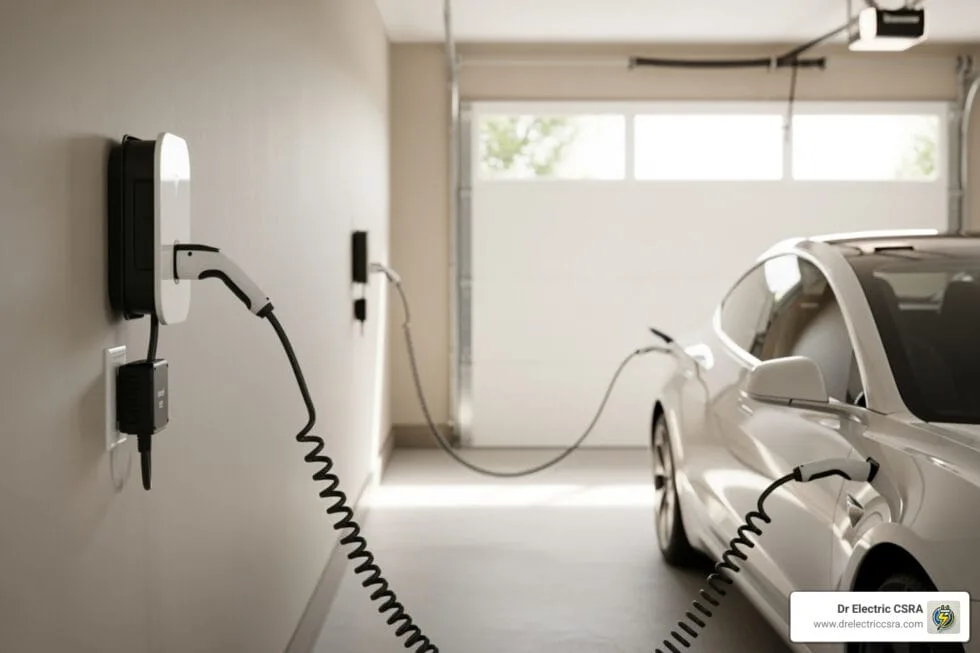
Protecting Your EV Charger from Surges
Are you wondering if your home EV charger needs surge protection?
Here’s why EV charger surge protection is a smart choice for any EV owner:
- Safeguards Your Investment: Protects your valuable EV charger and your electric vehicle from damage.
- Prevents Costly Repairs: Power surges can lead to expensive fixes, like a $5000 repair for your EV’s on-board charger.
- Ensures Reliability: Keeps your charging system working smoothly, preventing unexpected downtime.
- Improves Safety: Reduces risks of electrical hazards caused by voltage spikes.
As electric vehicles become a common sight, the convenience of home charging is a game-changer. You’ve invested in a cutting-edge vehicle, and its charging station is equally important. But these systems, with their sensitive electronics, are vulnerable to power surges. These sudden spikes in electricity can come from lightning, grid issues, or even internal home wiring, and they pose a real threat to your equipment. This guide will explain why protecting your EV charger is not just a good idea, but essential.
As a Master Electrician and founder of Dr. Electric CSRA, I’ve seen the damage power surges can inflict on modern electronics. My experience with EV charger surge protection ensures your valuable investment is safeguarded for years to come.
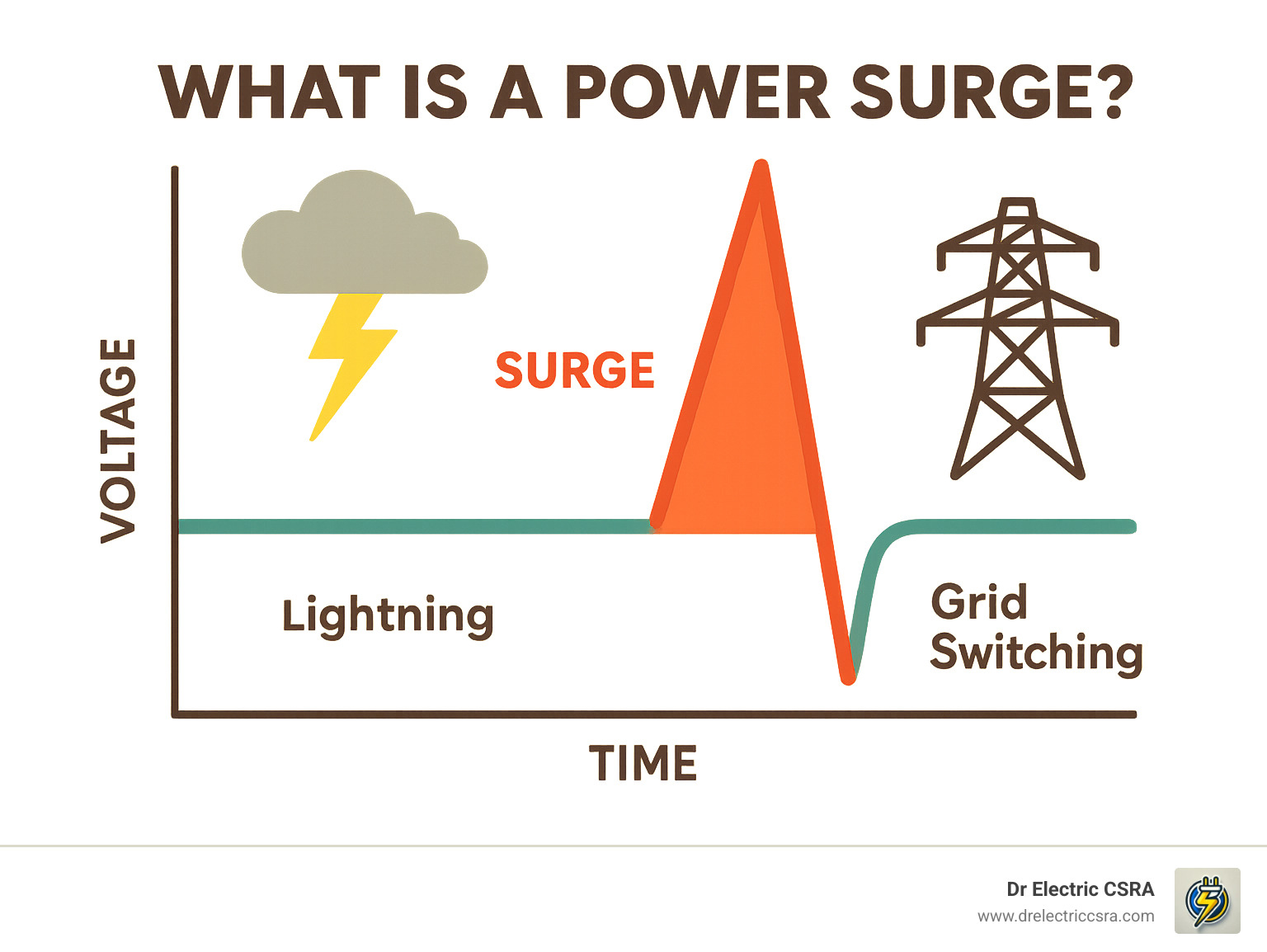
Basic EV charger surge protection terms:
Understanding Power Surges and Their Threat to Your EV
We all rely on electricity every day, don’t we? It’s amazing how it powers our lives, from brewing our morning coffee to charging our electric vehicles. But sometimes, this incredible force can get a little wild. That’s where power surges come in.
A power surge is a sudden, powerful spike in electrical voltage that goes way beyond what’s normal. Imagine your garden hose: a steady flow is great, but if the water pressure suddenly blasts, it can damage the hose or what it’s watering. In your home’s wiring, these \”transient overvoltages\” happen in a blink – just a few millionths of a second. Yet, that brief burst can wreak serious havoc.
What causes these electrical \”bursts\”? They can pop up from a few different places:
- Lightning Strikes: This is the big one, the most dramatic cause. Even if lightning hits miles away, it can send a powerful surge through your power lines. Did you know the U.S. gets about 25 million lightning strikes every year? These aren’t just loud noises; they cause between $650 million to $1 billion in losses annually. It’s serious business!
- Utility Grid Switching: Your local power company constantly manages the electricity grid, rerouting power and adjusting loads. While this is normal and necessary, these operations can sometimes create smaller surges.
- Faulty Wiring: Older or improperly installed wiring in your home can create electrical hiccups, leading to intermittent surges.
- Internal Appliance Cycling: Surprisingly, even large appliances within your home, like your air conditioner or refrigerator, can create tiny surges when they switch on and off. These small spikes travel through your home’s electrical system.
Your Complete Guide to EV Charger Surge Protection
Now that we understand the “why,” let’s dive into the “how.” The solution to protecting your EV charger and vehicle from power surges is a Surge Protective Device, or SPD.
So, how does an SPD work its magic? Imagine a surge as a giant wave of electricity rushing towards your sensitive electronics. An SPD acts like a highly responsive floodgate. When it detects this sudden, dangerous spike in voltage, it instantly diverts that excess energy away from your equipment and safely sends it to the ground. This happens incredibly fast – a good surge protector should react in less than a nanosecond, which is faster than you can even blink! Once the surge passes, the SPD resets, ready for the next electrical wave.
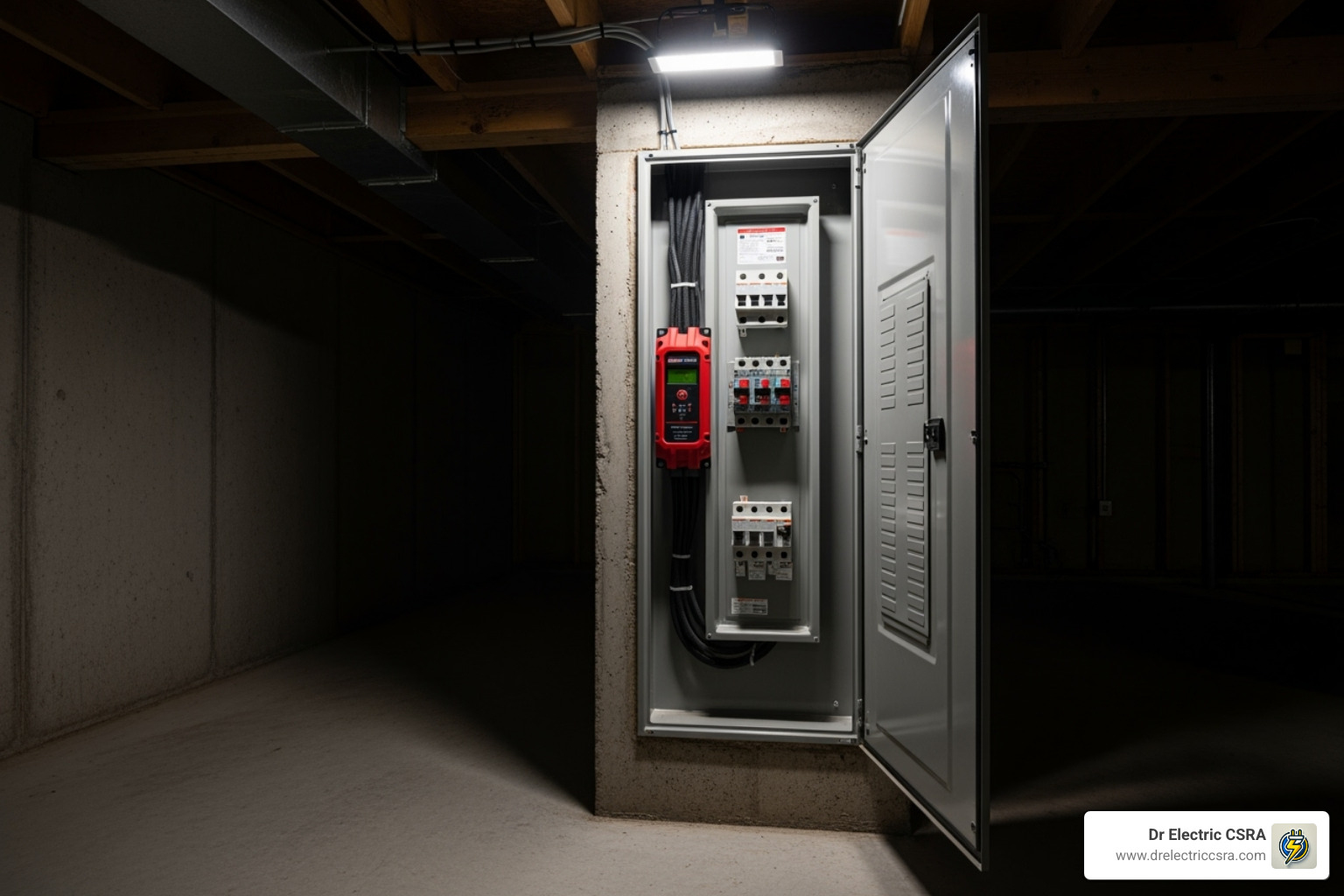
For comprehensive protection, we often recommend a layered approach to surge protection. This means not just protecting individual devices, but safeguarding your entire home.
Types of Surge Protectors (SPDs) for Your Home
SPDs come in different types, each designed for specific protection levels and installation points. Understanding these types helps us recommend the best strategy for your home and EV charger.
| SPD Type | Installation Location | Protection Level |
|---|---|---|
| Type 1 | Outside, at the service entrance (utility side) | Highest level of protection; handles large, external surges like direct lightning strikes. |
| Type 2 | Inside, at the main electrical panel (breaker box) | Excellent whole-house protection against external and internal surges. |
| Type 3 | At the point-of-use (e.g., power strips, wall outlets) | Protects individual devices from smaller, localized surges. |
Let’s break them down a bit:
- Type 1 SPDs are installed on the utility side of your main electrical panel. They offer the first line of defense, designed to handle the massive surges that come directly from the power grid, especially those caused by lightning or large utility switching events.
- Type 2 SPDs are what we typically call “whole-home” surge protectors. We install these right at your main electrical panel. They protect everything connected to your home’s electrical system from both external surges (those that make it past a Type 1, or if you don’t have one) and internal surges (like those from your large appliances cycling on and off). For a hardwired EV charger, which is directly connected to your main electrical panel, a Type 2 SPD is usually the most effective and critical choice, offering robust, whole-house coverage.
- Type 3 SPDs are the familiar power strips or wall-mount protectors you use for your computer or TV. While they offer some localized protection, they are not enough for high-power devices like an EV charger. They’re best for sensitive electronics that draw less power and are plugged into an outlet. For your hardwired EV charger, a whole-home Type 2 SPD is simply superior because it protects the entire circuit before the surge even reaches the charger.
Key Features for an Effective EV Charger Surge Protector
When choosing a surge protector for your home, especially with your valuable EV charger in mind, not all devices are created equal. Here are the key features we look for to ensure truly effective EV charger surge protection:
- Joule Rating: This is a crucial number. It tells you how much energy the SPD can absorb before it fails. For serious protection, especially for your high-value EV charger, you want a high joule rating. We recommend a minimum of 2000 joules for whole-home protection. The higher the number, the more surges it can withstand over its lifetime.
- Clamping Voltage: This indicates the voltage level at which the SPD begins to divert excess electricity. The lower the clamping voltage, the better, as it means less excess voltage will reach your sensitive electronics. Look for a clamping voltage of 400V or lower.
- Response Time: As we mentioned, speed is everything! An effective SPD should react incredibly fast, typically in less than a nanosecond. This passes the test.
- UL 1449 Certification: This is your stamp of approval for safety and performance. The Underwriters Laboratories (UL) 1449 standard is the recognized safety standard for SPDs. Always ensure any surge protector you install has this certification. It means it has been rigorously tested and meets strict safety requirements. You can read more about the standard on the UL 1449 Wikipedia page.
- Indicator Lights and Audible Alarms: Many quality SPDs come with indicator lights that show whether the device is still active and protecting your home. Some even have an audible alarm. These features are incredibly useful, as they let you know when the SPD has absorbed a large surge and needs to be replaced.
- Importance of Proper Electrical Grounding: For any surge protector to work effectively, your home’s electrical system must have proper grounding. Without a good ground path, the SPD has nowhere to safely divert that excess energy. This is a fundamental safety measure for your entire home. Learn more about why this is so important for your safety and equipment: Electrical Grounding for Safety
Protecting Your EV Charger from Surges
Are you wondering if your home EV charger needs surge protection?
Here’s why EV charger surge protection is a smart choice for any EV owner:
- Safeguards Your Investment: Protects your valuable EV charger and your electric vehicle from damage.
- Prevents Costly Repairs: Power surges can lead to expensive fixes, like a $5000 repair for your EV’s on-board charger.
- Ensures Reliability: Keeps your charging system working smoothly, preventing unexpected downtime.
- Improves Safety: Reduces risks of electrical hazards caused by voltage spikes.
As electric vehicles become a common sight, the convenience of home charging is a game-changer. You’ve invested in a cutting-edge vehicle, and its charging station is equally important. But these systems, with their sensitive electronics, are vulnerable to power surges. These sudden spikes in electricity can come from lightning, grid issues, or even internal home wiring, and they pose a real threat to your equipment. This guide will explain why protecting your EV charger is not just a good idea, but essential.
As a Master Electrician and founder of Dr. Electric CSRA, I’ve seen the damage power surges can inflict on modern electronics. My experience with EV charger surge protection ensures your valuable investment is safeguarded for years to come.
Basic EV charger surge protection terms:
Understanding Power Surges and Their Threat to Your EV
Let’s face it, electricity is incredible. It powers our homes, our devices, and now, our vehicles. But sometimes, electricity can get a little… overexcited. That’s where power surges come in.
A power surge is essentially a sudden, brief spike in voltage that significantly exceeds the normal flow of electricity. Think of it like a sudden burst of water pressure through a garden hose – if the pressure gets too high, it can damage the hose or whatever it’s connected to. For your electrical system, these “transient overvoltages” can last for only a few millionths of a second, but the damage they can inflict is anything but fleeting.
What causes these electrical outbursts? They can originate from several sources:
- Lightning Strikes: This is perhaps the most dramatic and well-known cause. While a direct strike is devastating, even a lightning strike miles away can induce a surge in your power lines. The U.S. alone experiences approximately 25 million lightning strikes each year, causing between $650 million to $1 billion in losses. It’s no joke!
- Utility Grid Switching: Your local power company constantly switches power grids, reroutes electricity, and adjusts loads. These routine operations, while necessary, can sometimes create minor surges.
- Faulty Wiring: Old, damaged, or improperly installed wiring in your home can lead to intermittent surges.
- Internal Appliance Cycling: Believe it or not, even large appliances like your air conditioner, refrigerator, or washing machine turning on and off can create small, internal surges that travel through your home’s electrical system.
So, how do these surges threaten your precious EV and its charging setup?
The risks are significant and can be quite costly. Your EV charger, especially a hardwired one, is directly connected to your home’s electrical system. It’s a sophisticated piece of equipment with sensitive components like its power supply, charging controller, and even Ethernet communication cables. A power surge can easily fry these delicate parts, rendering your charger inoperable.
But the danger doesn’t stop at the charger. A strong surge can travel through the charger and directly impact your electric vehicle’s on-board charging system and its vital Battery Management System (BMS). The BMS is the brain of your EV’s battery, overseeing its health, charging, and discharge. Damage to this system can be catastrophic. We’ve seen cases where a surge blowing out an EV’s on-board charger could lead to a staggering $5000 repair cost. That’s a repair bill that could make anyone’s wallet weep!
Furthermore, the threat isn’t just from lightning. An estimated $26 billion dollars is lost annually due to non-lightning power surges. These smaller, more frequent surges can quietly degrade your electronics over time, leading to premature failure. This is why having robust EV charger surge protection is so crucial.
To learn more about how we can help protect your home’s electrical system, visit our services page: More about our Surge Protection Services
The Hidden Dangers of Unprotected Charging
The immediate, dramatic damage from a large surge is easy to understand. But what about the quiet, insidious dangers of smaller, more frequent surges? These often go unnoticed, gradually degrading your equipment over time. Think of it like tiny, invisible punches to your electronics. While one punch might not knock them out, hundreds or thousands can lead to:
- Degradation Over Time: Your EV charger and even components within your car are designed to last, but constant exposure to minor voltage fluctuations can shorten their operational life significantly. This subtle wear and tear can lead to components failing much earlier than expected.
- Reduced Equipment Lifespan: As components degrade, they become less efficient and more prone to complete failure. This means your expensive EV charger might need to be replaced prematurely, or your vehicle could suffer internal damage that manifests much later.
- Vehicle Downtime and Inconvenience: Imagine waking up ready for your commute, only to find your EV didn’t charge overnight because the charger was damaged by a subtle surge. Unexpected repairs mean lost charging time and a major inconvenience to your daily routine. You’ll be scrambling to find public charging or alternative transportation.
- Voided Warranties: This is a tricky one. While installing a Surge Protective Device (SPD) generally won’t void your EV charger’s warranty, damage caused by power surges often isn’t covered by the manufacturer’s warranty if you don’t have an SPD installed. Manufacturers and installers cannot take responsibility for damage caused by power surges if an SPD is not in place. It’s like having car insurance that doesn’t cover accidents if you weren’t wearing a seatbelt.
- Insurance Coverage Gaps: Many homeowners are surprised to learn that damage from power surges is rarely covered by standard home insurance policies. This means you could be on the hook for that $5000 on-board charger repair bill yourself! The cost associated with installing an SPD is relatively low, particularly when compared to the potential costs of repairing or replacing equipment damaged by power surges, which might not be covered by your home insurance.
Given these risks, we believe EV charger surge protection is not just a luxury, but a “must-have” investment for any EV owner. It’s about protecting your significant financial commitment and ensuring peace of mind.
Why Your EV is Your Home’s Most Vulnerable Appliance
You might think of your EV as a car, but from an electrical perspective, it’s arguably the most expensive and sensitive electronic device in your home. Think about it: you protect your fancy new TV, your computer, and your gaming console with surge protectors, right? Well, your EV is exponentially more complex and valuable than all of those combined.
Your EV is packed with sensitive microprocessors, advanced battery management systems (BMS), and intricate computer systems. These components are highly susceptible to voltage spikes. Unlike your TV, which you can unplug during a storm, your EV is often directly connected to your home’s electrical system for hours on end, drawing a significant amount of power. This direct connection and high-power draw increase its vulnerability to any electrical disturbances.
While your EV and its charger may have some built-in surge protection, it’s often not comprehensive enough for all types of surges. These internal protections are designed for general use and may not be robust enough to handle the larger, more destructive surges that can originate from the utility grid or lightning strikes. Furthermore, the sheer volume of sensitive electronics in an EV makes it particularly susceptible to damage from even minor surges that might not bother other appliances.
We always recommend an external layer of defense for your EV charging system. Protecting your Home EV Charger setup is protecting the heart of your EV’s energy supply. It’s a small investment that offers colossal protection.
Your Complete Guide to EV Charger Surge Protection
Now that we understand the “why,” let’s dive into the “how.” The solution to protecting your EV charger and vehicle from those pesky power surges is a specialized device called a Surge Protective Device, or SPD. Think of it as a vigilant guardian for your home’s electrical system, always ready to spring into action.
So, how does an SPD work its magic? Imagine a power surge as a giant, unruly wave of electricity rushing towards your sensitive electronics. An SPD acts like a highly responsive floodgate. When it senses this sudden, dangerous spike in voltage – far beyond what your appliances can handle – it instantly diverts that excess energy away from your equipment. It safely sends that powerful surge directly to the ground, where it can do no harm. This happens incredibly fast – a good EV charger surge protection device should react in less than a nanosecond, which is faster than you can even blink! Once the surge passes, the SPD resets itself, ready to protect your home from the next electrical wave.
For comprehensive protection against all kinds of surges, we at Dr Electric CSRA often recommend a layered approach to surge protection. This means not just protecting individual devices with little plug-in strips, but safeguarding your entire home, including the dedicated circuit for your EV charger, right at the source.
Types of Surge Protectors (SPDs) for Your Home
SPDs come in different types, each designed for specific protection levels and installation points. Understanding these types helps us recommend the absolute best strategy for your home and, most importantly, your EV charger.
| SPD Type | Installation Location | Protection Level |
|---|---|---|
| Type 1 | Outside, at the service entrance (utility side) | Highest level of protection; handles large, external surges like direct lightning strikes. |
| Type 2 | Inside, at the main electrical panel (breaker box) | Excellent whole-house protection against external and internal surges. |
| Type 3 | At the point-of-use (e.g., power strips, wall outlets) | Protects individual devices from smaller, localized surges. |
Let’s break them down a bit:
- Type 1 SPDs are installed on the utility side of your main electrical panel. They offer the first line of defense, designed to handle the massive surges that come directly from the power grid, especially those caused by lightning or large utility switching events.
- Type 2 SPDs are what we typically call “whole-home” surge protectors. We install these right at your main electrical panel. They protect everything connected to your home’s electrical system from both external surges (those that make it past a Type 1, or if you don’t have one) and internal surges (like those from your large appliances cycling on and off). For a hardwired EV charger, which is directly connected to your main electrical panel, a Type 2 SPD is usually the most effective and critical choice, offering robust, whole-house coverage.
- Type 3 SPDs are the familiar power strips or wall-mount protectors you use for your computer or TV. While they offer some localized protection, they are not enough for high-power devices like an EV charger. They’re best for sensitive electronics that draw less power and are plugged into an outlet. For your hardwired EV charger, a whole-home Type 2 SPD is simply superior because it protects the entire circuit before the surge even reaches the charger.
Key Features for an Effective EV Charger Surge Protector
When choosing a surge protector for your home, especially with your valuable EV charger in mind, not all devices are created equal. Here are the key features we look for to ensure truly effective EV charger surge protection:
- Joule Rating: This is a crucial number. It tells you how much energy the SPD can absorb before it fails. For serious protection, especially for your high-value EV charger, you want a high joule rating. We recommend a minimum of 2000 joules for whole-home protection. The higher the number, the more surges it can withstand over its lifetime.
- Clamping Voltage: This indicates the voltage level at which the SPD begins to divert excess electricity. The lower the clamping voltage, the better, as it means less excess voltage will reach your sensitive electronics. Look for a clamping voltage of 400V or lower.
- Response Time: As we mentioned, speed is everything! An effective SPD should react incredibly fast, typically in less than a nanosecond. This rapid response ensures that the surge is diverted before it can damage your equipment.
- UL 1449 Certification: This is your stamp of approval for safety and performance. The Underwriters Laboratories (UL) 1449 standard is the recognized safety standard for SPDs. Always ensure any surge protector you install has this certification. It means it has been rigorously tested and meets strict safety requirements. You can read more about the standard on the UL 1449 Wikipedia page.
- Indicator Lights and Audible Alarms: Many quality SPDs come with indicator lights that show whether the device is still active and protecting your home. Some even have audible alarms. These features are incredibly useful, as they let you know when the SPD has absorbed a large surge and needs to be replaced.
- Importance of Proper Electrical Grounding: For any surge protector to work effectively, your home’s electrical system must have proper grounding. Without a good ground path, the SPD has nowhere to safely divert that excess energy. This is a fundamental safety measure for your entire home. Learn more about why this is so important for your safety and equipment: Electrical Grounding for Safety