

Why Mobile Homes Need Proper Electrical Service
200 amp breaker box for mobile home installations require specific considerations that differ from traditional residential panels. Mobile homes face unique electrical challenges including weather exposure, transport vibration, and park service requirements.
Quick Answer: Best 200 Amp Breaker Boxes for Mobile Homes
- Square D Homeline HOM3060M200PRBVP – Outdoor, plug-on neutral, 30 spaces
- Siemens EQ 200 Amp Mobile Home Panel – Convertible design, 4 spaces, pedestal mount
- Eaton MHM200P – Integrated metered ring, 8/16 interior configuration
- GE PowerMark Gold – Feed-through lugs, outdoor rated, 8 spaces
- Leviton Smart Load Center – App monitoring, AFCI/GFCI ready
Key Selection Factors:
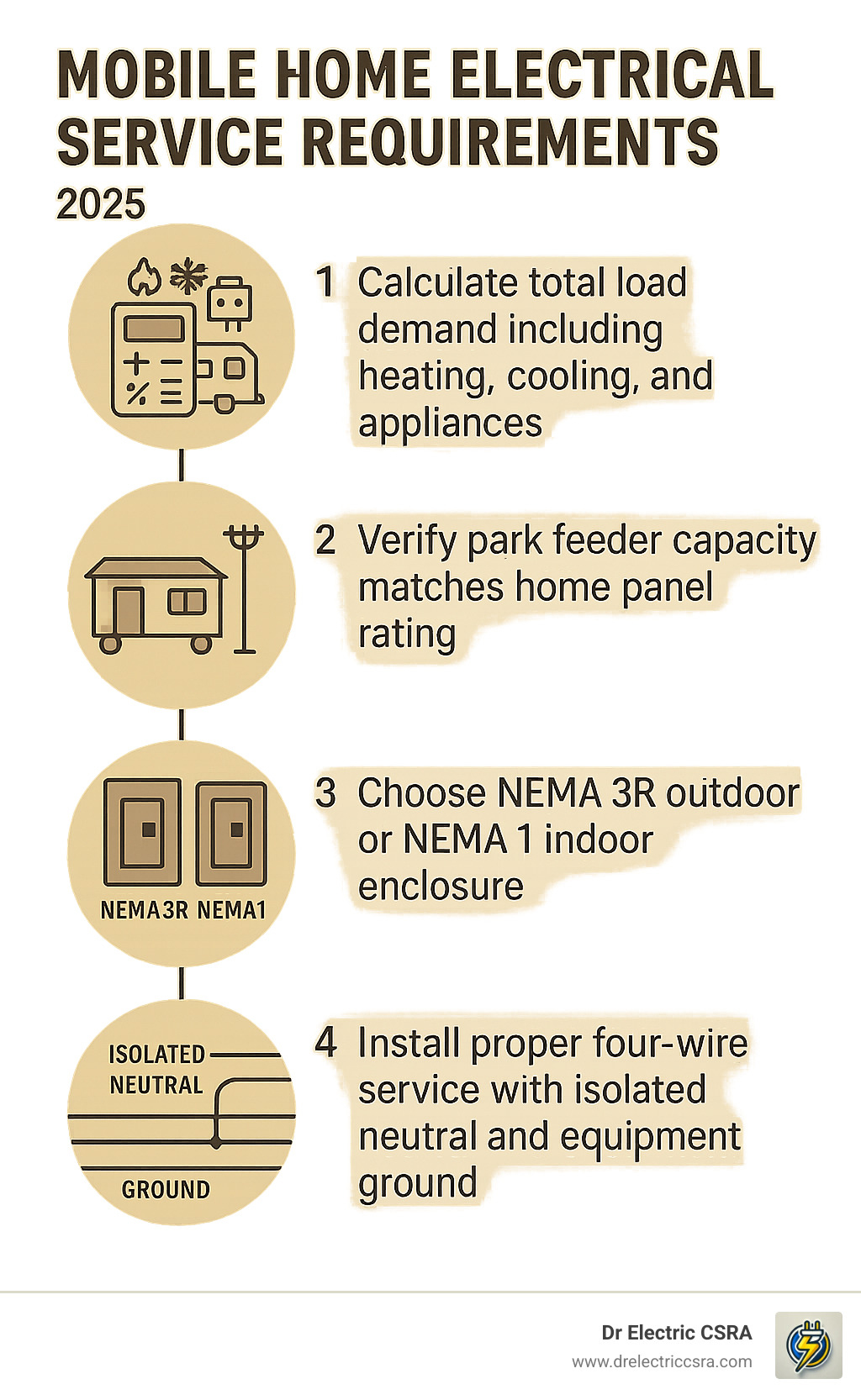
– Indoor vs outdoor rating (NEMA 1 vs NEMA 3R)
– Circuit expansion needs (8-40 spaces typical)
– Main breaker vs main lug configuration
– Copper vs aluminum bus bars
– Plug-on neutral compatibility
Modern mobile homes increasingly need 200 amp service to handle electric heat, air conditioning, and EV charging. The National Electrical Code requires minimum 100 amp service per NEC 550.32, but most newer mobile home parks provide 200 amp pedestals.
I’m Jesse Burnett, Master Electrician and founder of Dr. Electric CSRA, with over 1,200 completed residential and commercial electrical projects including numerous 200 amp breaker box for mobile home upgrades throughout the Central Savannah River Area.
Basic 200 amp breaker box for mobile home terms:
– new home electrical upgrades
– cost of new electrical panel
– new electrical panel upgrade
Why Upgrade to a 200 Amp Breaker Box for Mobile Home
Electrical demands in mobile homes have exploded over the past twenty years. Today’s mobile homes are packed with technology, from electric heat pumps to EV chargers, creating electrical loads that old panels can’t handle.
A 200 amp breaker box for mobile home installation provides the capacity boost your home needs. Consider what you’re asking your electrical system to do: electric baseboard heating pulls 60 amps, central air conditioning demands 30-50 amps, electric water heater needs 30 amps, and laundry adds another 70-80 amps for dryer and range.
You’re already pushing 200 amps with just the basics. Add an EV charger at 40-50 amps, and that old 100 amp panel doesn’t stand a chance.
Future-proofing your circuits makes financial sense. Mobile home parks are upgrading their infrastructure, with newer lots offering 200 amp pedestals as standard. We’ve helped dozens of homeowners avoid costly rewiring by upgrading before moving to new parks.
Electric heat and EV adoption is accelerating this trend. Heat pumps are becoming the go-to heating solution, and electric vehicle ownership is growing rapidly. Both require substantial electrical capacity that 100 amp panels can’t provide safely.
NEC 550.32 compliance sets the minimum at 100 amps, but that’s exactly what it is – a minimum. We always recommend 200 amp service for any mobile home planning to stay current with modern electrical needs.
Scientific research on temperature sensitivity of breakers shows that breakers don’t always trip when they should in cold weather. A 15 amp breaker might not trip until it hits 25 amps in low temperatures, creating fire hazards. This makes proper load calculation critical in mobile homes.
Voltage drop becomes a problem in undersized systems. When your panel can’t deliver adequate power, appliances work harder, run hotter, and fail sooner.
Signs Your Current Panel Is Undersized
Tripped breakers tell the biggest story. If your main breaker trips when running normal household loads, your panel needs help.
Dimming lights are another giveaway. When lights flicker every time the air conditioner kicks on, your electrical system is working overtime.
Added appliances often push older panels past their breaking point. Problems typically start after installing new hot tubs or EV chargers.
How to Confirm 200 A Is Right for You
We don’t guess – we calculate. Every upgrade starts with thorough manual load calculation following NEC Article 220.
Utility service limits can surprise homeowners. Some areas have transformer limitations that cap available power regardless of panel size.
Park feeder rating is crucial for mobile home residents. We’ve encountered parks with 60 amp feeders trying to support 200 amp homes – it doesn’t work.
Indoor vs. Outdoor 200 A Panels: Which Fits Your Setup?
Choosing between indoor and outdoor panels often comes down to your specific setup and budget. Indoor panels give you more circuit spaces for the money, while outdoor panels simplify installation by combining everything in one weatherproof package.
| Feature | Indoor Panel (NEMA 1) | Outdoor Panel (NEMA 3R) |
|---|---|---|
| Weather Protection | Requires separate enclosure | Built-in weatherproofing |
| Installation Cost | Lower | Higher due to pedestal/mounting |
| Maintenance Access | Climate controlled | Weather dependent |
| Corrosion Risk | Minimal | Higher without proper coating |
| Disconnect Location | Separate outdoor disconnect required | Integrated main breaker |
| Expansion Options | More circuit spaces available | Limited by enclosure size |
The biggest difference? Indoor panels typically offer 30-40 circuit spaces compared to just 8-16 spaces in most outdoor units.
Indoor 200 Amp Breaker Box for Mobile Home
We install more indoor panels than outdoor ones. Space efficiency tops the list – you get more room for future circuits without breaking the bank.
Climate control makes a real difference. Temperature swings of 40°F between outdoor and indoor environments age electrical components faster.
Main lug versus main breaker configuration trips up many homeowners. Indoor panels usually use main lugs because the actual disconnect sits outside per electrical code. Your indoor panel distributes power while the outdoor disconnect handles main shut-off duty.
Outdoor 200 Amp Breaker Box for Mobile Home
Outdoor panels work beautifully when you want everything visible and accessible. Utility workers love them for meter reading and service issues.
We always use pedestal mounting for outdoor installations. Hot-dipped galvanized steel pedestals resist our humid climate better than alternatives.
Corrosion resistance becomes critical. Quality panels feature G90 galvanized steel with powder-coat finishes.
Combined meter bases simplify everything for mobile homes on private lots. One enclosure handles meter, main disconnect, and circuit distribution.
Top 5 200 A Breaker Boxes Custom for Mobile Homes
After installing hundreds of 200 amp breaker box for mobile home systems across Augusta and the CSRA region, I’ve learned which panels hold up to real-world conditions. Mobile homes present unique challenges from weather exposure to transport vibration.
When selecting panels, I focus on UL listing for mobile home applications, adequate circuit spaces (minimum 8, prefer 16+), and plug-on neutral compatibility. Copper bus bars conduct better than aluminum, and solid manufacturer warranties show company confidence.
For complex upgrades requiring professional assessment, our upgrade services cover everything from load calculations to final inspection throughout the CSRA.
Square D Homeline 200 Amp Breaker Box for Mobile Home
The Square D Homeline series has become our go-to choice for mobile home installations. The plug-on neutral technology cuts installation time in half – breakers snap onto the neutral bar instead of individual pigtails.
Value pack options include panel cover and common breakers. The expandable design grows from 20 spaces up to 80 circuits.
Popular models: HOM3060M200PRBVP (30-space outdoor, $235), HOM4080M200PCVP (40-space indoor with CAFCI breakers, $306), HOM816M200FTRB (8-space outdoor with feed-through lugs, $160).
I’ve installed over 200 Homeline panels in mobile homes without a single callback.
Siemens SN Series 200 Amp Breaker Box for Mobile Home
Siemens panels deliver premium quality with innovative features. High-conductivity copper bus bars handle current better than aluminum, running cooler under heavy loads. Insta-wire neutrals and grounds speed connections, while convertible main lug/main breaker design provides installation flexibility.
Popular models: SN4060B1200 (40-space indoor main breaker, $280), EQ 200 Amp Mobile Home Panel (4-space outdoor pedestal, $221), W0202MB1200CU (200 amp outdoor enclosure, $195).
Eaton Mobile-Home Pedestal 200 A Panel
Eaton’s purpose-built mobile home panels address specific mobile home park needs. The integrated metered ring simplifies utility connections, while factory-installed BWH2200 main circuit breaker arrives ready for service.
Model MHM200P features 8 circuit/16 space interior configuration and hot-dipped galvanized G90 steel enclosure for corrosion resistance. UL 231 certification confirms mobile home safety standards.
GE PowerMark Gold Outdoor 200 A Panel
GE’s PowerMark Gold series excels in outdoor installations. Feed-through lugs solve common mobile home problems by powering external loads like well pumps directly from the main panel.
Ringless meter socket compatibility works with modern utility requirements, while heavy-duty galvanized steel construction withstands weather extremes.
Leviton Smart 200 A Load Center
For customers wanting usage monitoring, Leviton’s smart panels bring modern technology to mobile home electrical systems. Smartphone app provides real-time monitoring of individual circuits, helping identify problems before outages occur.
AFCI/GFCI breaker ready design accommodates modern safety requirements with copper bus bar construction for reliable current flow.
Installation, Code & Safety Checklist
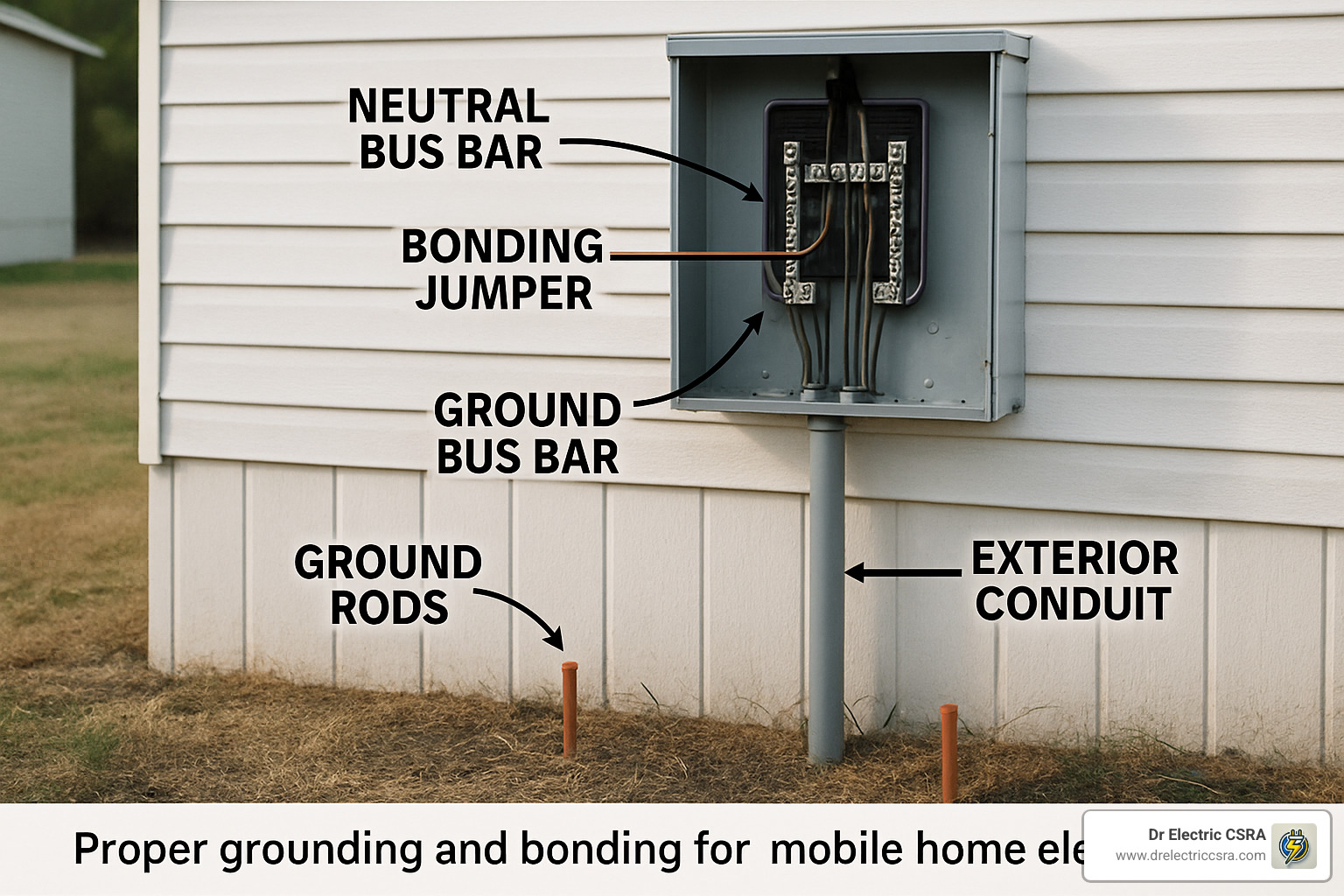
Installing a 200 amp breaker box for mobile home requires following NEC Article 550 plus local amendments. These codes exist because someone learned the hard way what happens when things go wrong.
Getting permits isn’t optional – it’s your insurance policy. We always pull permits and submit detailed load calculations. Rough-in inspection happens before energizing, followed by final inspection.
Mobile homes require four-wire feeders – two hot wires, one neutral, one equipment ground. Critical: the neutral bar must stay isolated from panel enclosure when installing subpanels.
Grounding saves lives. Every installation gets at least one eight-foot ground rod connected with number six copper wire. Multiple rods need six-foot spacing minimum.
Torque specifications matter. Main breaker connections need 35-50 foot-pounds, branch breakers require 25-30 foot-pounds. We use calibrated torque wrenches for every connection.
AFCI and GFCI protection isn’t optional – NEC requires AFCI protection for most 15 and 20 amp circuits. GFCI protection is mandatory for bathrooms, kitchen countertops, outdoor receptacles, and laundry areas.
We recommend whole-house surge protection for every 200 amp installation. Our surge protection services include both Type 1 and Type 2 devices.
DIY vs Hiring a Pro
Panel installations aren’t weekend DIY projects. They’re complex, dangerous work requiring specialized knowledge and tools.
Professional installation brings peace of mind. Licensed electricians carry insurance and provide warranties. We guarantee code compliance and stand behind every installation.
Cost comparisons: DIY materials cost $300-600. Professional installation runs $1,200-2,500 including materials. Add permit fees of $100-300, plus potential service upgrade costs of $2,000-4,000.
Georgia requires licensed electricians for panel installations. Unlicensed work voids insurance coverage and creates massive liability.
Common Mistakes to Avoid
Mismatched conductor sizing tops our dangerous errors list. Using 100 amp conductors with 200 amp panels creates fire hazards. Proper 200 amp service requires number 2/0 copper or 4/0 aluminum conductors.
Skipped load calculations cause downstream problems. We perform detailed calculations per NEC Article 220 for every installation.
Missing weather seals turn outdoor panels into water collectors. Every conduit entry needs proper weatherproof hubs and sealants.
Improper neutral-ground bonding creates shock hazards. Mobile home subpanels must keep neutral and ground separate.
Maintenance & Troubleshooting After the Upgrade
Your new 200 amp breaker box for mobile home needs regular attention to stay safe and reliable. Most maintenance tasks are simple visual checks taking just minutes.
Annual maintenance keeps panels running smoothly. Start with visual inspection for corrosion, physical damage, or overheating around connections. Brown or black marks around breakers warn of trouble brewing.
Thermal imaging reveals problems early. We use infrared cameras during maintenance services to spot hot connections before they become dangerous.
Torque verification on main connections prevents loose connections causing most panel problems. Thermal cycling loosens electrical connections over time, creating resistance and heat buildup.
Dust and debris control matters more for mobile homes. Road dust, outdoor exposure, and travel vibration create challenging conditions. We recommend annual cleaning with compressed air.
Panel labeling updates prevent confusion during maintenance and emergencies. Update the panel directory when adding circuits or changing appliances.
Quick Fixes for Nuisance Trips
Follow proper reset protocol – turn breaker completely OFF first, wait 30 seconds for thermal reset, then turn fully ON. Many people try flipping tripped breakers directly to ON, which often doesn’t work.
Branch circuit audits help identify overloaded circuits. Count devices on problem circuits, then measure actual current draw with clamp meters.
Appliance load balancing prevents voltage fluctuations confusing modern electronics. Distribute 240-volt loads across both legs of electrical service.
When to Call an Electrician
Burn marks or melted components indicate serious overheating that could start fires. Turn off main breaker and call for emergency service immediately.
Buzzing, crackling, or arcing sounds from panels mean electrical connections are failing. Burning odors are another red flag requiring immediate attention.
Repeated main breaker trips suggest problems with service entrance or major load imbalances.
Dr. Electric CSRA provides 24/7 emergency service throughout Augusta, Evans, Grovetown, Martinez, Aiken, and North Augusta for urgent electrical issues.
Frequently Asked Questions about 200 A Mobile-Home Panels
These are the questions we hear most often during 200 amp breaker box for mobile home consultations.
Do I need a main breaker or will main lugs suffice?
The answer depends on your specific setup. You need one main disconnect somewhere in your electrical system, but it doesn’t have to be inside your panel.
For mobile home parks, main lugs often work perfectly. If your home connects to a park pedestal with main disconnect (most do), your interior panel can use main lugs as a subpanel.
For private property installations, you’ll typically need a main breaker panel since it serves as service entrance equipment.
Our advice: when in doubt, go with main breaker panels. They cost only $50-75 more but provide flexibility for either configuration.
Can I upgrade from 100 A to 200 A without replacing service conductors?
Almost never. Conductor sizing matters for safety. Most 100 amp services use #4 copper or #2 aluminum conductors. For 200 amp service, you need #2/0 copper or #4/0 aluminum.
We’ve measured existing conductors on hundreds of upgrade jobs – only about 5% had oversized wiring handling 200 amps. Conductor replacement typically represents 60-70% of total upgrade cost.
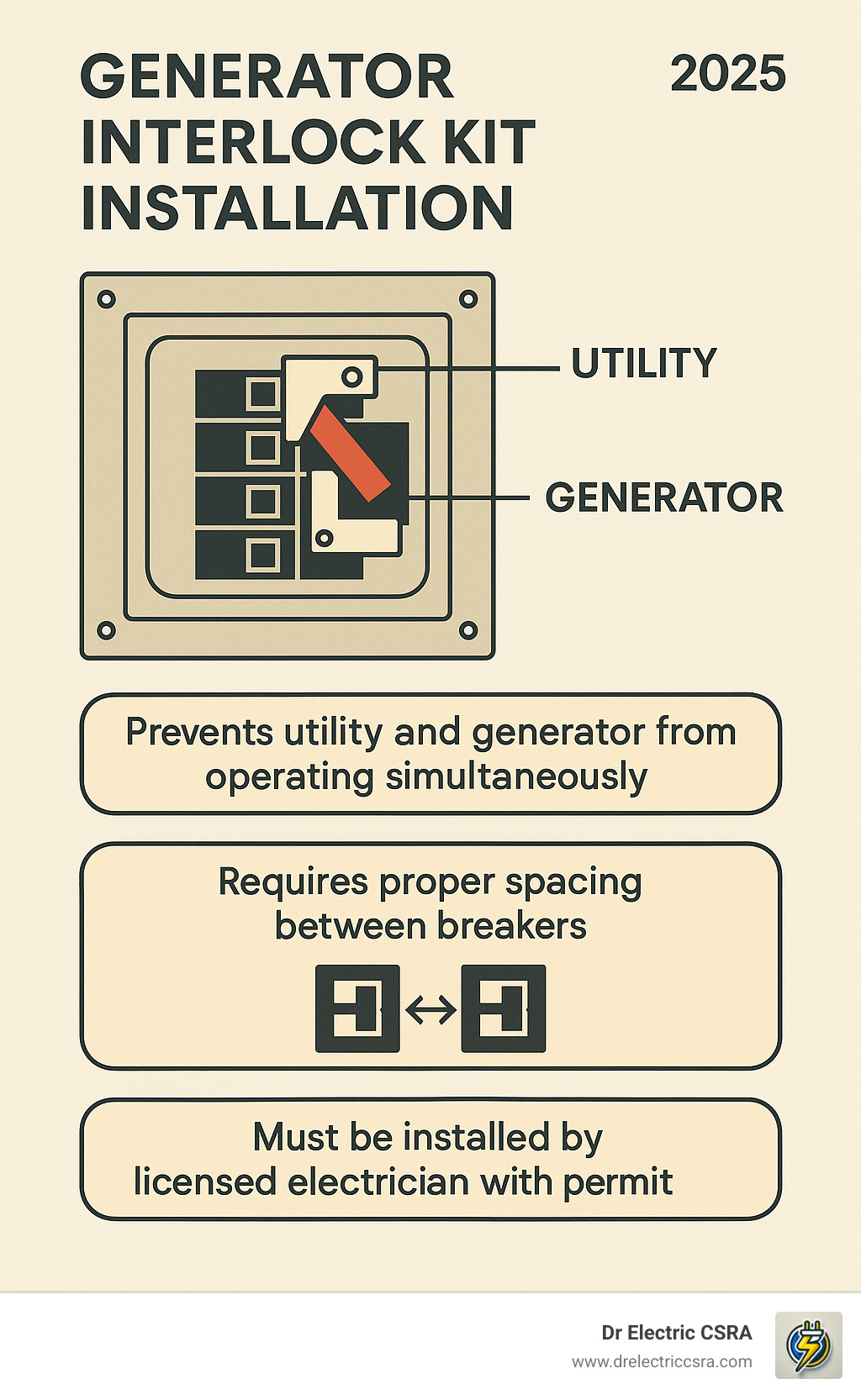
What accessories are required for generator interlock or solar backfeed?
For generator connections, you need mechanical interlock kits preventing utility service and generator from operating simultaneously. This protects utility workers from dangerous backfeed.
Generator interlock installation requires electrical permits and inspection. We handle this process because improper installation can be deadly.
Solar backfeed requirements are more complex and involve utility company coordination. You’ll need production meters for net metering, rapid shutdown disconnects, and separate AC/DC disconnects.
Conclusion
Upgrading to a 200 amp breaker box for mobile home isn’t just about meeting today’s electrical needs – it’s about preparing for tomorrow’s possibilities. After installing hundreds of these panels throughout Augusta and surrounding areas, I’ve seen how the right electrical upgrade transforms home safety and functionality.
Modern mobile homes with electric heat, central air, and today’s appliances easily exceed 100 amp capacity. Add EV chargers or solar systems, and you’re looking at serious electrical demands older panels can’t handle safely.
Your best bet for value and reliability? The Square D Homeline series continues impressing customers with plug-on neutral design and rock-solid performance. For outdoor installations in mobile home parks, their weather-resistant models excel.
Indoor panels make sense when you need maximum circuit spaces and climate protection. Outdoor panels shine when you want everything in one neat package – meter, disconnect, and distribution together.
What really matters: code-compliant installation by licensed professionals. I’ve seen too many DIY disasters costing more to fix than doing it right initially. Insurance companies don’t mess around with electrical work, and neither should you.
The investment pays for itself through improved safety, better resale value, and peace of mind. Your family deserves reliable power that won’t leave you in the dark or dealing with electrical fires.
At Dr. Electric CSRA, we’ve built our reputation on getting these upgrades right the first time. Our licensed electricians know mobile home electrical systems inside and out, backing every installation with our commitment to quality and safety.
Ready to upgrade your electrical service? We’re here to help with everything from initial assessment to final inspection. Our 24/7 emergency service means you’re never alone when electrical issues arise.
For comprehensive electrical services including panel upgrades, visit our residential electrical page to learn more about our full range of services and schedule your consultation today.