
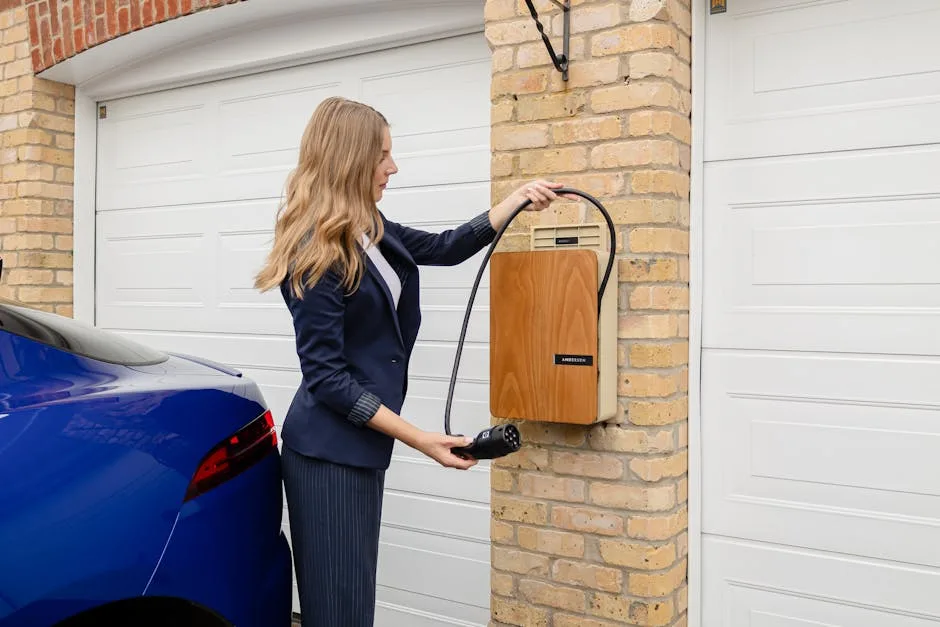
Powering Your EV Future: Finding Expert Installation in Your Area
EV charging installation near me is the top search for new electric vehicle owners looking to enjoy convenient, cost-effective home charging. If you’re looking for qualified local installers, here’s what you need to know:
- Average installation cost: $750-$1,500 for Level 2 chargers
- Timeline: Typically 3-6 weeks from quote to completion
- Required: Licensed electrician with EV certification
- First step: Get a load calculation to ensure your electrical panel can handle the charger
- Permits: Required in most jurisdictions (installer should handle)
The electric vehicle revolution is changing how we think about transportation and energy. As more Americans switch to EVs, having reliable home charging isn’t just a convenience—it’s essential. While all electric vehicles come with a basic Level 1 charger that plugs into standard outlets, these can take over 20 hours for a full charge. That’s why most EV owners quickly look for professional installation of Level 2 charging stations, which can fully charge your vehicle in just 3-4 hours.
Finding the right local installer matters. Your home’s electrical system needs proper assessment, and installation must comply with local codes and permit requirements. A qualified electrician will evaluate your electrical panel capacity, recommend the appropriate charger type, and ensure everything is installed safely and efficiently.
Learn more about EV charging installation near me:
Why “Near Me” Matters for EV Owners
When searching for “EV charging installation near me,” you’re doing more than just finding a convenient service provider. You’re connecting with professionals who understand local electrical codes, have relationships with area inspectors, and know the specific requirements of your utility company.
Local electricians like our team at Dr. Electric CSRA are familiar with the unique challenges of installing EV chargers in Augusta, Evans, Grovetown, Martinez, and throughout the CSRA region. We understand the local permit processes, inspection schedules, and utility requirements that can vary significantly between jurisdictions.
Beyond regulatory compliance, having a local installer means faster response times when you need support, knowledge of regional rebate programs, understanding of local climate considerations, community accountability through reputation, and support for the local economy rather than national chains.
Understanding Charger Types & Electrical Requirements
Deciding which EV charger is right for your home isn’t just about buying the most expensive option. It’s about finding the perfect match for your daily routine, your home’s electrical capacity, and your future plans.
Level 1 Charging
The basic charging cord that came with your electric vehicle is your Level 1 charger, designed to plug into any standard 120-volt outlet in your home.
Level 1 charging delivers only about 3-5 miles of driving range for each hour of charging. While there’s no installation required, this method is both slow and less energy-efficient, which means you’ll pay more per mile charged over time.
Level 2 Charging
This is where most EV owners land. Level 2 chargers use 240-volt power—the same type that runs your clothes dryer or oven—and can charge your car 5-7 times faster than Level 1.
With a Level 2 charger, you’ll gain about 25-30 miles of range per hour of charging. This means most EVs can fully recharge overnight in 3-7 hours, making it perfect for daily drivers. According to our experience with hundreds of installations around Augusta, over 95% of EV charging happens at home, making Level 2 the sweet spot for convenience and practicality.
Level 2 installation requires a licensed electrician like our team at Dr. Electric CSRA, as it needs a dedicated circuit and proper safety measures.
DC Fast Charging (Level 3)
DC Fast Charging can charge your EV to 80% in just 15-60 minutes by delivering direct current straight to your vehicle’s battery.
While incredibly convenient on road trips, these systems require industrial-level electrical service that’s not practical for home installation. With costs starting around $20,000 before installation, these are primarily found at commercial charging stations.
| Charger Type | Voltage | Charging Speed | Installation Requirements | Typical Cost | Best Use Case |
|---|---|---|---|---|---|
| Level 1 | 120V AC | 3-5 miles/hour | None (plugs into standard outlet) | $0 (comes with vehicle) | Occasional drivers, PHEVs |
| Level 2 | 240V AC | 25-30 miles/hour | Professional installation with dedicated circuit | $750-$1,500 installed | Primary home charging solution |
| DC Fast (Level 3) | 400-900V DC | 80% in 15-60 minutes | Industrial power connection, not for homes | $20,000-$50,000+ | Commercial applications only |
Choosing the Right Charger for Your Lifestyle
Consider your daily driving needs first. If you’re commuting less than 30 miles round trip, even a Level 1 charger might work. For those driving 50+ miles daily (common in the Augusta area), Level 2 charging becomes essential.
Your vehicle’s battery size matters too. Newer EVs with 300+ mile ranges have bigger batteries that would take days to fill on Level 1 charging.
Think about your charging window. Most of our clients charge overnight during off-peak hours, but if you work shifts or need flexibility, a higher-amperage Level 2 charger gives you more options.
Future-proofing is something to consider. If you’re thinking about adding a second EV or upgrading to a longer-range model in the next few years, investing in a higher-amperage Level 2 charger (40-48 amps) makes financial sense now rather than upgrading later.
Finding EV Charging Installation Near Me: Step-by-Step Guide
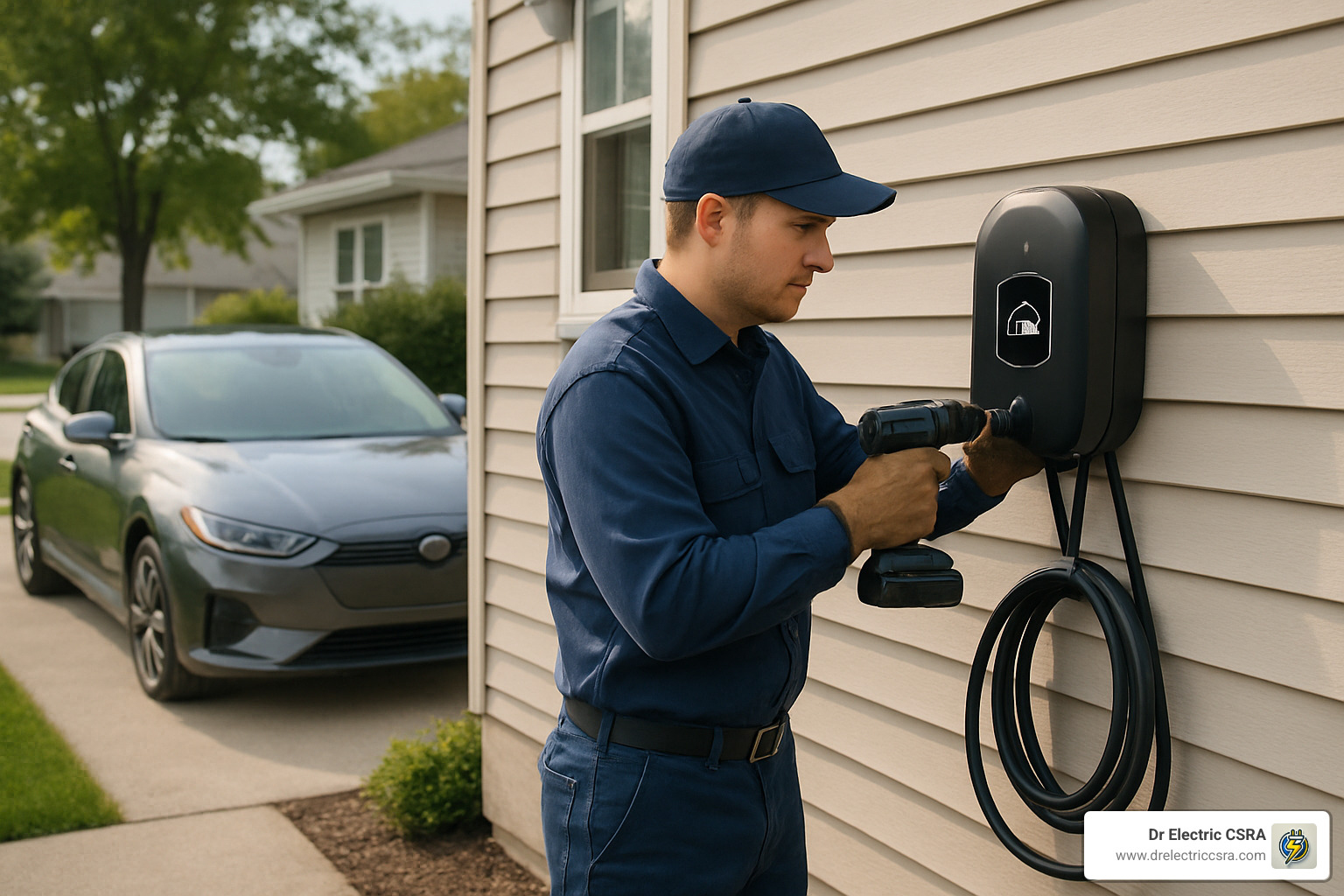
Finding the right professional for your EV charging installation near me doesn’t have to be complicated. Here’s how to find someone who’ll do the job right the first time:
Start by checking for proper electrical credentials – this is non-negotiable. Here in Georgia and South Carolina, your installer needs a valid electrical contractor license and proper insurance coverage. At Dr. Electric CSRA, our team has specialized EV charging training for installations throughout Augusta, Evans, Grovetown, Martinez, and the entire CSRA region.
Next, look beyond general electrical skills to EV-specific experience. A good installer should understand load calculations specifically for EV charging, know different charger brands, and be familiar with the National Electrical Code Article 625 (the section dedicated to EV charging equipment). Ask potential installers how many chargers they’ve installed and which brands they work with regularly.
A thorough site survey is crucial. Any installer worth their salt will want to visit your home before giving you a quote. During this visit, they should evaluate your electrical panel’s capacity, measure the distance from your panel to where you want the charger installed, check out mounting options, and talk through your specific charging needs.
Once you’ve had your site survey, request detailed written quotes. A good quote breaks down equipment costs, labor, permit fees, inspection costs, and notes any additional work that might be needed like panel upgrades or trenching for detached garages. Most EV charging installation near me projects range from $750 to $1,500, though costs can increase if your electrical panel needs upgrading.
Don’t forget to clarify who’s handling permits! Ask directly: Who will obtain the necessary permits? Who schedules the required inspections? Is the permit cost included in your quote?
More info about Car Charger Installation
Questions to Ask When Hiring for “EV Charging Installation Near Me”
When interviewing potential installers, ask about certifications: “Are you certified to install this specific brand of charger?” and “What specialized training have your technicians received?”
Insurance matters too, so ask for proof of liability insurance and workers’ compensation. A professional installer should have both.
Regarding permits and code compliance, find out who handles pulling permits and whether they’re familiar with local electrical codes for EV installations.
Don’t skip warranty questions: “What warranty do you provide on labor?” and “How do you handle service calls if issues arise after installation?”
Finally, gauge their technical experience with questions like “How many EV chargers has your company installed?” and “Have you worked with my vehicle model before?”
How to Compare Quotes for EV Charging Installation Near Me
When comparing quotes, check for scope detail. Vague descriptions like “install EV charger” don’t cut it. Better quotes break down electrical panel work, conduit and wiring installation, charger mounting, and testing procedures.
A transparent quote separates parts costs from labor costs. This breakdown helps you understand exactly what you’re paying for.
Watch out for travel fees and additional charges that might be hiding in the fine print. Some installers tack on separate fees for permit acquisition, inspection scheduling, weekend installation, or extended warranty options.
Timeline commitments matter too. A professional quote should tell you when installation can begin after approval, how long the actual installation will take, and when you can expect the final inspection.
Finally, review the payment terms. Look for reasonable conditions that protect both you and the installer – typically a 30-50% deposit, a clear payment schedule, and final payment due after successful inspection.
Budget, Incentives & Permits: What Really Affects the Bottom Line
When researching EV charging installation near me, understanding the true cost requires looking beyond the basic installation price.
Hardware vs. Labor Costs
Most homeowners spend between $400-$1,000 on the actual Level 2 charging station, depending on features like Wi-Fi connectivity, power output, and weatherproofing. The electrical materials – wire, conduit, breakers – typically add another $100-$300, with mounting hardware running $50-$150.
On the labor side, expect to pay $400-$800 for a straightforward installation when your electrical panel has available capacity. Most electricians charge $50-$100 per hour, with typical installations taking 3-5 hours to complete properly.
Where costs can climb quickly is when your home needs additional work. Panel upgrades might add $1,000-$2,500 if your electrical service can’t handle the new load. And if you’re installing in a detached garage? Trenching costs typically run $10-$20 per linear foot to safely run power underground.
Panel Upgrades and Special Situations
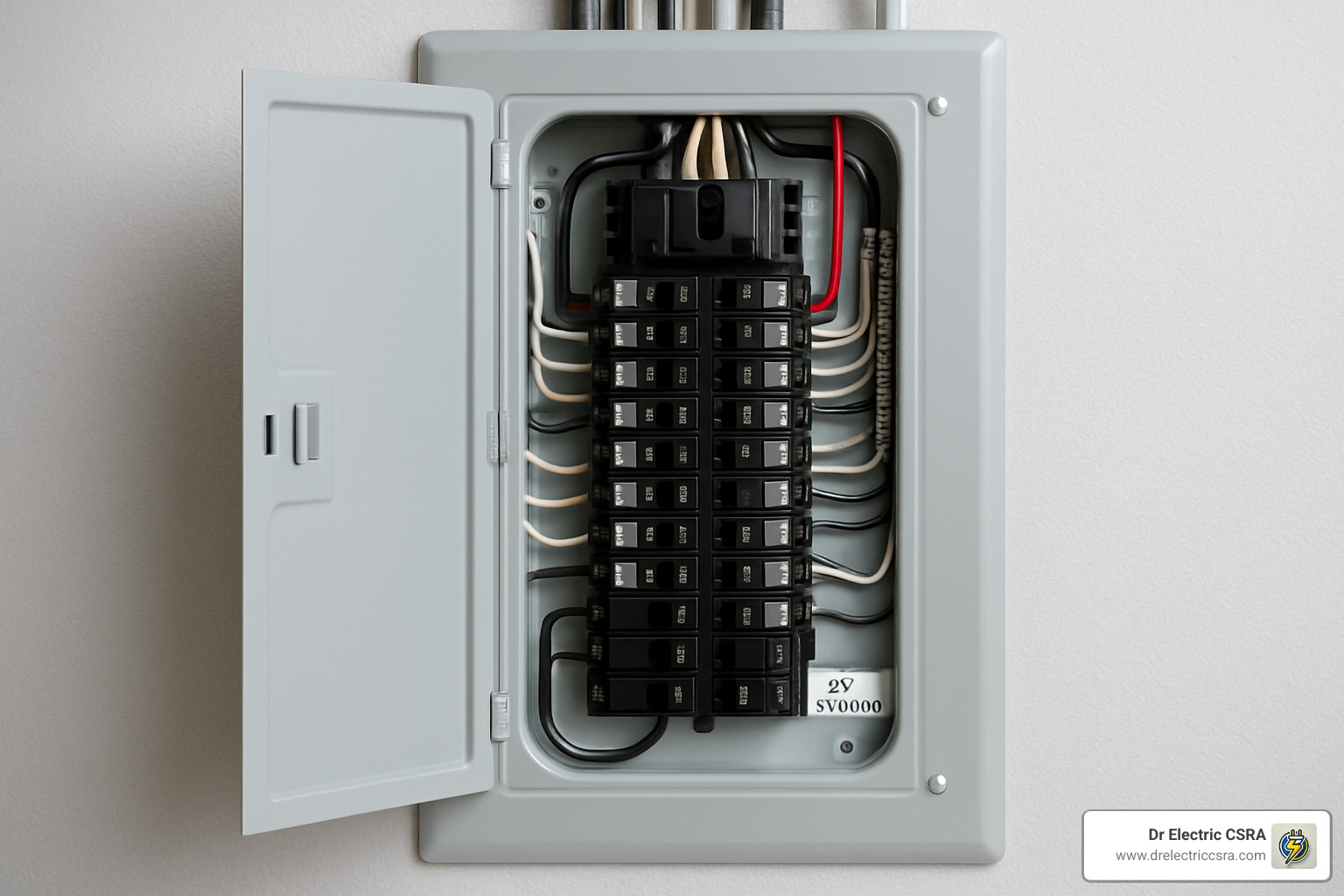
Many homes in Augusta and the CSRA, especially those built before 2000, weren’t designed with electric vehicles in mind. Your home might need an electrical panel upgrade if your existing panel is already at or near capacity, you have an older 100-amp service, or your panel has no available spaces for new circuit breakers.
Inspection Fees and Permit Costs
All proper EV charger installations require permits and inspections. These aren’t just bureaucratic hoops – they ensure your installation is safe and won’t cause electrical fires or damage your vehicle.
Electrical permits typically cost $50-$200 depending on your local jurisdiction. Inspection fees are usually included in the permit cost, but may require multiple visits if corrections are needed.
Utility Rebates and Tax Credits
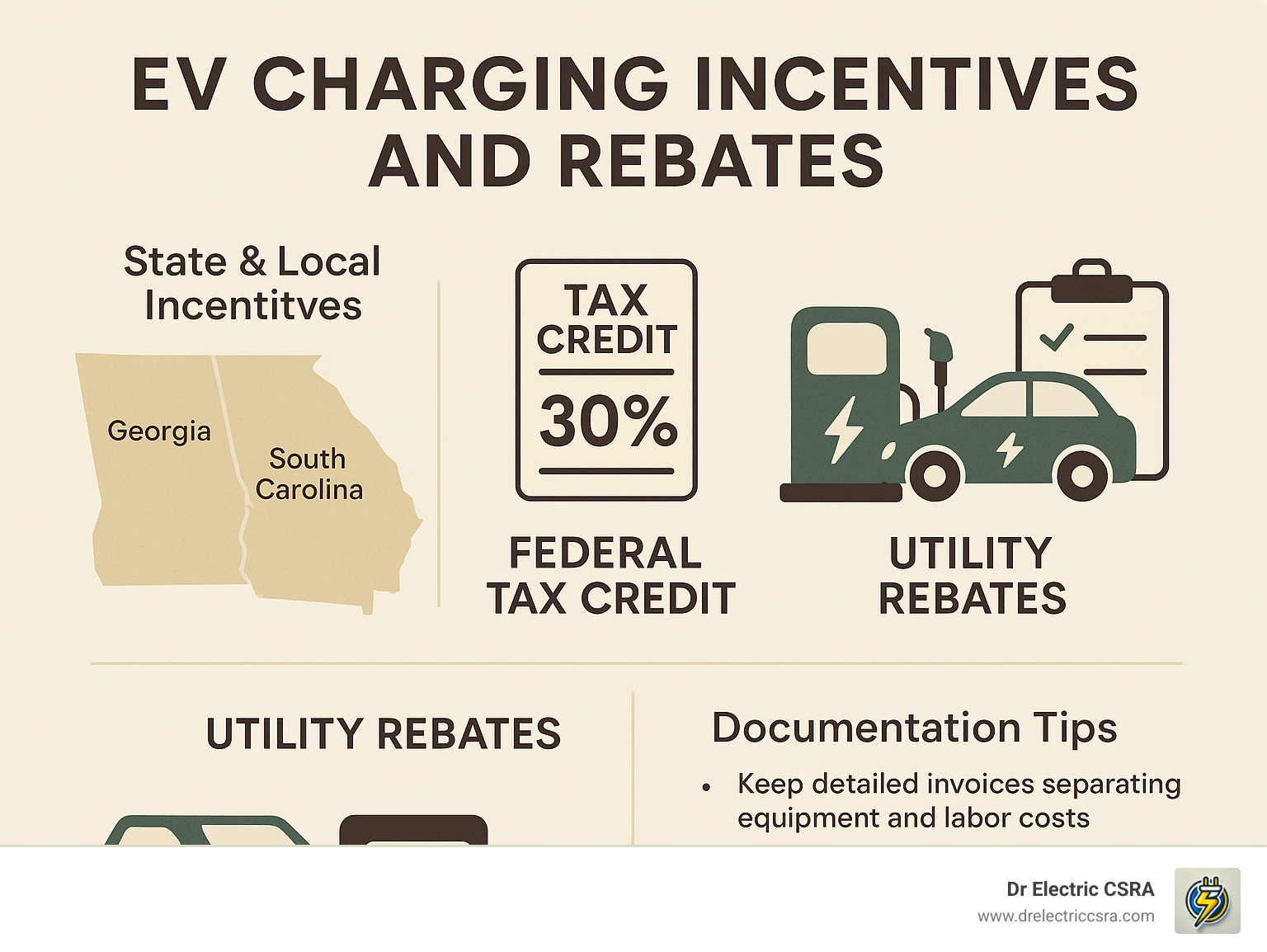
The federal government currently offers a tax credit worth 30% of your hardware and installation costs (up to $1,000) for home chargers under the Inflation Reduction Act. If you’re installing at a business property, the credits can go even higher.
Many utilities offer additional rebates of $250-$1,000 for Level 2 charger installations. Georgia Power has an excellent EV program, and several South Carolina utilities offer similar incentives.
More info about Residential Electrical
Tapping Federal, State & Utility Rebates
To maximize your savings, you’ll need to understand how these various programs work together. The federal tax credit (IRS Section 30C) covers 30% of both hardware and installation costs up to $1,000, but requires filing IRS Form 8911 with your tax return. Be sure to save all your receipts and documentation!
For local rebates, Georgia Power offers up to $700 back on residential EV charger installations, while Dominion Energy South Carolina provides rebates up to $1,000. Most require you to apply either before installation or shortly after, and many specify certain “smart” charger models that qualify.
Do You Need a Permit & Who Handles It?
Yes, you absolutely need permits for EV charger installation – and no, you shouldn’t have to deal with the paperwork yourself.
Permits aren’t just red tape; they’re critical safety measures. EV chargers involve high-voltage electrical work that, if done improperly, can create serious fire hazards. Local jurisdictions require permits to ensure National Electrical Code (NEC) compliance, and your homeowner’s insurance may not cover damage from unpermitted electrical work.
Professional installers like our team at Dr. Electric CSRA should handle obtaining all required permits. We’re familiar with the specific requirements of each local Authority Having Jurisdiction (AHJ), and we schedule all required inspections.
Timeline, Installation Day & Future-Proofing Your Home
When planning for your EV charging installation near me, understanding the timeline and what to expect on installation day helps ensure a smooth process.
Typical Installation Timeline
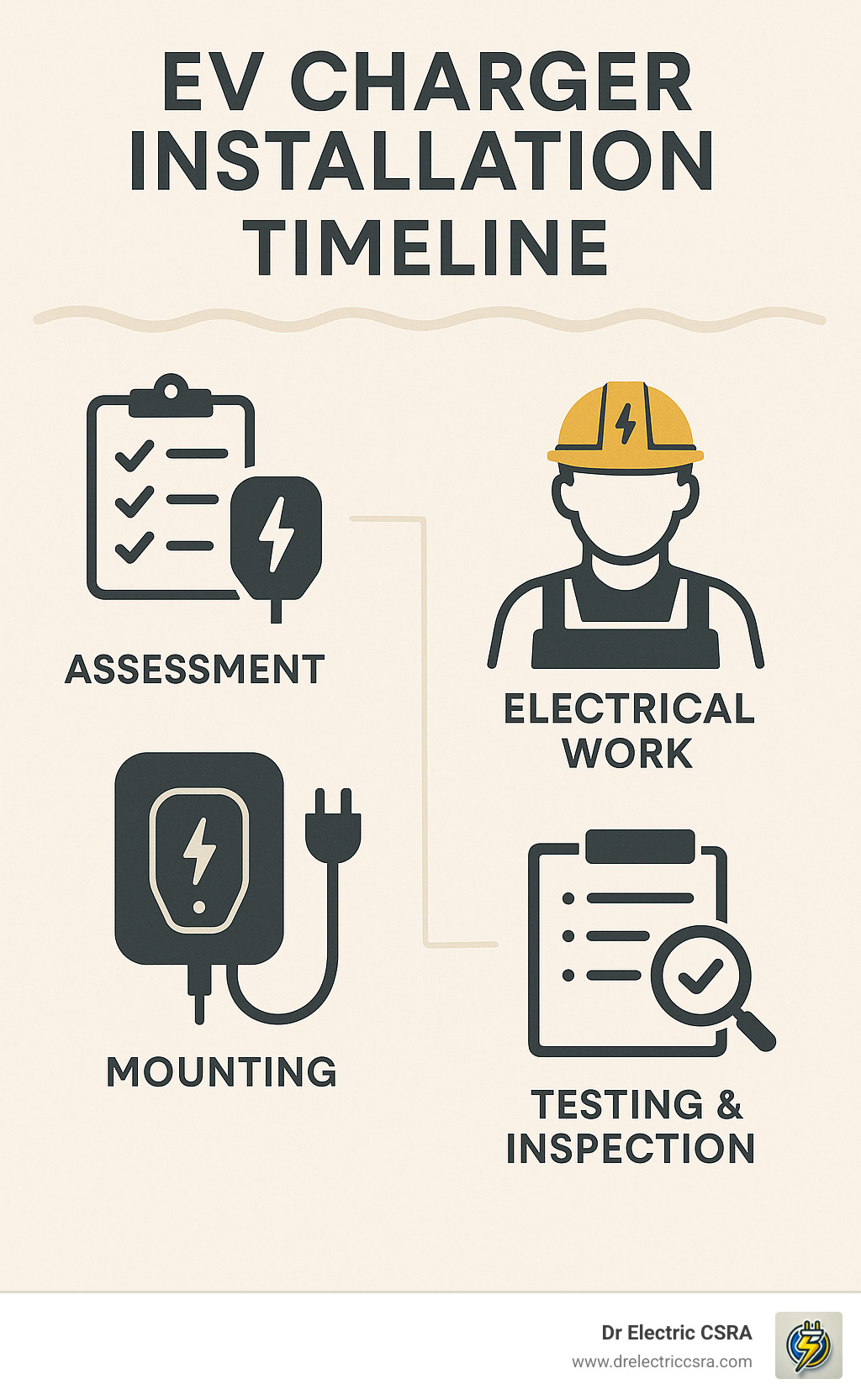
From initial inquiry to completed installation, here’s what to expect:
1. Initial Contact and Consultation (1-3 days)
- Phone or online inquiry
- Basic information gathering
- Scheduling of site assessment
2. Site Assessment and Quote (3-7 days)
- On-site evaluation of electrical system
- Discussion of charging needs and options
- Detailed quote provided
3. Quote Acceptance and Scheduling (1-2 days)
- Review and acceptance of proposal
- Deposit payment
- Installation date scheduling
4. Permit Application (7-14 days)
- Drawings and documentation preparation
- Permit submission
- Waiting for approval
5. Installation Day (1 day for standard installations)
- Circuit installation
- Charger mounting and wiring
- Initial testing
6. Final Inspection and Activation (3-7 days)
- Scheduling inspection with local authorities
- Final walkthrough and customer training
- System activation after approval
Overall, you can expect the process to take 3-6 weeks from initial contact to fully operational charging station, with the actual installation work typically completed in a single day for standard setups.
What Happens on Installation Day
When our Dr. Electric CSRA technicians arrive for your installation, here’s what you can expect:
- Arrival and Setup: Introduction and review of installation plan, protection of work areas
- Electrical Panel Work: Power shutdown (if necessary), installation of new dedicated circuit breaker
- Running Wiring and Conduit: Installation of conduit pathways, pulling appropriate gauge wiring
- Charger Mounting: Secure mounting of charging station, connection of wiring to unit
- Testing and Commissioning: Power restoration, initial testing of circuit, charger functionality verification
- Customer Orientation: Walkthrough of operation, safety guidelines review, maintenance recommendations
For standard installations, the entire process typically takes 4-8 hours depending on complexity.
Future-Proofing Your Home for EV Technology
When investing in an EV charger installation, consider these future-proofing strategies:
- Install higher capacity than currently needed (a 50-amp circuit even if your current charger only needs 32 amps)
- Consider smart chargers that can adjust charging rates based on home energy usage
- Plan for multiple vehicles with dual-port chargers or strategic placement
- Prepare for solar integration if you’re considering solar panels
- Ensure compatibility with future battery storage systems
At Dr. Electric CSRA, we help our customers think beyond their immediate needs, designing EV charging installations that can grow with changing technology.
More info about Home EV Charger vs Public Charging
Maintaining Your Charger for Years of Safe Use
Once your EV charger is installed, proper maintenance ensures years of safe, reliable operation:
- Regular Visual Inspections: Check for physical damage to the charging cable, loose connections, or signs of overheating
- Electrical Testing: Have a licensed electrician check connections and grounding annually
- Software Updates: Keep smart chargers updated with the latest firmware
- Cleaning and Protection: Keep the charging connector clean and protected from dirt
- Cable Care: Properly coil and store the charging cable when not in use
According to the U.S. Department of Energy’s Alternative Fuels Data Center, proper maintenance not only extends the life of your equipment but also ensures optimal charging efficiency and safety.
Frequently Asked Questions about Local EV Charger Installations
How long does a standard installation take from quote to final inspection?
From the moment you decide to install an EV charger to the day you’re happily charging your vehicle, you’re looking at about 3-6 weeks for the complete process.
The journey typically unfolds like this: After your initial assessment (1-2 days), we’ll prepare your quote and once you give us the green light (another 1-3 days), we dive into the paperwork. Permit applications usually take 1-2 weeks to process – this varies depending on how busy the local offices are in Augusta and surrounding areas.
If you need specific equipment ordered, that might add 3-10 days to the timeline. But here’s the good news – the actual installation at your home usually takes just one day! Our technicians can typically complete the physical work in 4-8 hours for standard setups.
The final step is scheduling and completing the inspection, which generally takes 1-2 weeks depending on inspector availability.
Can I supply my own charger, or must I buy through the installer?
You absolutely can supply your own charger – in fact, many of our customers do exactly that! When you provide your own equipment, you get to choose the exact model with all the features you want.
If you’re going this route, just make sure your chosen charger is UL-listed or has similar safety certification. You’ll also want to verify it’s compatible with your specific vehicle and that the amperage rating aligns with your electrical setup. Before installation day, we’ll need to know the make and model, amperage requirements, whether it’s hardwired or plug-in, and mounting specifications.
That said, if researching chargers sounds overwhelming, we’re happy to recommend and supply high-quality options as part of our service. Many customers appreciate this one-stop solution, especially when they’re already juggling the many details of EV ownership.
What warranty and post-install support should I expect?
When you invest in an EV charging installation near me, the relationship shouldn’t end once our technicians pack up their tools.
At Dr. Electric CSRA, we stand behind our work with a comprehensive 1-year workmanship warranty. This covers all aspects of our installation including wiring, connections, mounting, and circuit work.
Your charging equipment itself typically comes with a manufacturer’s warranty ranging from 1-3 years, with premium models sometimes offering up to 5 years of coverage. These warranties generally protect you against defects in the electronic components, charging cable, connector, and physical housing.
We provide initial troubleshooting by phone, on-site service for warranty issues, and technical guidance for operation questions or firmware updates. We understand that your ability to charge your vehicle isn’t just a convenience – it’s your daily life. That’s why we offer 24/7 emergency support for all our electrical installations, including EV chargers.
Conclusion
Bringing an electric vehicle home isn’t just about embracing new technology – it’s about reimagining how energy flows through your daily life. Finding qualified EV charging installation near me professionals transforms this vision into reality, ensuring your charging setup is safe, efficient, and built to last.
Here at Dr. Electric CSRA, we’ve witnessed how home charging has become the heartbeat of the EV ownership experience throughout Augusta, Evans, Grovetown, Martinez, and the entire CSRA region. Our team doesn’t just install electrical equipment – we help families gain energy independence while contributing to cleaner air in our community.
When you choose us for your EV charging installation near me, you’re getting more than technical expertise. You’re partnering with a local team that stands behind our work with:
- Safety as our foundation – Every installation meets or exceeds National Electrical Code requirements because your family’s safety isn’t negotiable.
- Service from start to finish – From the moment we assess your electrical panel until we’re showing you how to use your new charger, we handle every detail, including those tricky permits.
- Forward-thinking installations – We design your system to grow with you, whether that means accommodating a second EV or integrating with future solar panels.
- Local know-how that matters – Our familiarity with local utility programs, rebates, and code requirements means smoother installations and often substantial savings.
- Support when you need it most – With 24/7 emergency service, you’ll never be left wondering who to call if something isn’t working right.
The switch to electric vehicles represents more than just changing how you fuel your car – it’s about taking control of your energy future. By choosing local experts for your charging station, you’re investing in both your home’s infrastructure and our shared community.
Ready to power up your home for the electric revolution? Contact us today for a consultation and join the growing family of Dr. Electric CSRA customers who are charging smarter, faster, and safer – right where they live.