
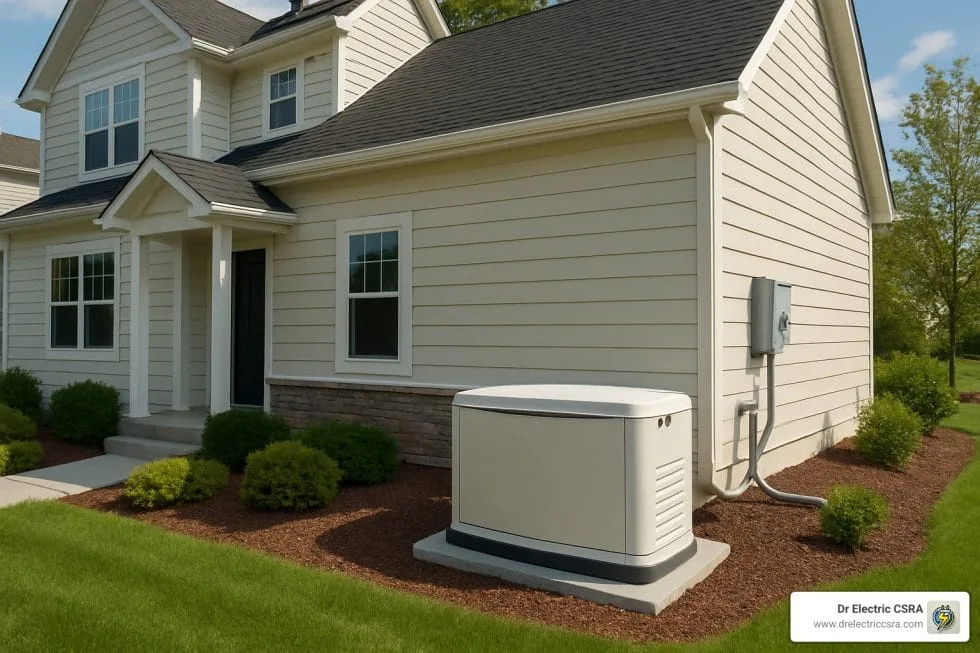
Understanding Full House Generator Prices: What to Expect
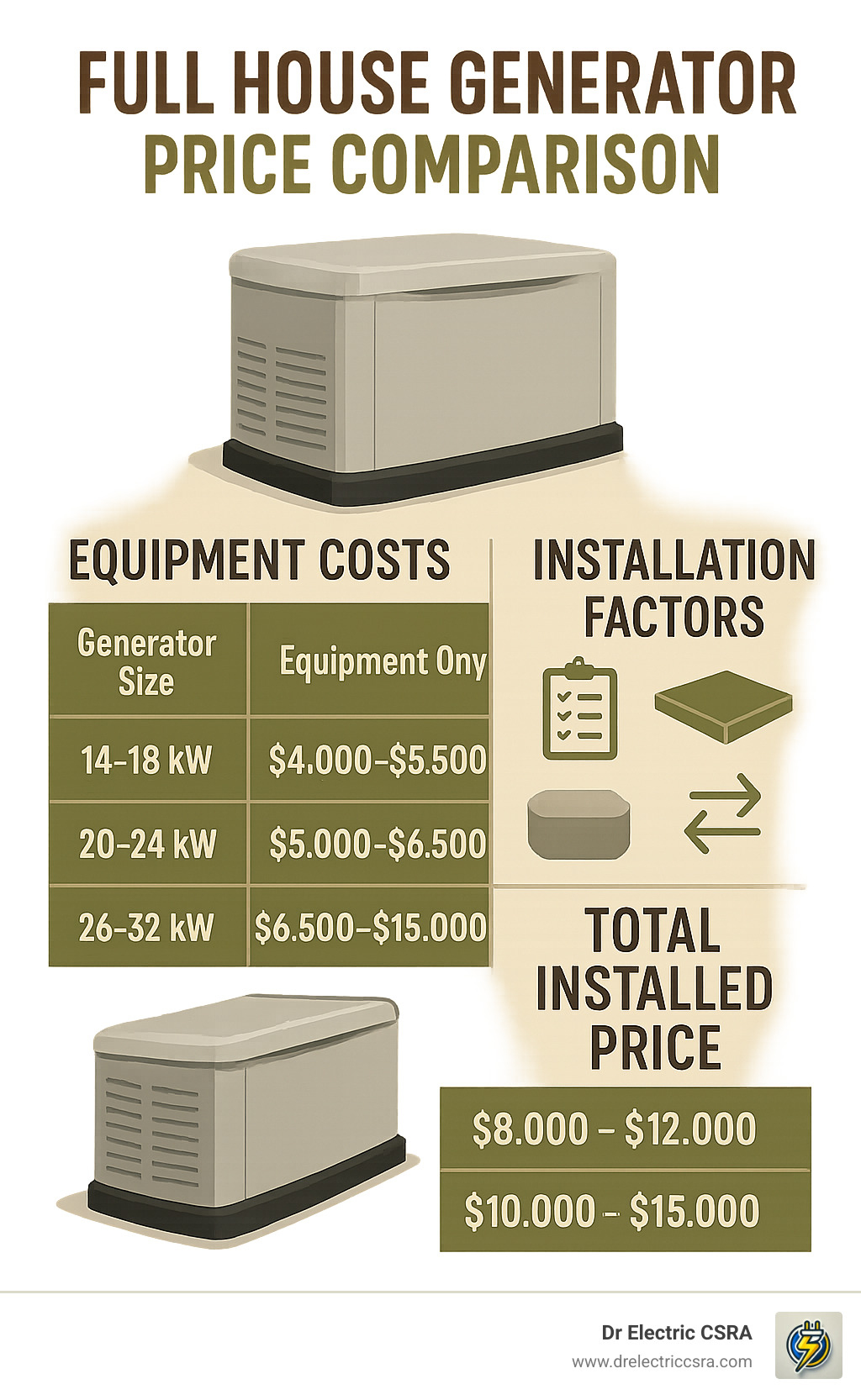
A full house generator price typically ranges from $5,000 to $25,000 installed, depending on size and features. Here’s a quick breakdown of what you can expect to pay:
| Generator Size | Equipment Only | Total Installed |
|---|---|---|
| 14-18 kW | $4,000-$5,500 | $8,000-$12,000 |
| 20-24 kW | $5,000-$6,500 | $10,000-$15,000 |
| 26-32 kW | $6,500-$15,000 | $12,000-$25,000 |
When the power goes out, life doesn’t stop. Food spoils, basements flood, and work grinds to a halt. That’s why many homeowners are considering whole-house generators – but the sticker shock can be real.
The average cost to install a whole-house generator is approximately $17,000, though prices typically range from $5,000 to $25,000 depending on size, features, and installation complexity. This investment isn’t just about the generator unit itself – installation, transfer switches, concrete pads, permits, and fuel considerations all contribute to the final price tag.
Why such a wide range? Because your home’s specific needs determine everything from the generator’s size to the fuel type and installation requirements. A 1,500 square foot home might need a 13-16 kW generator, while a 3,000+ square foot home could require 20+ kW to keep everything running smoothly during an outage.
I’m Jesse Burnett, Master Electrician and founder of Dr. Electric CSRA, and I’ve personally installed hundreds of whole-house generators, giving me insight into full house generator price considerations across various home sizes and power needs. My experience with full house generator prices spans from basic essential-circuit systems to comprehensive whole-home solutions that keep every appliance running during extended outages.
Full house generator price terms to remember:
– Whole House Transfer Switch Installation Made Simple
– installing transfer switch for whole house generator
Whole House Generator 101: Definition, Types & Sizing Basics
Ever wonder what happens when you flip a switch during a power outage and the lights actually come on? That’s the magic of a whole house generator. Unlike those portable units you drag out of the garage and hook up with extension cords, a whole house generator (also called a standby generator) sits permanently outside your home, connected directly to your electrical panel. When the neighborhood goes dark, it springs to life automatically – often before you’ve even had time to find the flashlight.
“The difference between a portable generator and a whole house standby system is like comparing a flashlight to your home’s lighting system,” says our lead technician at Dr. Electric CSRA. “One helps you steer in the dark; the other makes you forget the power is even out.”
These powerhouses run on natural gas or liquid propane, so you’re not out refilling gas cans during storms. They’re measured in kilowatts (kW), with each kilowatt providing 1,000 watts of power. Choosing the right size isn’t just about square footage – it’s about understanding what you need to keep running when everything else stops.
To figure out your home’s power needs, we start with a simple but crucial load calculation:
- Identify the essential appliances and electronics you can’t live without
- Consider both running and starting wattage (those startup surges can be 2-3 times higher!)
- Add up the total power needed
- Include a 20% buffer for future gadgets or appliances
Today’s smarter generators include load management systems that can juggle which circuits get power and when. This clever technology lets you install a smaller (and less expensive) generator while still powering your entire home – just not everything simultaneously.
How Generator Size Relates to Home Square Footage
While your home’s size isn’t the only factor in picking a generator, it’s a good starting point. Here’s a friendly guide:
- 1,000-1,500 sq ft home: 7-10 kW generator
- 1,500-2,500 sq ft home: 12-18 kW generator
- 2,500-3,500 sq ft home: 18-25 kW generator
- 3,500+ sq ft home: 25-48 kW generator
But square footage only tells part of the story. What’s inside those square feet matters tremendously. A gas-heated home needs much less backup power than an all-electric one. Your HVAC system is usually the biggest power consumer, so it deserves special attention.
One of our technicians recently shared: “I once had a client with a modest 1,800 sq ft home who needed a 22kW generator because they had two heat pumps. Meanwhile, a 3,000 sq ft home with gas heat and a gas water heater was fine with a 16kW unit.”
Think ahead when sizing your generator. Planning to add central air or an electric vehicle charger in the next few years? Factor those into your calculations now – it’s much easier than upgrading your generator later.
Portable, Partial, or Full Coverage?
When the lights go out, you have three main backup options:
Portable Generator offers the lowest upfront cost ($500-$2,000) but requires manual setup every time, extension cords snaking through your house, regular refueling (often in terrible weather), and typically only powers a few essential items.
Partial-Home Standby Generator provides a middle-ground solution ($3,000-$12,000 installed) that keeps essential circuits powered automatically – think refrigerator, heating system, sump pump, some lights, and a few outlets.
Full-Home Standby Generator delivers the complete package ($10,000-$25,000 installed), powering your entire home as if nothing happened. This is the “what outage?” experience.
Many families find that a partial-home solution hits the sweet spot of affordability and convenience. By focusing on what our service manager calls “survival loads,” you can often slash your full house generator price by 30-40% while still maintaining comfort and safety during outages.
“Most families don’t need to run every appliance during an outage,” he explains. “The dishwasher can wait, but nobody wants their basement flooded or their food spoiled.”
Whatever option fits your needs and budget, proper installation isn’t just important – it’s essential for safety. An incorrectly installed generator can create dangerous “backfeed” that puts utility workers’ lives at risk. That’s why professional installation by licensed electricians isn’t just recommended – it’s required by code.
More info about Residential Electrical
The Full House Generator Price Spectrum
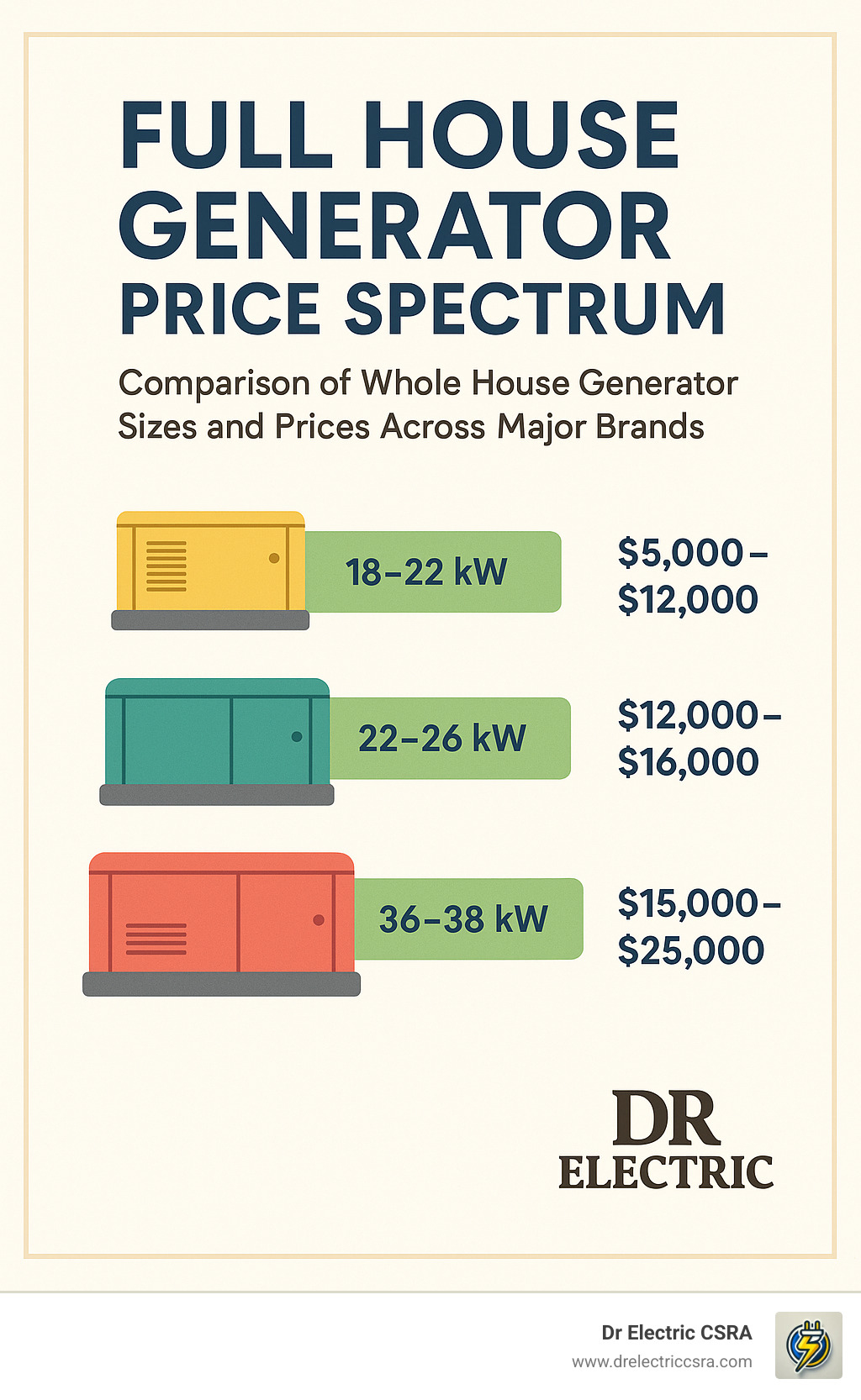
Let’s talk about what you’ll actually pay for that peace of mind during power outages. The full house generator price range is quite broad, typically falling between $5,000 and $25,000 installed, depending on what size and features you need.
Your total investment breaks down into two main buckets:
- Equipment costs: This is the generator itself, transfer switch, and any accessories
- Installation costs: All the labor, permits, site prep, and materials needed to get you up and running
Where you live makes a big difference too. Here in Augusta and the CSRA area, we’re fortunate that labor rates tend to be more reasonable than big cities like Atlanta or Charleston. That means your dollar stretches further when it comes to installation.
“I was shocked at how much more my sister paid for the exact same generator in Boston compared to what I paid here in Augusta,” shared Mark, one of our customers in North Augusta. “The equipment cost was identical, but her installation was nearly double!”
Equipment-Only Full House Generator Price Ranges
The generator unit itself is just the starting point. Here’s what you can expect to pay for just the equipment before installation:
A 10-12 kW generator typically runs $2,000-$3,500 and works well for powering essential circuits in smaller homes. If you’re just looking to keep the lights on, refrigerator running, and maybe a window AC unit, this might do the trick.
Moving up to a 14-18 kW generator will cost about $4,000-$5,500. This size handles essential appliances plus your air conditioning and water heater in most homes. It’s our most popular size for average households.
For medium to large homes, a 20-24 kW generator priced at $5,000-$6,500 will power most circuits without breaking a sweat. This is ideal if you want to maintain nearly normal living during an outage.
Larger homes with multiple HVAC systems need a 26-32 kW generator, priced between $6,500-$15,000. At this level, you’re looking at powering everything without compromises.
For the largest homes or properties with home businesses, a 36-48 kW generator costs between $14,000-$21,000. These commercial-grade units handle extreme demands with ease.
Brand differences account for some price variation. For instance, a Generac 24kW system typically runs around $6,500, while a comparable Kohler might cost a bit more but comes with different warranty terms.
“When comparing brands, don’t just focus on the initial full house generator price,” advises Jesse, our master electrician. “Look at warranty length, parts availability, and local service support. During hurricane season when everyone needs repairs at once, having a well-supported brand makes all the difference.”
Installed Full House Generator Price by Home Size
When we add in installation costs, here’s the real-world pricing most homeowners can expect:
For a 1,500 sq ft home (typically needing a 13-16 kW generator), expect to pay $8,000-$12,000 total. This breaks down to about $3,000-$5,000 for equipment and $5,000-$7,000 for installation.
A 3,000 sq ft home usually requires an 18-22 kW generator, with total costs ranging from $12,000-$18,000. The equipment portion runs $5,000-$7,000, while installation accounts for $7,000-$11,000.
For larger 5,000+ sq ft homes, you’ll need a 25-48 kW generator with a total investment of $18,000-$25,000 or more. Equipment costs start at $8,000-$15,000, with installation adding another $10,000-$15,000.
I recently helped a family in Evans who had received quotes ranging from $13,500 to $22,000 for the same 20kW generator. After sitting down with them and explaining exactly what each quote included (and what was missing), they chose our comprehensive package at $15,200. Two years and three major outages later, they tell me it was the best money they’ve ever spent.
“The difference between the quotes was eye-opening,” they told me. “Some companies were cutting corners on the electrical work, others weren’t including the concrete pad or proper gas line sizing. When Jesse explained what we actually needed versus what was optional, the decision became much clearer.”
More info about Whole House Generators Prices Installed
The Extras: Pads, Switches, Permits & Fuel Storage
When budgeting for your generator, don’t forget the supporting cast that makes the whole system work! The full house generator price includes several critical components beyond just the generator unit itself.
That concrete pad your generator sits on? It’s not just a fancy footrest. A properly installed concrete pad typically costs around $1,000 and provides crucial stability for your generator. We pour these at about 3-by-6 feet, making sure they’re level, properly reinforced, and positioned according to local codes (usually at least 18 inches from your home’s walls).
“I’ve seen DIY pads crack within a year because they weren’t reinforced correctly,” shares our installation manager. “When you’re protecting a $10,000 investment, that extra care with the foundation really matters.”
The transfer switch is truly the unsung hero of your generator system. This critical safety component connects your generator to your home’s electrical panel and prevents dangerous backfeeding into utility lines. Labor for installing a transfer switch averages about $1,200, plus the equipment cost:
- Manual transfer switches run $300-$600
- Automatic transfer switches cost $500-$2,000
- Whole-house automatic switches range from $1,000-$2,500
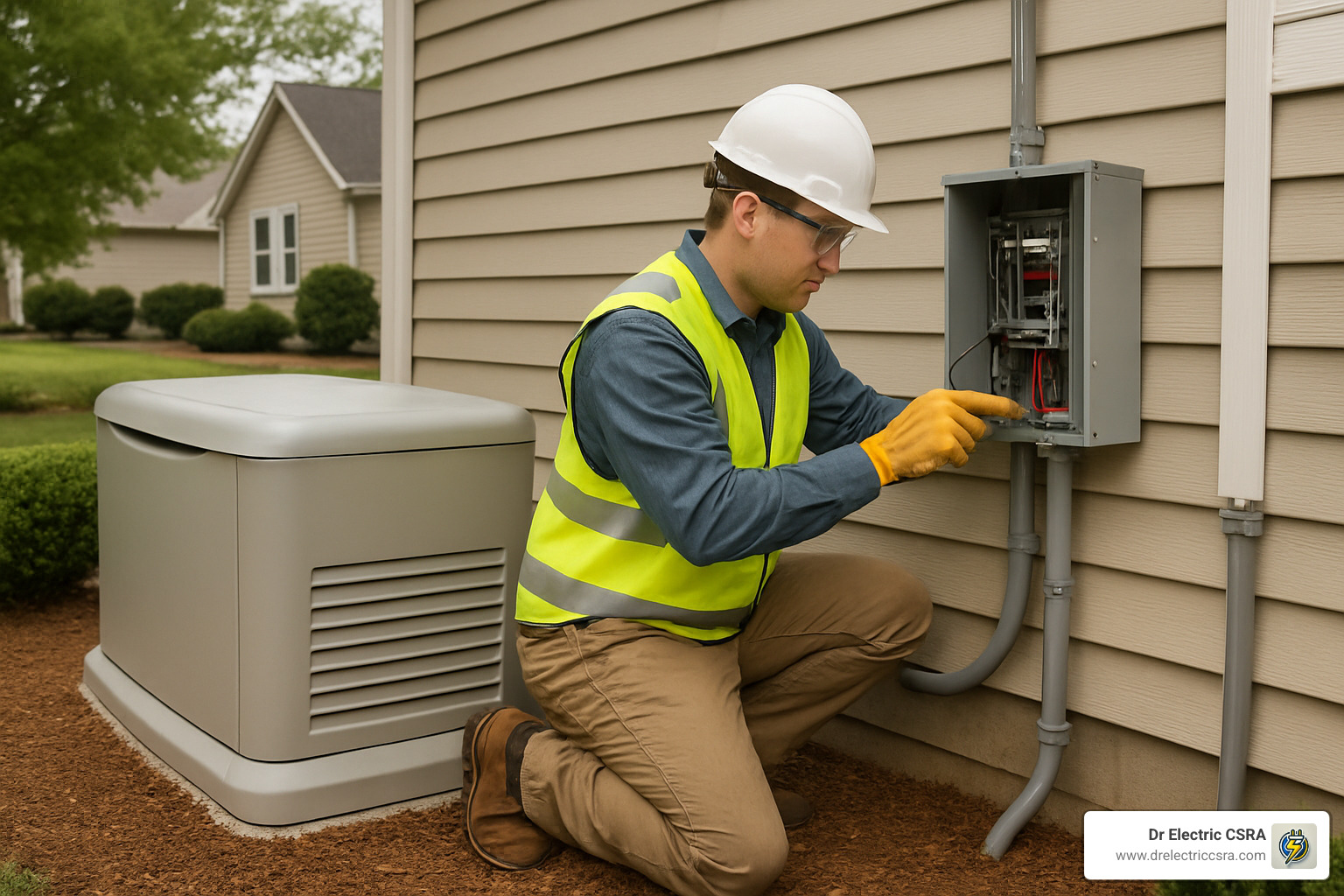
The professional installation itself typically runs between $1,500 and $5,000 depending on complexity. Our team handles everything from electrical connections to fuel line installation and thorough system testing. We also take care of all permitting (which costs $50-$200 in our region) as part of our installation process.
Your fuel choice affects both your wallet and your setup requirements. Natural gas is wonderfully convenient if it’s available, requiring just a connection to your home’s existing gas line (add $500-$1,000 if you don’t already have one nearby). Liquid propane needs a storage tank ($500-$2,500 depending on size), while diesel requires a fuel tank and regular refilling.
“Most of our Augusta customers prefer natural gas when it’s an option,” notes Jesse, our master electrician. “There’s something reassuring about knowing your generator will keep running even during extended outages without needing refills.”
Concerned about noise? While most modern generators run at about 60-70 decibels (similar to your central AC), we can add sound-dampening enclosures for an additional $500-$1,000 if you’re particularly sensitive to noise or have close neighbors.
More info about Installing Transfer Switch for Whole House Generator
Do You Need an Automatic Transfer Switch?
While manual transfer switches are less expensive, I strongly recommend automatic switches for most homeowners. Here’s why:
An automatic switch keeps you safe during storms when you’d otherwise need to venture outside in potentially dangerous conditions. Your power restores automatically, typically within 10-30 seconds of an outage, protecting sensitive electronics from power surges when utility power returns. Perhaps most importantly, your home stays protected even when you’re away.
One of our customers in Martinez learned this lesson the hard way. “I thought I was being smart saving $800 on a manual switch,” Robert told us. “Then we lost power during that big ice storm while we were visiting our daughter in Charleston. Came home to spoiled food and a flooded basement because the sump pump couldn’t run. That ‘savings’ ended up costing me thousands.”
Today’s automatic transfer switches also offer smart features like load shedding, which can prioritize your most important circuits when generator capacity is limited. This intelligent power management means you can often install a smaller, more affordable generator while still protecting what matters most.
More info about Whole House Transfer Switch Installation Made Simple
Ownership Costs: Fuel, Maintenance & Lifespan Math
When you’re considering a whole house generator, the sticker price is just the beginning of the story. Let’s talk about what it really costs to own one of these systems over time – the full house generator price includes some ongoing expenses you’ll want to plan for.
Fuel Consumption and Costs
Your generator’s appetite depends on its size and what fuel it eats. During an actual outage, here’s what you might spend each day:
- Natural gas: $20-$90 per day (the budget-friendly champion)
- Propane: $60-$170 per day (convenient but costlier)
- Diesel: $32-$120 per day (efficient but maintenance-intensive)
“Most homeowners are shocked when I tell them these numbers,” shares our senior technician. “But remember – these figures assume you’re running at full capacity. Most outages only require 25-75% of your generator’s power, so your actual costs will likely be lower.”
Even when the power grid is humming along nicely, your generator will still run weekly self-tests lasting 5-20 minutes. Think of these like your generator’s morning stretches – keeping everything limber and ready. These brief workouts typically cost less than $10 a month in fuel – a small price for the peace of mind that your system is ready when you need it.
Maintenance Requirements
Like your car, your generator needs regular TLC to stay reliable:
Annual maintenance typically runs $80-$300 depending on your generator’s size. This usually covers oil and filter changes (needed every 100-200 hours of operation), spark plug inspections, and air filter checks. Your battery will need testing and likely replacement every 2-3 years.
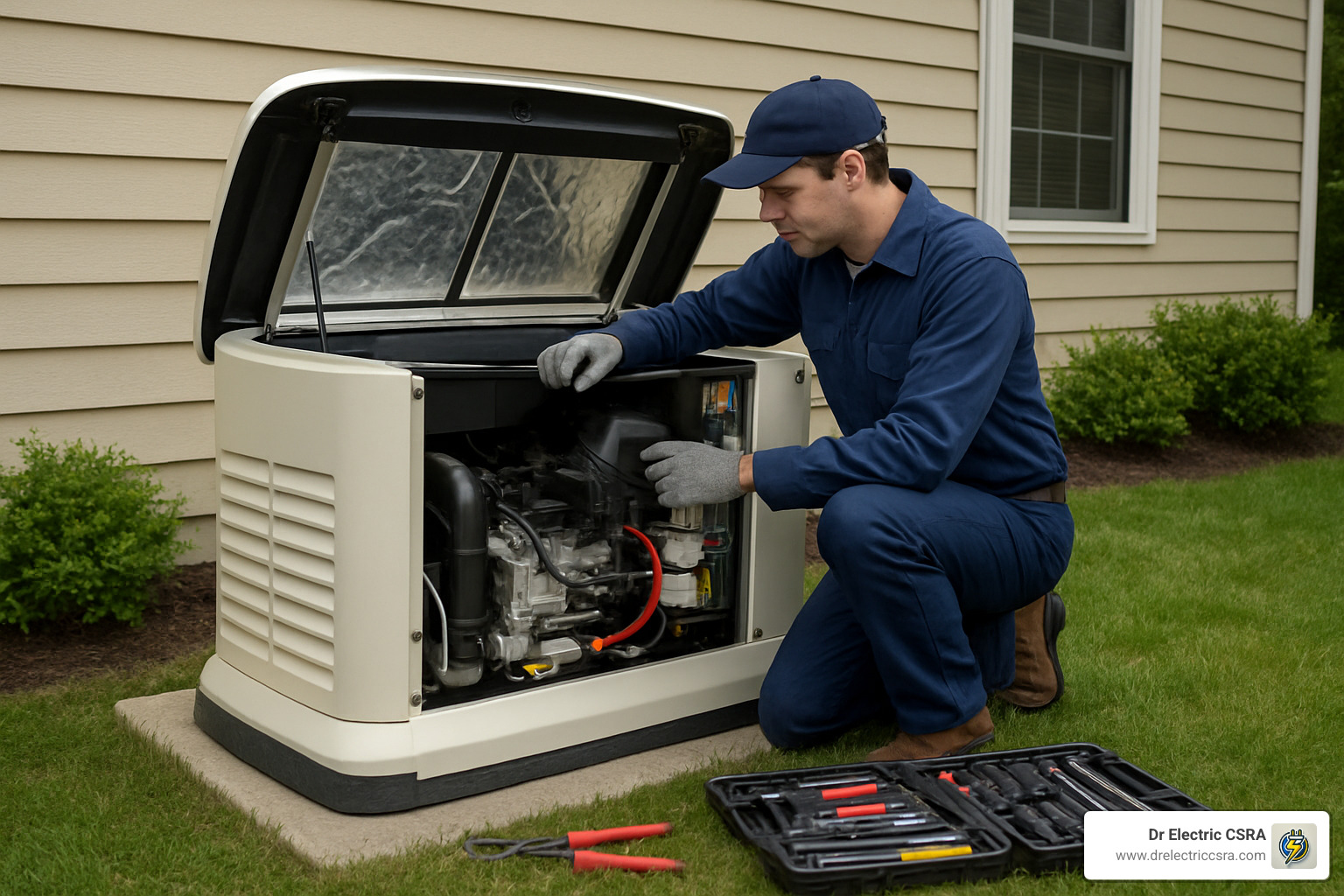
“I had a customer skip two annual services to ‘save money,’” recalls our maintenance coordinator. “When Hurricane Irma hit, their generator ran for six hours before seizing up. The repair cost was five times what maintenance would have been, not counting the hotel stays while we sourced parts.”
Many of our customers opt for service agreements that include priority scheduling during storm season – which in Augusta can be mighty valuable when everyone’s calling at once.
Lifespan Considerations
A quality standby generator that gets proper maintenance should serve you faithfully for 15-30 years or 10,000-30,000 operating hours. When you spread the initial full house generator price across that lifespan, the math starts looking much better – especially when you consider what power outages actually cost:
The hidden costs of going without power:
– That fully-stocked fridge and freezer? $200-$500 in spoiled food per outage
– Hotel rooms when your house is too hot or cold: $100-$300 nightly
– A flooded basement from a non-functioning sump pump: $2,000-$10,000
– Lost work-from-home productivity: potentially hundreds or thousands
– Medical equipment failures: potentially priceless
“I like to think of generators as insurance you can actually use,” explains our estimator Jesse. “When you break down the numbers, most of our customers are spending about $500-$1,000 annually for their generator when you include everything. That’s comparable to what many pay for home insurance – and this is insurance that keeps your lights on!”
Latest research on outage trends
Fuel Type Impacts on Your Wallet & Environment
The fuel you choose affects both your budget and your carbon footprint:
Natural Gas is the clear winner for most homes when available. It’s the cheapest per kilowatt-hour, delivers continuous supply without refilling, and burns cleaner than other fossil fuels. The downside? Not every neighborhood has natural gas lines.
Propane offers flexibility – it can be delivered anywhere – and stores well for years. You’ll pay more per kilowatt-hour than natural gas, and you’ll need space for that tank, but it’s a solid option for rural homes.
Diesel generators squeeze the most electricity from each gallon, making them efficient workhorses. However, they produce more emissions, require more maintenance, and the fuel can degrade if stored too long.
Solar-Battery Alternatives are gaining popularity with zero fuel costs and silent operation. The tradeoff is a higher initial investment ($10,000-$25,000) and limited capacity during extended cloudy periods.
“Here in Augusta and the CSRA, we get our share of severe weather,” notes our systems designer. “When those ice storms or hurricanes hit, natural gas is hard to beat since the underground lines usually stay intact. Our customers who’ve weathered multi-day outages with natural gas generators never worry about finding fuel when every gas station in town has lines around the block.”
Stretch Your Budget: Savings, Financing & Rebates
Looking at that full house generator price tag might make your heart skip a beat, but don’t worry – there are plenty of ways to make backup power more affordable without sacrificing quality or peace of mind.
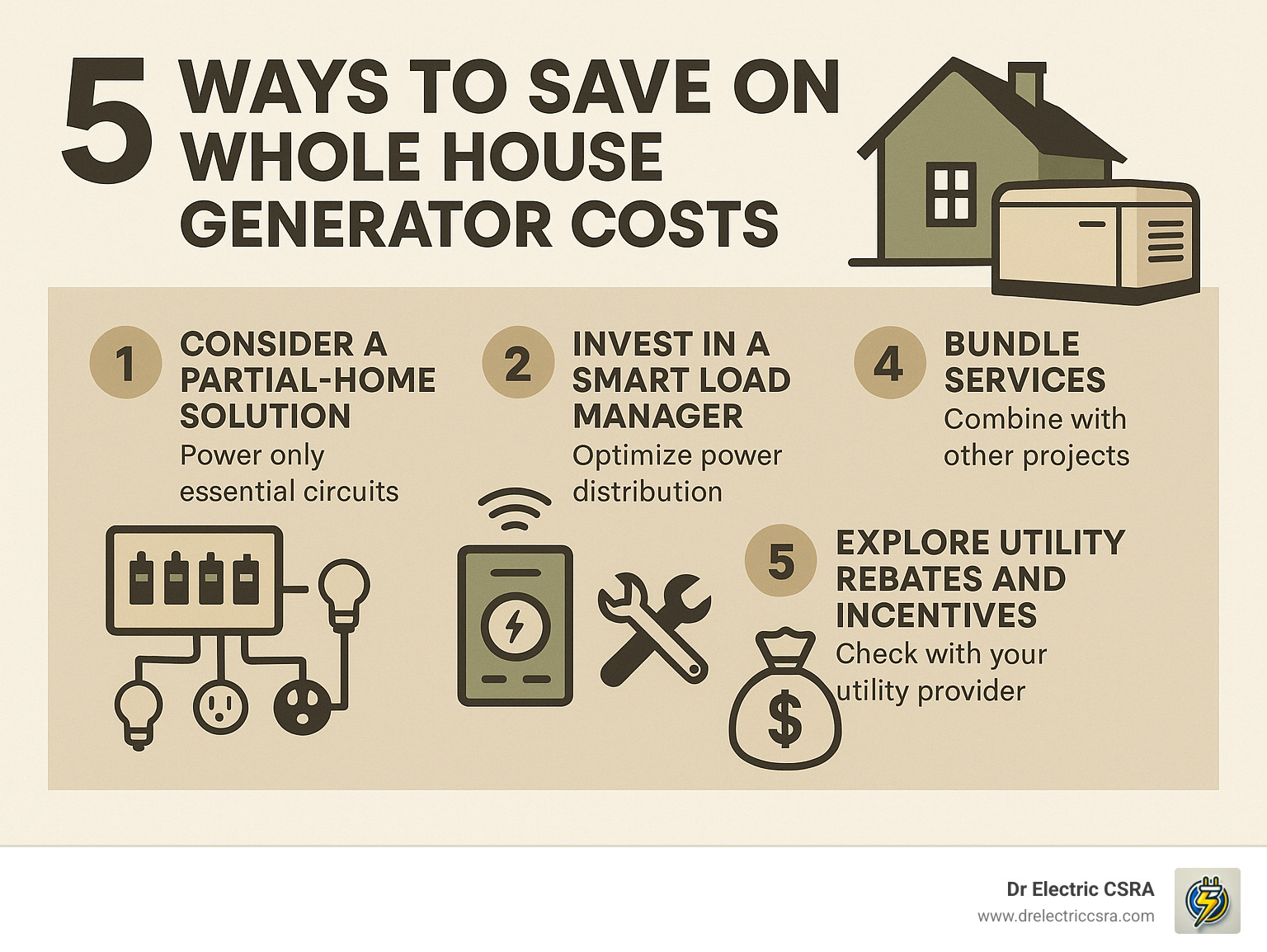
1. Consider a Partial-Home Solution
When I meet with homeowners concerned about costs, I often suggest focusing on what truly matters during an outage. By powering just your essentials – refrigerator, heating/cooling, sump pump, and some strategic lighting and outlets – you can often install a generator that’s half the size and cost.
“My family initially wanted a whole-house system,” shares Mark from North Augusta, “but after talking through our actual needs with Dr. Electric, we realized a 12kW generator covering our essentials was perfectly adequate. We saved nearly $6,000 and still sleep soundly during storms.”
A partial-home solution typically runs $8,000-$10,000 installed compared to $15,000+ for whole-house coverage. That’s significant savings while still keeping your family comfortable and your home protected.
2. Invest in a Smart Load Manager
Technology can stretch your generator’s capacity. For an additional $500-$1,000, a smart load management system acts like a traffic controller for your electricity, automatically prioritizing what gets power when.
This clever device means you can install a smaller, more affordable generator while still powering most of your home – just not everything simultaneously. When your AC compressor kicks on, for example, the system might temporarily pause your electric water heater, then switch it back on moments later.
These systems are particularly valuable in our Georgia summers when cooling demands are high but intermittent.
3. Time Your Purchase Strategically
Generator manufacturers are just like any other business – they have seasons and sales cycles. If you can plan ahead rather than buying during emergency situations, you’ll find the best full house generator price deals during off-peak seasons, typically late fall through winter.
I’ve seen customers save 10-15% by purchasing in December rather than waiting until hurricane season announcements in June. Manufacturers often run promotions during slower periods to keep their production lines moving.
4. Bundle Services
If your home needs other electrical work, bundling projects can significantly reduce your overall costs. When our teams are already on-site for a panel upgrade or rewiring project, we can often install a generator more efficiently.
“We already had Dr. Electric scheduled to upgrade our 1970s electrical panel,” explains Jennifer from Evans. “Adding the generator installation to the same project saved us about $1,200 in labor costs since they only had to mobilize once.”
This approach not only saves money but often results in a more integrated, thoughtfully designed electrical system.
5. Explore Utility Rebates and Incentives
Don’t leave money on the table! Some utility companies offer rebates for standby generator installations, particularly for customers with medical needs or those in outage-prone areas.
While these programs come and go, they’re worth investigating before you purchase. Our team regularly helps customers identify and apply for available incentives, sometimes finding savings that customers didn’t know existed.
6. Consider Financing Options
Rather than depleting your savings, consider spreading the cost over time. Many of our customers finance their generator installations through home improvement loans, home equity lines of credit, or manufacturer financing programs.
With interest rates creating monthly payments of $100-$300 for most systems, many homeowners find that the peace of mind is well worth the monthly investment – especially when compared to the cost of even a single major power outage.
7. DIY Site Preparation
While we always recommend professional installation for the generator itself, some homeowners reduce costs by handling certain preparation work themselves. If you’re handy, you might consider:
Clearing and leveling the installation site – removing shrubs, small trees, or other obstacles
Pouring the concrete pad – following our specifications for size and reinforcement
Trenching for gas or electrical lines – where permitted by local codes
One retired contractor in Martinez followed our detailed specifications to prepare his own pad and trench for the gas line, saving approximately $1,200 on his installation while still ensuring everything met code requirements.
“We’re always happy to work with homeowners who want to participate in the process,” says our installation supervisor. “We’ll provide clear guidelines on what you can safely do yourself and what requires professional expertise.”
The goal isn’t just to save money today – it’s to install a system that will protect your home reliably for decades to come.
Frequently Asked Questions about Full House Generator Price
How much does it cost to run a full house generator per day?
When folks ask me about ongoing costs, I always tell them it depends on three things: the size of your generator, what fuel it uses, and current fuel prices in your area.
For most homeowners here in Augusta, the numbers break down like this:
If you’re running a 20kW generator at full capacity (which rarely happens), you’re looking at approximately $30-$90 per day for natural gas, $60-$170 for propane, or $32-$120 for diesel.
The good news? Your generator rarely runs at full capacity. After last summer’s storms rolled through, we checked in with our customers and found most systems humming along at just 50-60% of their maximum output. This means your actual fuel costs during an outage will likely be much lower than these estimates.
“My generator ran for three days straight after that big ice storm,” shared Mark from Evans. “I was worried about the gas bill, but it ended up being about $65 total – definitely worth not losing everything in my freezer or having to relocate my family to a hotel.”
Will a full house generator add value to my property?
Absolutely! And I’m not just saying that as someone who installs them. Local real estate professionals consistently tell us that a properly installed whole-house generator typically adds 3-5% to a home’s value. That means many homeowners recover between 50-100% of their installation costs when they sell.
But the real value goes beyond just dollars and cents. In our region, where summer thunderstorms and winter ice events can knock out power for days, homes with generators have become increasingly attractive to buyers. They often sell faster and command higher prices simply because they offer something invaluable: peace of mind.
One local real estate agent we partner with put it perfectly: “It’s becoming a checkbox item for many buyers, especially those relocating from areas with more reliable power infrastructure. When they ask ‘Does it have a generator?’ and the answer is yes, you can see the relief on their faces.”
What size generator covers a 2,000 sq ft home?
For a typical 2,000 square foot home, you’re generally looking at a generator in the 16-22kW range. But here’s where things get interesting – square footage is just the starting point.
What really determines your generator size is what’s inside your home and how it’s powered. During our home assessments, we look at several key factors:
Your heating system makes a huge difference. If you have gas heating, you’ll need significantly less generator capacity than if you’re running electric heat pumps or resistance heating. The same goes for your water heater – gas models barely register on your generator’s radar, while electric ones need substantial power.
Air conditioning is another major consideration. Each ton of cooling typically needs 3-5kW of capacity. And if you rely on a well pump for water, that’s additional capacity you’ll need to factor in.
We’ve installed generators as small as 14kW and as large as 24kW for similarly sized homes right here in Augusta. The difference? One home had gas heat, gas water heater, and modest cooling needs. The other had dual heat pumps, electric water heating, and a home office with sensitive equipment.
During our initial visit, we’ll perform a detailed load calculation specifically for your home – no guesswork, just precise sizing based on your actual needs.
More info about Whole House Generators Prices Installed
Conclusion
Investing in a whole-house generator is a bit like buying insurance for your home’s power supply – it comes with an upfront cost, but the protection it provides is invaluable when you need it most. While the full house generator price might initially make you catch your breath, understanding what drives those costs helps you make choices that balance protection with your budget.
Here at Dr. Electric CSRA, we’ve seen the relief on homeowners’ faces when their lights stay on while the neighborhood goes dark. We’ve also seen the confusion when they’re presented with wildly different quotes from various contractors. That’s why we’re committed to price transparency and helping you find the right solution – not just upselling you to the most expensive option.
“The best generator for your home isn’t necessarily the biggest or most expensive,” as our lead technician often tells customers. “It’s the one that meets your specific needs at a price that makes sense for your situation.”
As a licensed electrical contractor serving Augusta, Evans, Grovetown, Martinez, and the entire CSRA region, we handle your entire generator installation in-house. No subcontractors means no finger-pointing, no communication breakdowns, and no surprise costs. Just one team, one point of contact, and zero headaches.
Our whole-house generator process is straightforward:
- We assess your home to determine your actual power needs (not just what would be “nice to have”)
- You receive a detailed quote that breaks down every cost component
- Our licensed team handles the installation from start to finish
- We thoroughly test everything before considering the job complete
- We’re here for ongoing maintenance and support for the life of your system
Many of our customers tell us they delayed getting a generator for years because of price concerns, only to wish they’d done it sooner after experiencing their first outage with backup power. As Mark from North Augusta told us after last year’s ice storm: “Having lights, heat, and running water while waiting three days for power restoration? That was priceless.”
Ready to explore your generator options without the sales pressure? Contact Dr. Electric CSRA today for a friendly, no-obligation consultation. We’re your neighbors, and we’re here to help you keep the lights on when everyone else’s go out.