Building Your Dream Home’s Electrical Blueprint
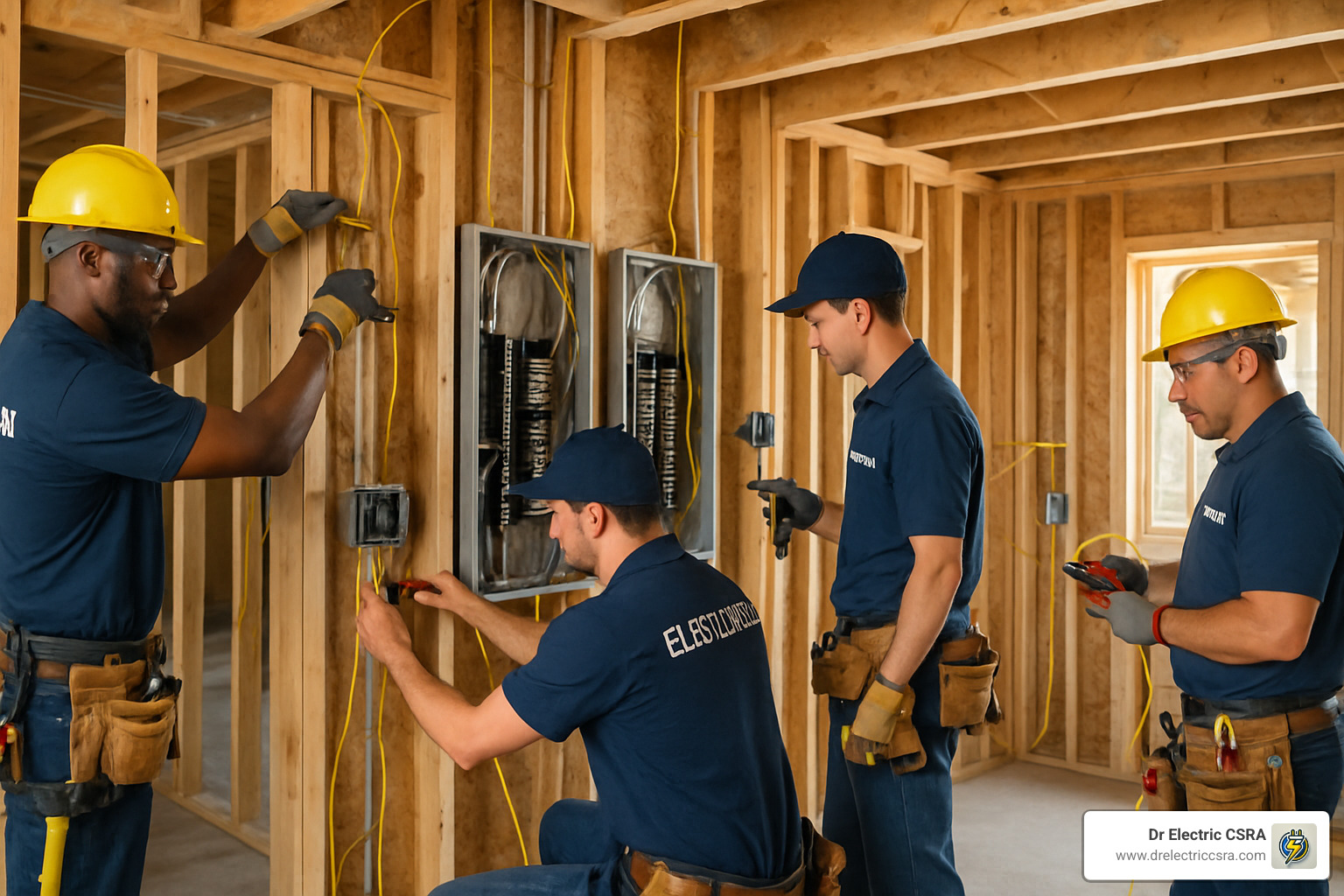
A custom home electrician is a specialized electrical contractor who focuses on designing and installing electrical systems in custom-built homes, providing services beyond standard electrical work. They collaborate with architects, builders, and homeowners to create personalized electrical solutions that match your lifestyle and future needs.
Quick Guide to Finding a Custom Home Electrician:
| What to Look For | Why It Matters |
|---|---|
| License & Insurance | Ensures code compliance and protects your investment |
| Specialization in Custom Homes | Experience with high-end finishes and complex systems |
| Pre-wiring Expertise | Future-proofs your home for smart technology |
| Panel Size Knowledge | Recommends appropriate service (200 vs 400 amp) |
| Builder Relationships | Streamlines coordination with your construction team |
| Detailed Planning Process | Includes walk-throughs and itemized change lists |
When building a custom home, standard electrical contractors often lack the specialized knowledge needed for complex systems like whole-house lighting control, structured wiring, and smart home integration. A true custom home electrician understands how to design an electrical system that accommodates both current needs and future technologies.
The right electrician should be involved from the earliest planning stages – not as an afterthought. This early involvement ensures proper utility coordination, adequate power supply planning, and strategic pre-wiring that can save thousands in future retrofit costs.
I’m Jesse Burnett, a Master Electrician with extensive experience as a custom home electrician who has completed hundreds of custom residential projects including panel upgrades, smart home systems, and specialized installations across the CSRA region.
What Makes a Custom Home Electrician Different?
When building your dream home, you might wonder if you really need a specialized electrician rather than a general contractor. Trust me, the difference is significant and will impact both how your home functions and its value for years to come.
A custom home electrician brings expertise that goes far beyond basic wiring. We’re talking about professionals who understand the big picture of your electrical needs – from sophisticated structured wiring systems that integrate all your communication networks to whole-house audio that fills every room with perfect sound.
“Custom Home Builders are some of our best customers,” I often hear from specialized electricians in our industry. This partnership isn’t just convenient – it’s crucial. When your builder and electrician work hand-in-hand, your electrical systems don’t just meet code requirements; they improve your everyday life.
Did you know that about 65% of Americans now own at least one smart home device? The smart home market has exploded to an estimated $40 billion, according to research on smart home adoption. A custom home electrician knows exactly how to integrate these technologies seamlessly into your new home’s infrastructure from day one.
Beyond the Basics: Services Only Custom Pros Offer
Standard electricians can handle the basics, but a true custom home electrician offers specialized services that transform a house into your personalized dream home.
Imagine walking into your living room and pressing a single button that adjusts your room scene lighting to the perfect ambiance for movie night. Or having motorized shades that automatically lower during the hottest part of the day to save on cooling costs. These aren’t futuristic fantasies – they’re standard offerings from specialized electricians.
One homeowner in Evans, GA told me: “Having our custom home electrician pre-wire for motorized blinds throughout the house saved us thousands compared to what it would have cost to add them later. Plus, there’s no visible wiring—it all looks built-in because it was planned from the start.”
From spa and pool wiring with specialized safety features to dock wiring for waterfront properties, these professionals handle complex installations that require specific expertise. They’ll set up whole-house audio systems and even install electrical floor warming so you never have to step on cold tile again on winter mornings.
Why Your Project Deserves a Specialist
Your custom home represents both your dreams and a significant investment. Here’s why it deserves specialized electrical attention:
The code complexity alone is enough to make your head spin. Custom homes often include features with specific electrical requirements that general contractors might miss. A specialist lives and breathes these regulations, ensuring your home is both safe and compliant.
Finish protection becomes critical when you’ve invested in high-end materials. “Protecting expensive finishes is our top priority,” as we tell all our clients at Dr Electric CSRA. We use specialized techniques and equipment to ensure your investment remains pristine during installation.
Custom homes often follow multi-year schedules, requiring an electrician who can coordinate with your overall timeline and adapt as your project evolves. And let’s be honest – most custom home projects involve owner-driven changes as you refine your vision. A specialized electrician can accommodate these changes without compromising the integrity of your electrical system.
At Dr Electric CSRA, we understand that your custom home is more than just a building project – it’s the realization of your dreams. We bring the expertise, flexibility, and attention to detail that standard electrical contractors simply can’t match. When you’re investing in a custom home, partnering with a custom home electrician isn’t a luxury – it’s a necessity for creating the safe, smart, and sophisticated home you’ve always wanted.
Blueprint to Breaker: Involving Your Electrician at Every Stage
One of the most critical decisions when building a custom home is when to bring your custom home electrician into the process. The answer is simple: as early as possible.
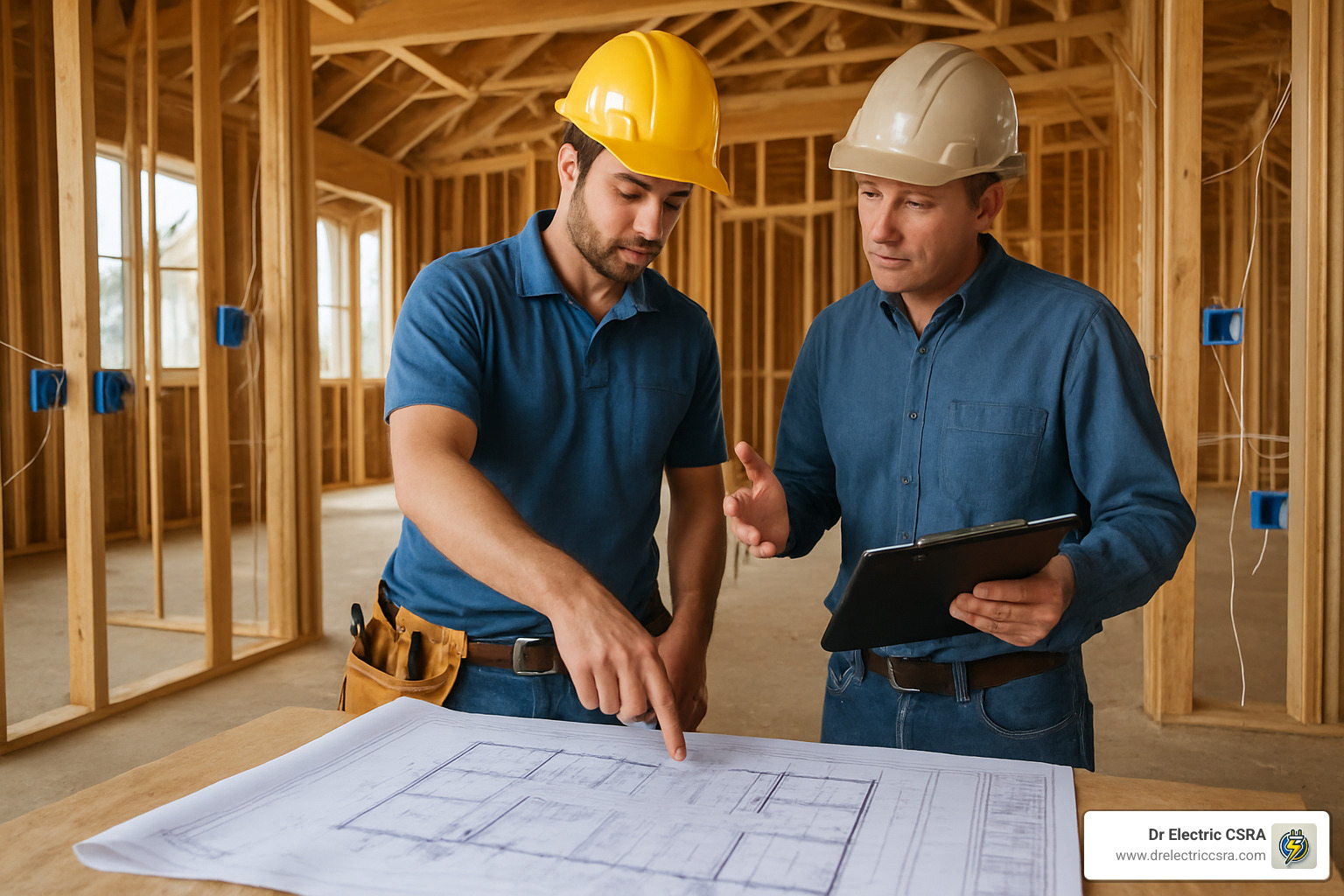
Stage-by-Stage Timeline
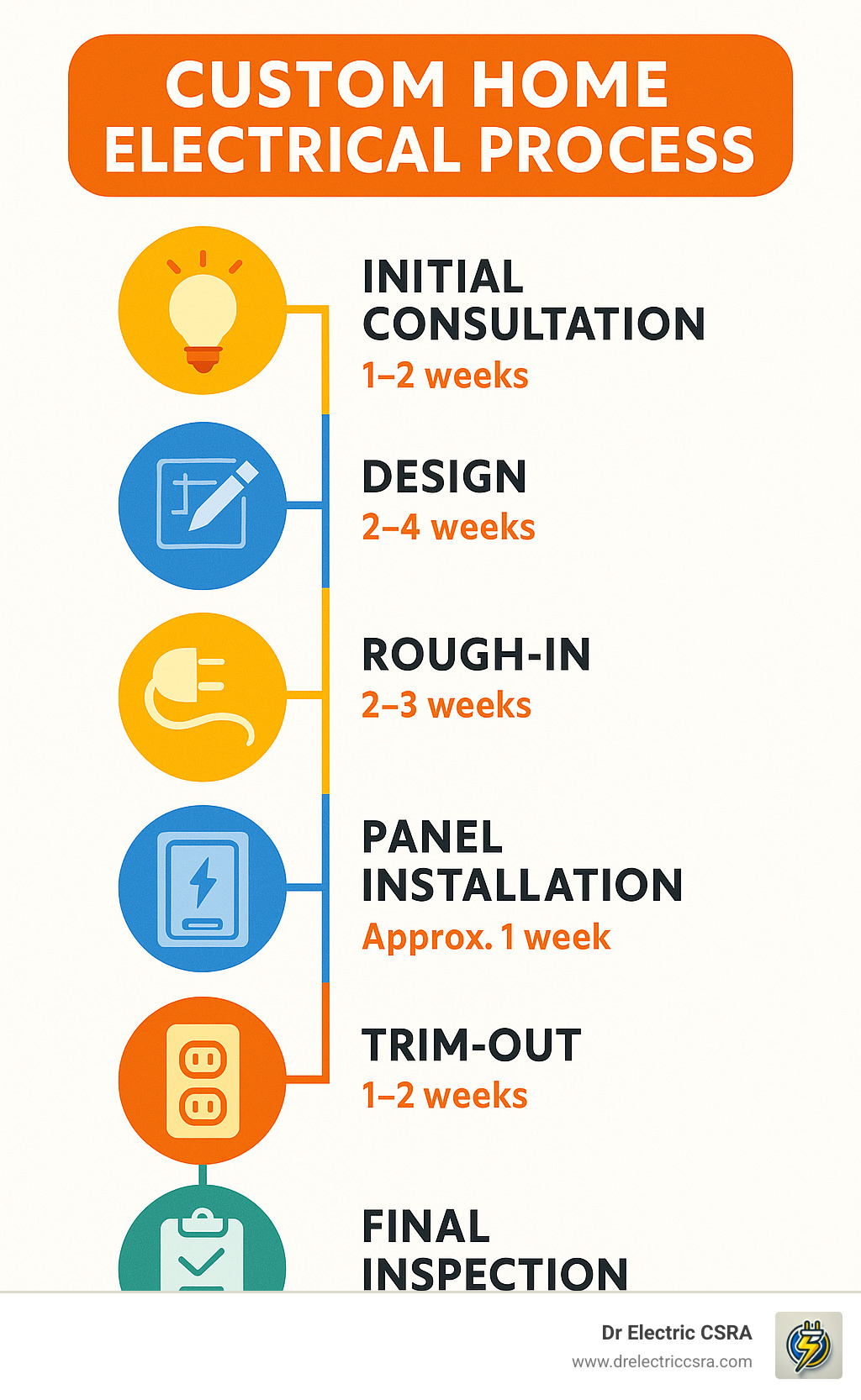
The journey from blueprint to flipping that first breaker follows a natural progression. It starts with planning before a shovel ever hits the ground and continues through to that satisfying moment when you turn on the lights in your completed dream home.
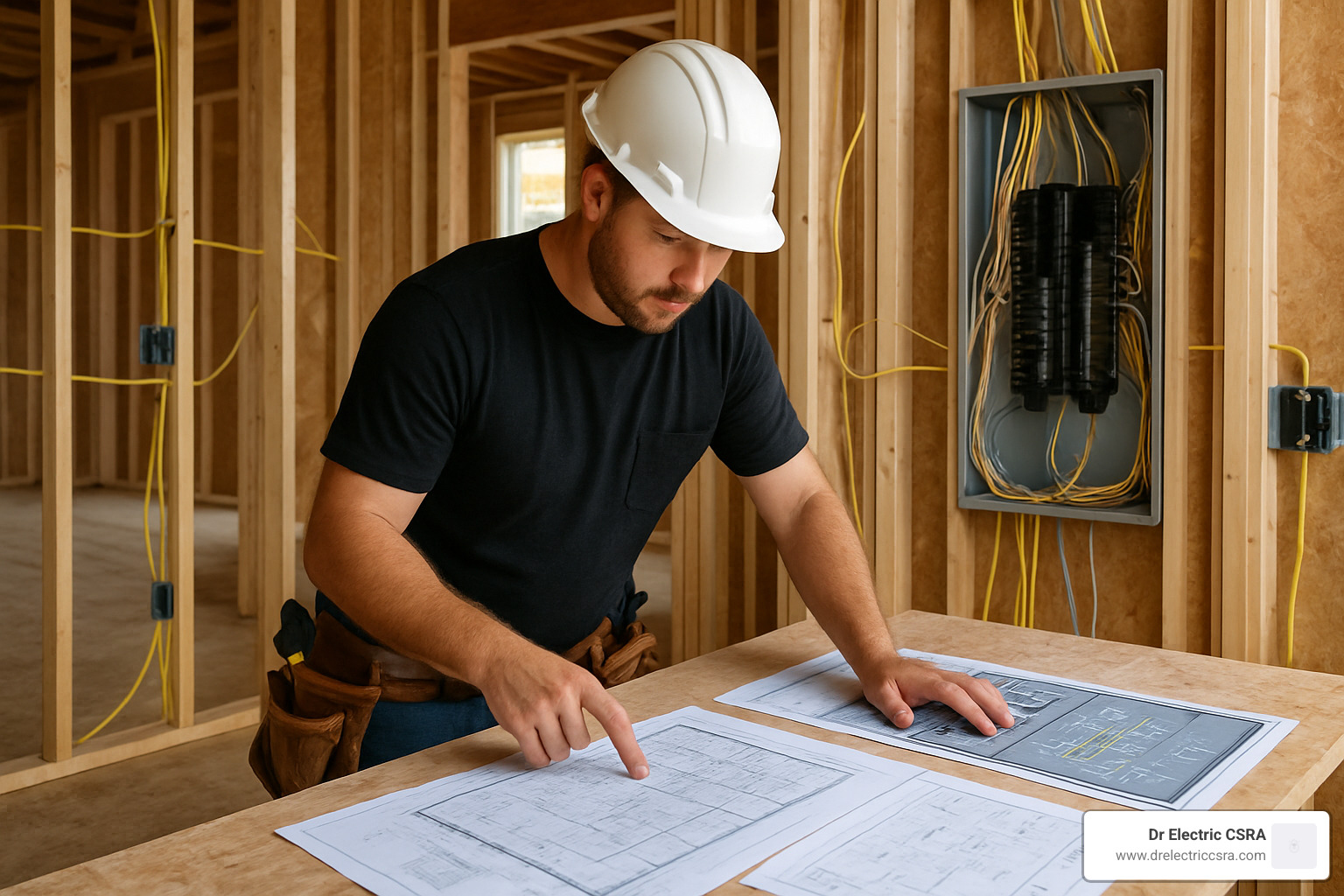
During the concept meeting in pre-construction, we’ll sit down together to review your architectural plans and really understand how you’ll live in your new space. We’ll talk about everything from your daily routines to special features like home theaters or workshops. This is also when we start planning for future technologies you might want to incorporate down the road.
As construction begins, we tackle the site power connection. This crucial early step involves coordinating with your local utility provider to determine the best connection point for your property.
“Is your property able to connect to the local utility?” This seemingly simple question can have major implications for your project timeline and budget. Not all properties qualify for direct hookup, and your custom home electrician can help steer this process smoothly.
Most utility providers include up to 50 feet of conduit and trenching in their standard connections. Beyond that, additional distance can cost around $28 per foot. For homes set far back from existing power lines, this can add up quickly! We’ll help you understand these costs upfront so there are no surprises. You can learn more about new service requirements here.
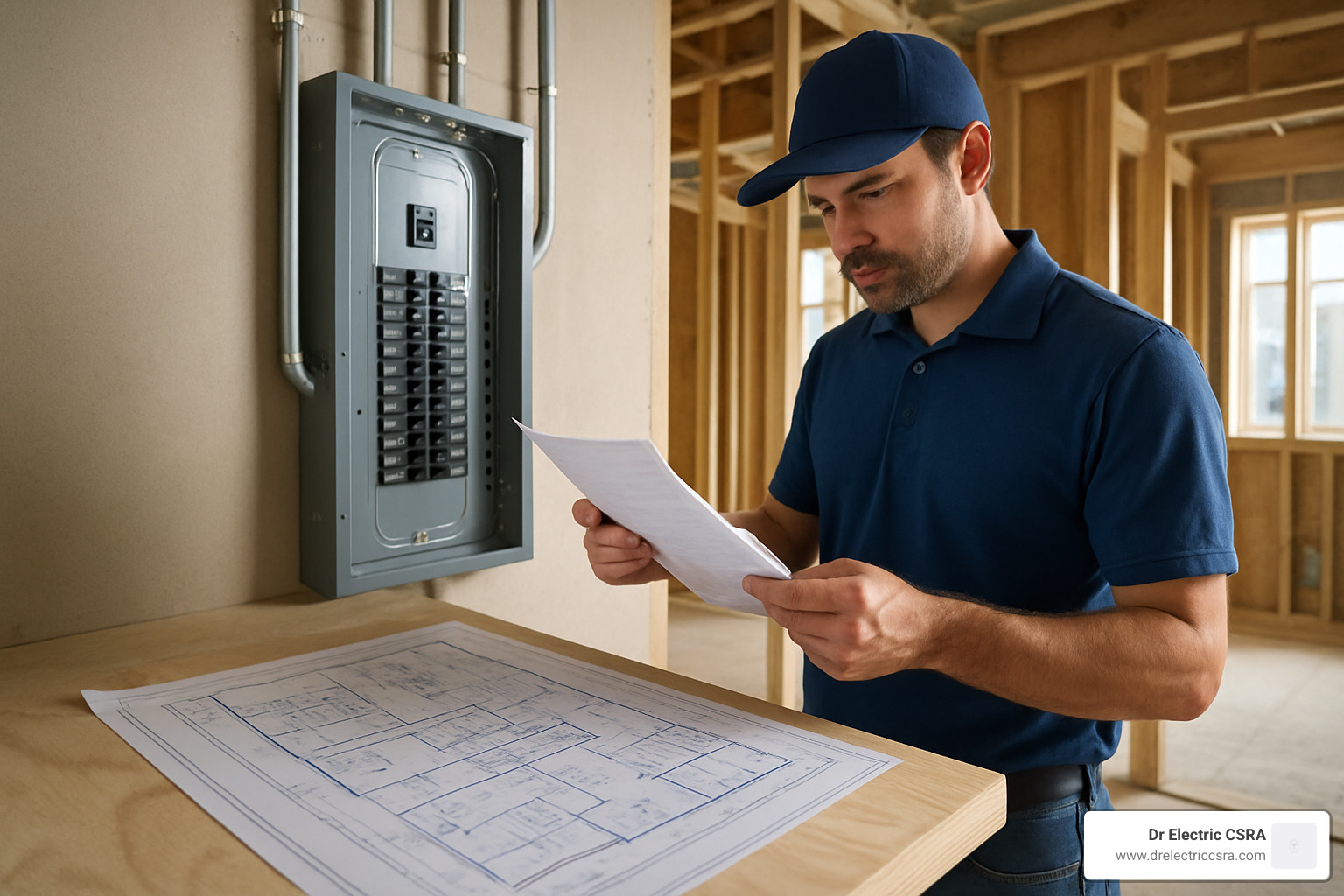
Once framing is complete, we move to the rough-in phase. This is when we install all the wiring that will eventually disappear behind your walls. We’ll place outlet boxes, switch locations, and run specialized wiring for all your smart home features. Getting this right is crucial since changes become much more difficult and expensive after drywall goes up.
The panel set happens mid-construction. We’ll install your main service panel, set up any necessary subpanels, establish proper grounding systems, and prepare everything for the utility connection. This is the heart of your electrical system, and proper planning here pays dividends for decades.
After drywall installation comes the trim-out phase. This is when your electrical system really starts to take visible shape. We install outlets, switches, and fixtures. We connect appliances and specialized equipment. We set up control systems for all those smart features we planned for. And finally, we test every circuit and system to ensure everything works perfectly.
The process wraps up with the final inspection just before you move in. We’ll coordinate with your local building department to ensure code compliance, address any required corrections, and provide you with complete documentation of your electrical system.
Working With a Custom Home Electrician: Step-by-Step
The relationship with your custom home electrician should be collaborative and thorough. At Dr Electric CSRA, we’ve refined this process to ensure nothing falls through the cracks.
It begins with a comprehensive initial consultation where we discuss your lifestyle, preferences, and electrical needs in detail. We want to understand not just what you need today, but how you might use your home in the future.
We then perform detailed load calculations to determine the appropriate electrical service size. This isn’t guesswork – it’s a precise calculation based on your home’s anticipated power requirements, from everyday appliances to specialized equipment.
Selecting the right material specifications comes next. We’ll help you choose quality components that meet both code requirements and your aesthetic preferences. The difference between standard and premium electrical components can be significant in both performance and appearance.
Throughout construction, we conduct multiple walk-throughs to ensure everything is proceeding according to plan. As one of our experienced electricians explains, “We perform a project ‘walk-thru’ followed by a written, itemized list of changes.” This documentation is invaluable for keeping track of decisions and modifications.
Regular progress check-ins maintain clear communication throughout the construction process. Building a custom home often involves adjustments along the way, and we’re there to address any changes or challenges that arise.
The process concludes with a final review where we provide a comprehensive explanation of your completed electrical system. We’ll cover maintenance recommendations and discuss potential future upgrades so you fully understand the capabilities of your new home’s electrical infrastructure.
At Dr Electric CSRA, we believe clear communication is the foundation of a successful project. Our attention to detail at every stage is what sets a true custom home electrician apart from general contractors. We don’t just install wiring – we create electrical systems that improve your home’s functionality, safety, and value for years to come.
Designing the Heart of Your Power: Panels, Circuits & Load Calculations
The electrical panel is the heart of your home’s power system, and choosing the right one is crucial for both current functionality and future flexibility.
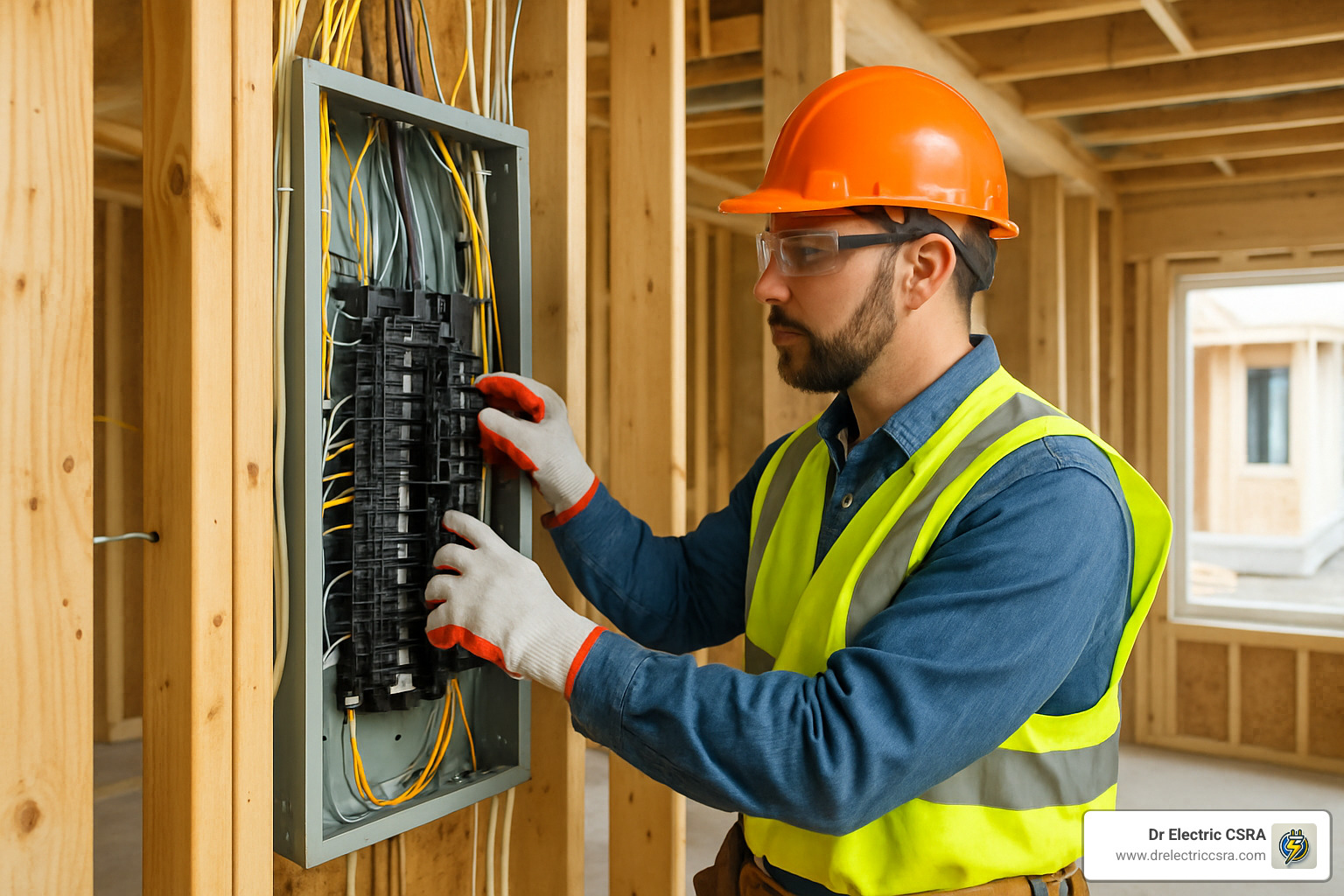
When I sit down with homeowners to discuss their electrical needs, I often explain that your panel choice today will impact your lifestyle for decades. Think of it as choosing the right-sized engine for your dream car – you want enough power for all your needs without constantly redlining.
Most new homes start with a 200-amp panel, which works perfectly for average-sized homes with standard electrical demands. But if you’re building a custom home, you might want to consider stepping up to a 400-amp service, especially if your home exceeds 2,500 square feet or includes power-hungry features.
| Feature | 200-Amp Panel | 400-Amp Panel |
|---|---|---|
| Typical Home Size | Up to 2,500 sq ft | 2,500+ sq ft |
| Support for High-Load Appliances | Limited | Extensive |
| EV Charging Capability | Basic (Level 1) | Advanced (Level 2) |
| Workshop/Studio Support | Basic tools only | Professional equipment |
| Future Expansion | Limited | Substantial |
| Smart Home Integration | Basic systems | Comprehensive systems |
| Cost Premium | Standard | +$2,000-5,000 |
| Resale Value Impact | Neutral | Positive |
I remember working with a family in River Island who initially balked at upgrading to a 400-amp service. “We don’t need all that power,” they insisted. Six months after moving in, they called to thank me – their teenage son’s gaming computers, their daughter’s pottery kiln, and their own EV charger would have constantly tripped breakers with a smaller panel.
Choosing the Right Electrical Panel
The decision between a 200-amp and 400-amp panel often comes down to your lifestyle and future plans. If you’re installing multiple high-draw appliances, an EV charger, a workshop with power tools, or planning extensive smart home features, a 400-amp service provides the breathing room you’ll need.
One Augusta homeowner shared with me: “We initially thought a 200-amp panel would be sufficient, but our custom home electrician recommended 400-amp service because of our plans for a woodworking shop, hot tub, and two EV chargers. It was the best decision we made—we’ve never had to worry about tripping breakers or limiting our power usage.”
Beyond just panel size, I always emphasize the importance of dedicated circuits in custom homes. These are circuits reserved exclusively for specific high-draw appliances like your refrigerator, microwave, dishwasher, and HVAC system. Having dedicated circuits prevents the frustration of tripped breakers when multiple appliances run simultaneously – something that happens all too often during holiday gatherings!
Safety clearances are another critical factor that homeowners often overlook. Your electrical panel needs adequate space around it – not just for looks, but for safety and code compliance. I’ve seen too many beautiful custom homes with panels crammed into tight spaces, creating potential hazards and inspection headaches.
When planning your panel, don’t forget about future-proofing with expansion space. I recommend leaving at least 4-6 empty slots in your panel for future additions. Trust me – whether it’s a new hot tub, workshop equipment, or technology we haven’t even invented yet, you’ll eventually need those extra circuits.
Whole-house surge protection installed directly at your panel provides invaluable protection for all your electronics and smart home equipment. Unlike plug-in surge protectors that only safeguard individual devices, panel-level protection shields your entire electrical system from damaging power surges.
At Dr Electric CSRA, we specialize in electrical panel upgrades and can help you determine the right service size for your custom home. Our licensed electricians ensure that your panel not only meets current needs but also provides capacity for future expansion – because the heart of your home’s power system should be as forward-thinking as you are.
Smart, Safe & Future-Ready Wiring Choices
One of the most valuable services a custom home electrician provides is pre-wiring for future technology and convenience features. This forward-thinking approach can save thousands in retrofit costs later.
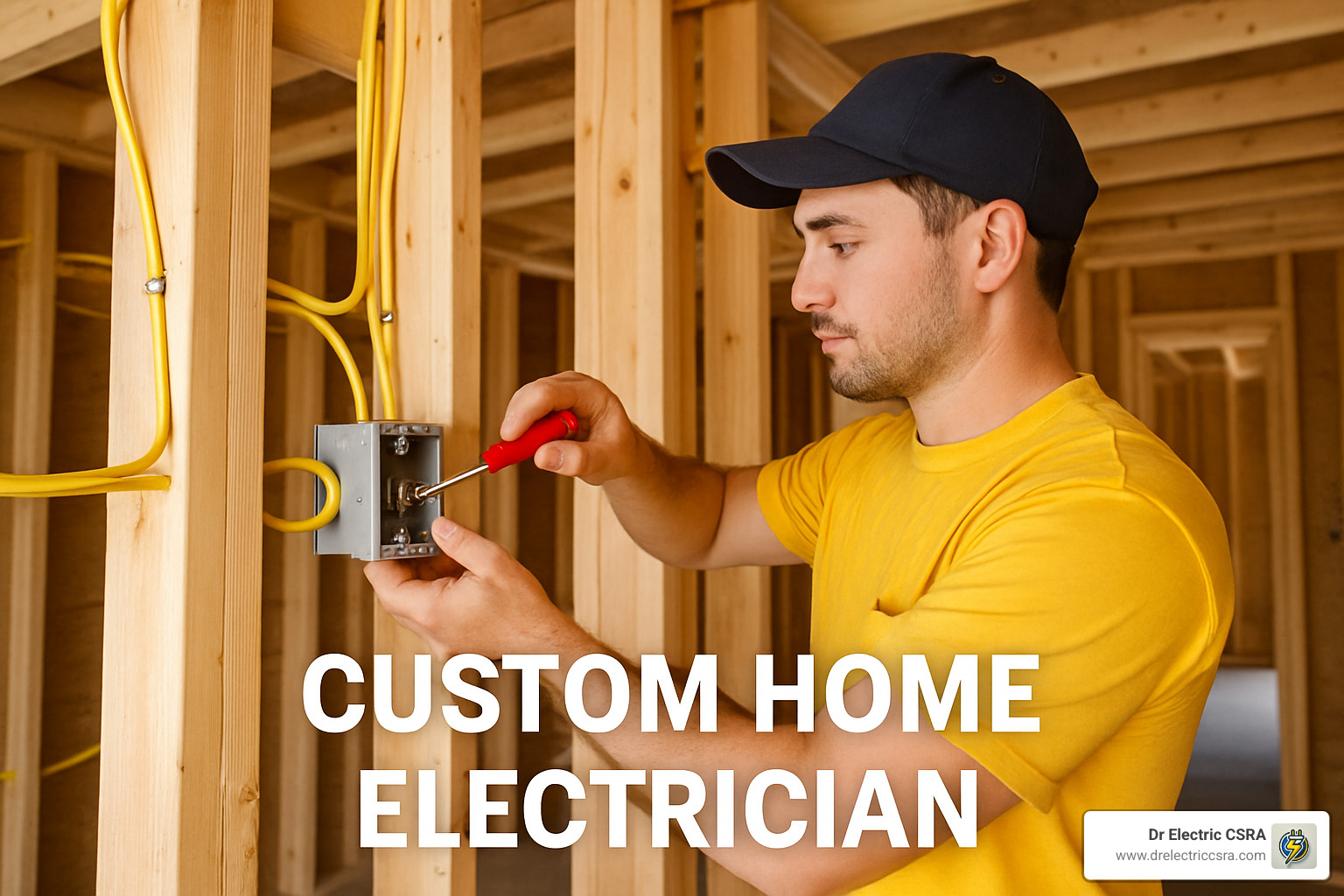
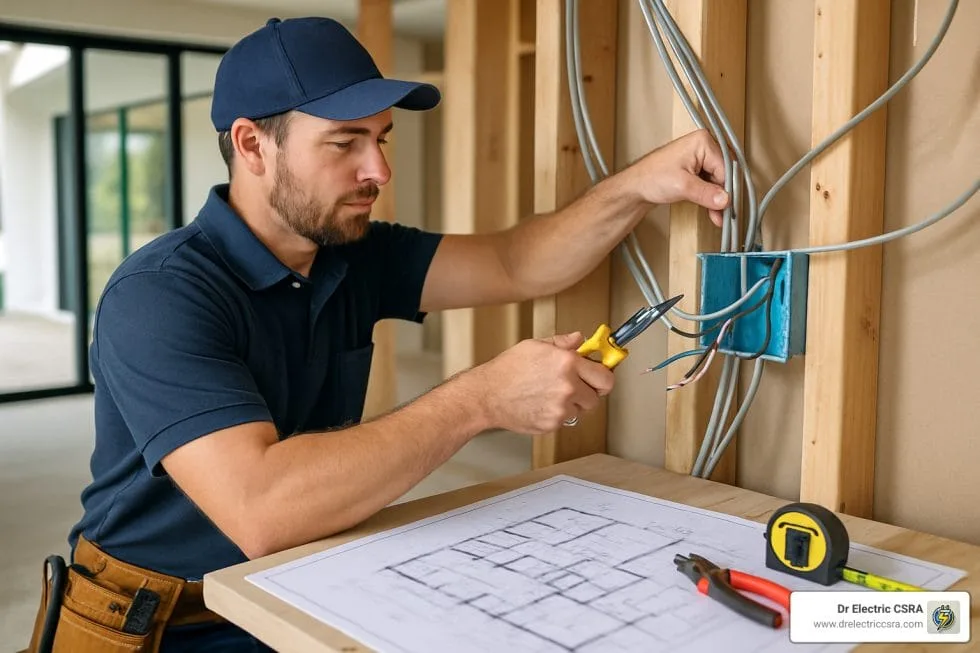
When we build a custom home, we’re not just building for today—we’re creating a space that should serve you well for decades. That’s why thoughtful pre-wiring is so crucial. During construction, before those walls get closed up, we can install all the cables and wiring that will support both your current needs and future technologies.
Think about how Cat6 Ethernet wiring throughout your home provides rock-solid internet connections where WiFi might struggle. Or how Power-over-Ethernet (PoE) allows security cameras and access points to receive both power and data through a single cable—no need for separate power outlets near each device.
“I always tell my clients, what costs a couple hundred dollars during construction could easily cost five times that amount later,” says Jesse at Dr Electric CSRA. “It’s the difference between a simple wire pull through open walls versus cutting drywall, fishing wires, and then patching and painting.”
The numbers back this up. Industry data shows that pre-wiring for features like ceiling fans, wall-mounted TVs, and smart home devices during construction typically costs $100-200, while the same work as a retrofit might run $500-1,000 or more.
Beyond just saving money, proper pre-wiring for energy-efficient technologies can reduce your carbon footprint and monthly utility bills. Smart thermostats, automated lighting controls, and intelligent power management systems all depend on proper wiring infrastructure. You can learn more about these energy-saving upgrades and their benefits.
Pre-Wiring Payoffs You’ll Thank Yourself For
I remember a client in Evans who called me five years after we completed her custom home. “Extra wiring you insisted we run to the backyard?” she asked. “We just put in a pool, and the electrician said we saved about $3,000 by having those conduits already in place.”
This kind of foresight is exactly what separates a true custom home electrician from a standard contractor. Some of the most appreciated pre-wiring decisions include home audio systems with invisible speaker wiring tucked neatly into walls and ceilings. Instead of portable speakers cluttering surfaces or visible wires running along baseboards, you get crystal-clear sound that seems to come from nowhere.
Blinds control is another feature homeowners absolutely love. With pre-wiring for motorized window treatments, you can control natural light with the touch of a button or even schedule your blinds to open and close automatically. This adds convenience while also improving energy efficiency.
Security pre-wiring ensures your home can support comprehensive protection with cameras, motion sensors, and access control systems—all without unsightly cables running along exterior walls.
Having a generator transfer switch pre-wired during construction makes connecting backup power seamless during outages. At Dr Electric CSRA, we’ve seen how valuable this becomes during storm season. Our Whole House Transfer Switch Installation Made Simple service has been a lifesaver for many families who want protection from power interruptions.
Outlet Placement Secrets for Everyday Convenience
“You never hear anyone say ‘I wish I didn’t have so many outlets,’” is something I often tell homeowners during the planning phase. Strategic outlet placement makes everyday life so much more convenient.
Consider your kitchen island—the heart of many family gatherings and meal preparations. Pop-up outlets or under-counter receptacles preserve the clean look while providing power exactly where you need it. No more stretching cords across walkways!
What about those holiday eaves? A dedicated outlet under the eaves for seasonal lighting, controlled by an indoor switch, means no more extension cords draped across your yard or climbing ladders in January to unplug decorations.
Inside cabinets, hidden outlets create charging stations for devices or power small appliances while reducing countertop clutter. In closets, convenient power for rechargeable vacuums or clothing steamers makes household chores simpler.
For homeowners with recreational vehicles, RV hookups with exterior 50-amp service save the hassle of running extension cords from the garage. And in bathrooms, outlets inside medicine cabinets keep electric toothbrushes and razors charging but out of sight.
Many families also appreciate pre-wiring for ceiling fans in bedrooms and living spaces. A properly installed ceiling fan not only improves air circulation but can significantly reduce heating and cooling costs. You can learn more about how to Install a Ceiling Fan for maximum efficiency and comfort.
At Dr Electric CSRA, we walk through your home plans room by room, thinking about how you’ll actually live in each space. We consider your daily routines, seasonal needs, and future possibilities to create an electrical system that works for your life—not just today, but for years to come.
This thoughtful approach to electrical design is what makes a custom home truly custom. After all, the wires hidden in your walls are just as important as the visible finishes that make your house beautiful.
Hiring & Budgeting Guide for Custom Home Electricians
Finding the right custom home electrician requires due diligence, but the effort pays off in quality workmanship and systems that function flawlessly for years to come.
Choosing the Right Custom Home Electrician
When Sarah and Mike began building their dream home in Evans, they interviewed five different electricians before making their choice. “The difference was night and day,” Sarah told us. “The electrician we chose actually listened to how we planned to live in our home, not just where we wanted outlets.”
This experience highlights what truly matters when selecting your custom home electrician. Beyond the basics of licensing and insurance (which are absolutely non-negotiable), look for someone who speaks your language while still demonstrating technical expertise. In Georgia, all electricians must maintain proper state licensing, and many municipalities require additional permits for specific work.
The best professionals have a portfolio of similar custom projects they can proudly share. Don’t hesitate to ask for photos or even tours of completed homes. A true custom home electrician will have relationships with builders and homeowners who are happy to showcase their work.
Reviews and references tell the real story. When you call references, ask specific questions: “How did they handle unexpected challenges?” or “Were they respectful of your home and finishes?” One North Augusta homeowner told us, “Our electrician actually wore booties over his shoes every time he entered our home once the flooring was installed. That level of care for our investment spoke volumes.”
Pay attention to communication style during your initial meetings. Does the electrician ask thoughtful questions about your lifestyle? Do they explain complex concepts clearly? The technical expertise matters enormously, but so does the ability to communicate effectively with you throughout what might be a year-long project.
Finally, understand their pricing structure before moving forward. Some electricians, like us at Dr Electric CSRA, offer transparent flat-rate pricing that provides cost certainty regardless of time spent. Others charge hourly rates that might fluctuate based on the complexity of the work. Neither approach is inherently better, but knowing what to expect prevents surprises down the road.
Custom Home Electrician Cost Breakdown
Custom electrical work isn’t inexpensive, but it’s an investment in both safety and quality of life. Understanding where your money goes helps you make informed decisions about priorities.
Labor rates typically range from $75-150 per hour for custom electrical work, reflecting the specialized knowledge required. When James built his custom home in Martinez, he initially balked at these rates until his builder explained, “The difference between a good electrician and a great one isn’t just in what they install—it’s in what problems they prevent you from having for the next 30 years.”
Material quality varies dramatically and impacts both aesthetics and functionality. While basic outlets might cost just $2 each, designer options that complement your home’s style can run $15-25, and smart outlets with remote control capabilities might reach $100 each. Your custom home electrician can help you determine where premium materials make sense and where standard components will serve you perfectly well.
The decision about service size has long-term implications. While a standard 200-amp service works for many homes, larger custom homes or those with specific features often benefit from upgrading to 400-amp service. This upgrade typically adds $2,000-5,000 to the project cost but provides significant future flexibility, especially if you’re considering electric vehicle chargers, workshop equipment, or extensive smart home systems.
Smart home integration represents one of the biggest variables in custom electrical budgets. Basic pre-wiring might add $2,000-5,000 to your project, creating pathways for future technology. Comprehensive systems with control panels, automated features, and programming can range from $10,000-50,000 depending on complexity. As one client put it, “We started with just automated lighting, but once we experienced the convenience, we kept adding features. I’m glad our electrician created a system that could grow with us.”
Always include a contingency buffer of 10-15% in your electrical budget. Custom homes inevitably involve changes as you see spaces take shape, and having this buffer prevents financial stress when you decide to add lighting in that reading nook or an extra outlet in the pantry.
At Dr Electric CSRA, we understand that building a custom home is both exciting and financially significant. That’s why we provide detailed, itemized estimates that clearly outline all costs before work begins. Our transparent pricing ensures there are no surprises, and our expertise helps you make informed decisions about where to allocate your electrical budget for maximum value. You can learn more about our comprehensive Services on our website.
Frequently Asked Questions about Custom Home Electricians
What questions should I ask during the planning phase?
The planning phase is your golden opportunity to set your electrical project up for success. When sitting down with your custom home electrician, don’t be shy about asking the tough questions.
Start by asking how many circuits they recommend for your home—and more importantly, why. Their answer will reveal whether they’re truly considering your specific needs or just applying a cookie-cutter approach. A thoughtful electrician will ask about your lifestyle, appliances, and technology before making recommendations.
“I always ask clients about their hobbies, work habits, and even holiday decorating traditions,” says Jesse at Dr Electric CSRA. “Someone who loves cooking needs different electrical planning than someone who runs a home-based business.”
Next, discuss panel size recommendations based on both current and future needs. Your electrician should consider everything from your appliance list to potential additions like EV chargers or a workshop. This conversation naturally leads to pre-wiring suggestions for future technology—a crucial topic that separates forward-thinking electricians from the rest.
For high-end homes, ask specifically how they’ll protect your expensive finishes during installation. Custom home electricians should have clear protocols for protecting marble countertops, custom cabinetry, and other premium features.
Documentation is another critical area to discuss. How will they label and document your electrical system for future reference? Proper panel schedules and wiring diagrams can save tremendous headaches years down the road when you need modifications.
Finally, inquire about energy-efficient options they recommend. Their response will quickly reveal whether they stay current with energy-saving technologies or are stuck in outdated practices.
How do custom home electricians keep projects on budget and on schedule?
Budget and timeline overruns can turn your dream home experience into a nightmare. Fortunately, experienced custom home electricians have developed systems to keep both in check.
The foundation of staying on budget starts with detailed initial planning—the more comprehensive your electrical plan before construction begins, the fewer expensive changes you’ll need later. At Dr Electric CSRA, we spend extra time in the planning phase precisely because it prevents costly surprises down the road.
Regular walk-throughs at key construction phases serve as checkpoints to ensure work is proceeding correctly. These aren’t casual strolls through your construction site—they’re structured evaluations with specific items to verify at each stage.
When changes do become necessary (and in custom homes, they almost always do), professional electricians document them with itemized change orders that clearly outline cost implications before any additional work begins. This transparency prevents the dreaded “bill shock” that plagues many construction projects.
“Communication is everything,” notes one veteran custom home electrician. “We coordinate closely with builders, plumbers, and HVAC contractors to prevent conflicts that could delay the project or require expensive rework.”
Efficient material management also plays a huge role in keeping projects on schedule. By ordering materials well in advance and staging them appropriately, work can flow without interruptions caused by waiting for backordered items.
Can my electrical system be upgraded easily in the future?
The ease of future electrical upgrades depends almost entirely on decisions made during initial construction. Think of it as planting seeds now for flexibility later.
Starting with a panel that has extra spaces for circuit breakers makes adding new circuits much simpler. Many homeowners who initially balked at the cost of a larger panel later wished they’d made that investment when adding circuits becomes necessary.
Strategic conduit installation is another forward-thinking approach. Installing empty conduit in walls that might need future wiring creates pathways for new cables without opening up finished surfaces. One Augusta homeowner told us: “Our custom home electrician installed empty conduit from our attic to our entertainment center. Years later when we upgraded to a new audio system, running the wires was simple—no cutting into walls required.”
Access points are often overlooked but tremendously valuable. Strategic access panels in non-visible areas provide entry points for future wiring. These might be located in closets, utility rooms, or other discreet locations.
Detailed documentation showing wire routes and junction box locations makes future work much easier. When an electrician can consult accurate plans rather than guessing what’s behind your walls, modifications become simpler and less invasive.
Perhaps most importantly, starting with adequate service capacity (like 400 amps instead of 200) means you won’t need a costly service upgrade later. While it represents a larger initial investment, it can save thousands if you later add power-hungry features like a workshop, spa, or electric vehicle charging.
At Dr Electric CSRA, we believe in building electrical systems that grow with you—because your home should evolve as your life does.
Conclusion
Building a custom home is one of life’s most significant investments, and the electrical system is quite literally the power behind your dream home’s functionality. A specialized custom home electrician brings expertise that extends far beyond basic wiring—they help create a home that’s safe, efficient, and ready for both current and future technologies.
From the earliest planning stages through final inspection, the right electrical partner ensures your home’s systems are thoughtfully designed, properly installed, and carefully documented. This attention to detail not only improves your daily living experience but also adds significant value to your investment.
At Dr Electric CSRA, we understand the unique challenges and opportunities that custom homes present. Our team of licensed electricians brings decades of experience to every project, ensuring that your electrical systems are as exceptional as the home they power. We serve homeowners throughout Augusta, Evans, Grovetown, Martinez, and the entire CSRA region with a commitment to quality that’s best.
Whether you’re in the early planning stages or ready to break ground on your custom home, we invite you to contact us for a consultation. Let us help you create an electrical system that improves your lifestyle today and adapts to your needs tomorrow.
When it comes to custom homes, the electrical system should never be an afterthought—it should be an integral part of creating your perfect living environment. With Dr Electric CSRA as your partner, you can be confident that your home will be wired for life.